
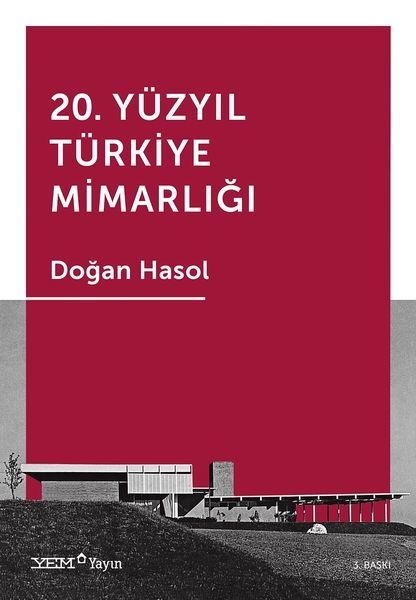
20th Century Turkish Architecture
Yazar: Doğan Hasol
Brand: YEM Yayın
Basım Tarihi: Kasım 2021
Basım Dili:
Sayfa Sayısı: 304Boyut: 16x23 cm
Out Of Stock
9786257008136
Product Description
The revised 3rd edition of Doğan Hasol's book, which inventories architecture produced in Turkey throughout the 20th century by categorizing it into periods, has been released by YEM Yayın.
The 20th century was an era of changes and transformations in social, economic, and political spheres for Turkey, as it was for many other countries around the world, especially an era of breakthroughs in science, technology, and art. The reflection of these rapid developments was also observed in our country's architecture. In 20th Century Turkish Architecture, Doğan Hasol chronologically narrates this process of change and development in our country's architecture, exemplifying it with nearly 150 architects and 190 buildings under the following headings:
- Towards the 20th Century and Early 20th Century Turkish Architecture
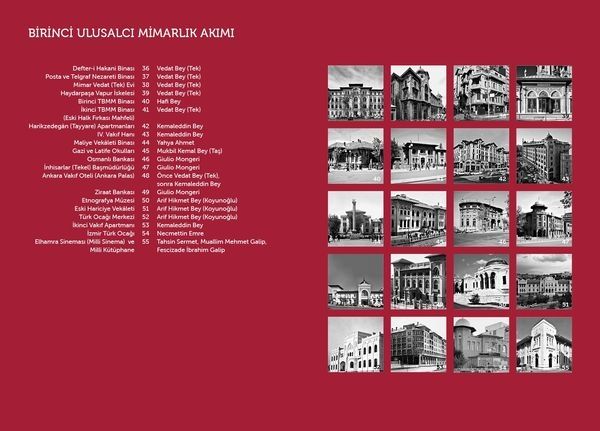
- First Nationalistic Architecture Movement
- Foreign Architects as Guests of the Young Republic
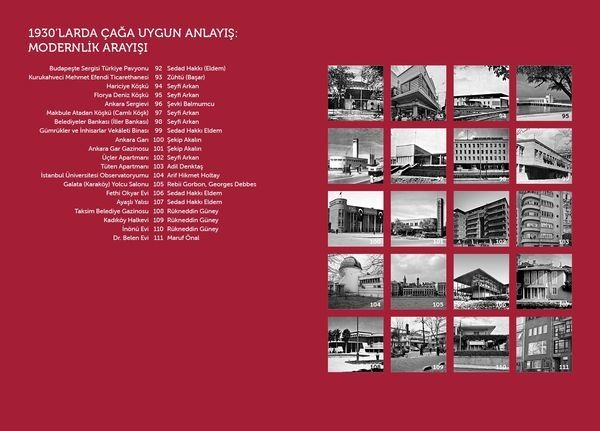
- A Contemporary Approach in the 1930s: The Search for Modern Architecture
- The 1940s... National Architecture or Second Nationalistic Architecture
- The 1950s... Modernism/International Style
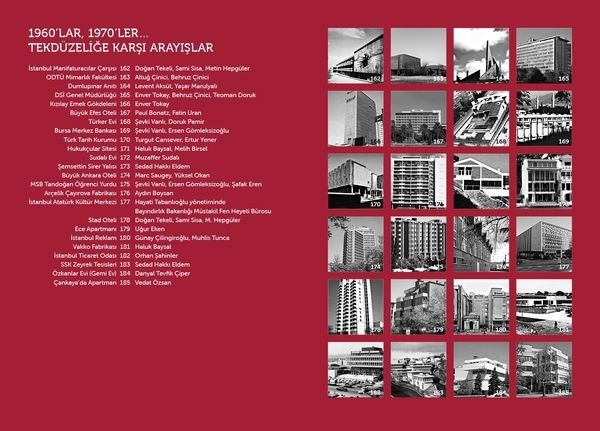
- The 1960s, 1970s… Searches Against Monotony
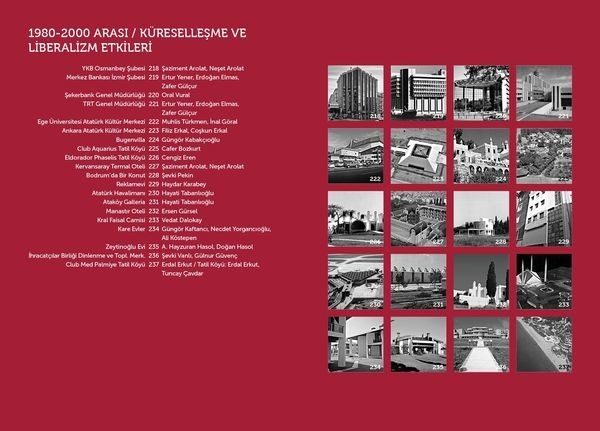
- Between 1980-2000/Effects of Globalization and Neoliberalism
Doğan Hasol's views on the book, which is the product of many years of work and covers the entire 20th century, including the pre-Republic period, are as follows:
“This book is not an anthology. The presented buildings were selected to reflect their periods and architectural approaches, in addition to their architectural values... It was only possible to begin interpreting and showcasing the country's century-long architectural accumulation with an inventory. This process, despite our own knowledge, archival resources at hand, and years of accumulated documents and information, was still not easy and stretched over a long period. Determining the assessment through a chronological system based on periods via buildings seemed appropriate; the development processes in the country also allowed for this. However, it was not easy to rigidly categorize the factors affecting architecture, such as economic, social, and political processes, into precise periods. In parallel, it was inevitable for there to be overlaps and shifts between periods regarding the architectural understanding and style of the buildings. Moreover, as seen in many examples in our country, the investment decision, design process, and construction phase in architecture could sometimes extend over many years.
Regarding the preparation of the book, I should immediately add this: Let's state that not all valuable works produced between 1900-2000 that could serve as examples are limited to those given in the book, and there could be many other examples beyond those presented. The given examples, in addition to our personal efforts, were mostly compiled from easily accessible works in large cities and those featured in architectural publications, many of which are award-winning. In the selection of buildings, works that could more easily provide an idea about movements and periods were sought. It is also worth noting one more point: Many buildings that are not in harmony with their surroundings were excluded from the selection, despite some good architectural qualities, on the grounds that they did not belong to their location.
This book will hold a significant place in proving and documenting the existence of architecture, countering the increasingly common rhetoric, 'Is there even architecture in Turkey?'...
I believe that this book will play a significant role in proving and documenting the existence of architecture, countering the increasingly common rhetoric, "Is there even architecture in Turkey?" That rhetoric is somewhat justified, but largely unfair. Undoubtedly, many excellent architectural works were produced in our country in the 20th century, as in many past periods. However, on one hand, the educational, cultural, and aesthetic levels of our society are far from appreciating these works, and on the other hand, good examples have become invisible amidst intense squatter housing, illegal construction, and the chaos of unplanned development. Another point is the lack of awareness in society and among our political leaders regarding the preservation of architectural values, in addition to their evaluation. Many valuable works have been lost due to the attitudes of city and national administrators who do not believe in scientific methods, planning, and architecture, and who assume that only their own aesthetics, tastes, and knowledge can be criteria for evaluating architectural works. Therefore, as can be seen in the examples in the book, many works from the 20th century, unfortunately, could be demolished and destroyed..."
