
 Yeni Baskı

Step-by-Step Construction Materials
Yazar: Hans Drexler, Manfred Hegger, Martin Zeumer,
Brand: YEM Yayın
Basım Tarihi: Ekim 2024
Basım Dili:
Sayfa Sayısı: 88Boyut: 16.0 x 22.0 cm
Out Of Stock
9786257008198
Product Description
YEM Yayın has published the "Step by Step" series, a highly anticipated fundamental reference for architecture, interior architecture, and landscape architecture students.
The series, comprising four books titled Design Ideas - Design Methods - Structural Systems - Building Materials, is intended to be read together for narrative coherence and to complement each other in terms of content. Its aim is to meticulously present the processes involved in various activities and specialization areas within the architectural discipline by following them step-by-step, addressing the fundamental issues encountered in these processes, the factors influencing them, and the main approaches and principles developed for solutions, with easy-to-understand explanations and insightful suggestions.
The fourth book in the "Step by Step" series is titled Building Materials. Similar to the previous (third) book in the series, "Structural Systems," which aimed to build a bridge between the disciplines of architecture and civil engineering, this book focuses on building materials that appear in almost every stage of the architectural design process and are used to bring design ideas to life. Based on the understanding that building materials not only form the foundation of construction activity but also facilitate communication between people and buildings, the book emphasizes aspects of materials that directly concern both their design and the appearance of the structure to be built. The wide range of possibilities that different types of materials can offer to design when used consciously forms the focus of the book. It is stressed that each material only gains meaning within its specific context, and therefore, materials are open to interpretation and re-contextualization. To explore the physical and sensory world of materials, the fundamental properties of building materials are first defined, then major material types are examined under separate headings, addressing their distinguishing characteristics. In the final section of the book, typical design approaches and principles related to material usage are explained.
Bert Bielefeld, who prepared the book for publication, offers his insights on the book as follows:
“The ‘Step by Step Building Materials’ book aims to address the fundamental properties of major building elements and components. For this reason, instead of thoroughly examining materials, the authors focus on aspects of materials that directly concern both their design and the appearance of the structure to be built. The wide range of possibilities that different types of materials can offer to design when used consciously is the focus of the book. To enable readers to explore the physical and sensory world of materials, the fundamental properties of building materials are first defined, then major material types are examined under separate headings, emphasizing their distinguishing characteristics. In the final section of the book, typical design approaches and principles related to material usage are explained. Thanks to the ‘Step by Step Building Materials’ book, students will gain practical knowledge regarding the use of different types of materials, thus enabling them to realize their designs in an impressive manner.
The authors of the book, Hegger, Drexler, and Zeumer, state:
“... The processes of selecting, developing, and detailing materials play an important role in the design process. Integrating design and material to achieve a coherent structure is the ultimate goal. A material is primarily defined by its properties perceived by the sense of sight (color, surface texture, reflective properties, joints, etc.). These properties are integrated with properties perceived by other senses (feel to the touch, smell, sound, surface temperature, etc.). The structural properties of materials (physical structure, load-bearing capacity, durability, etc.) and their environmental effects are often not perceptible to the naked eye. However, these 'intrinsic values', which can only be determined by measurement, define the technical applicability and suitability of the material for its intended purpose. Ultimately, each material gains meaning within its context. Although this meaning may be based on common values, it lacks objective foundations. Therefore, materials are open to interpretation and re-contextualization...”
CONTENTS
Foreword_7
Introduction _8
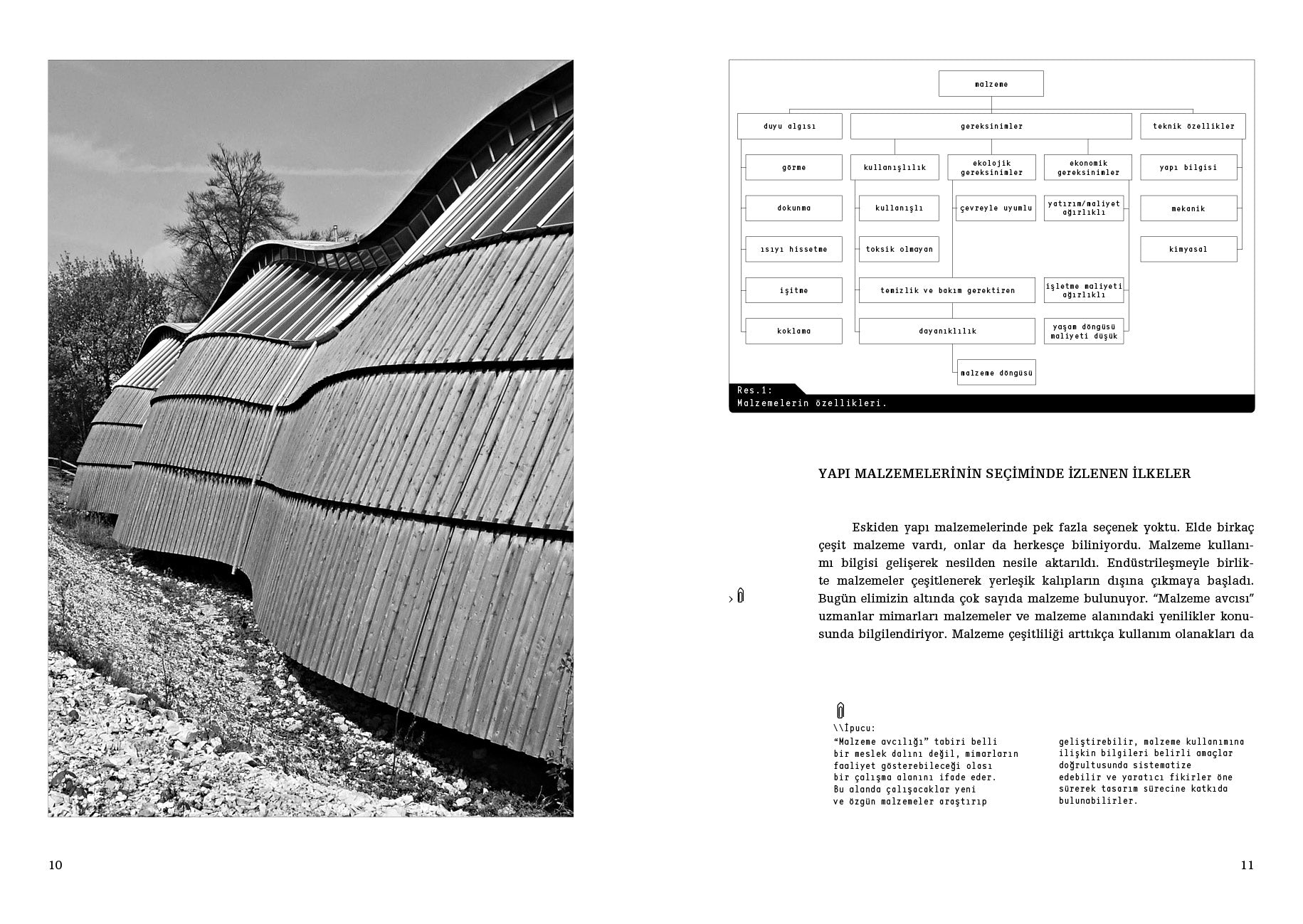
Principles Followed in the Selection of Building Materials _11
Material Perception _12
Requirements Materials Must Meet _17
Technical Specifications _24
Classification of Building Materials _27
Material Typologies _27
Wood _33
Wood-Based Products _36
Natural Stone _39
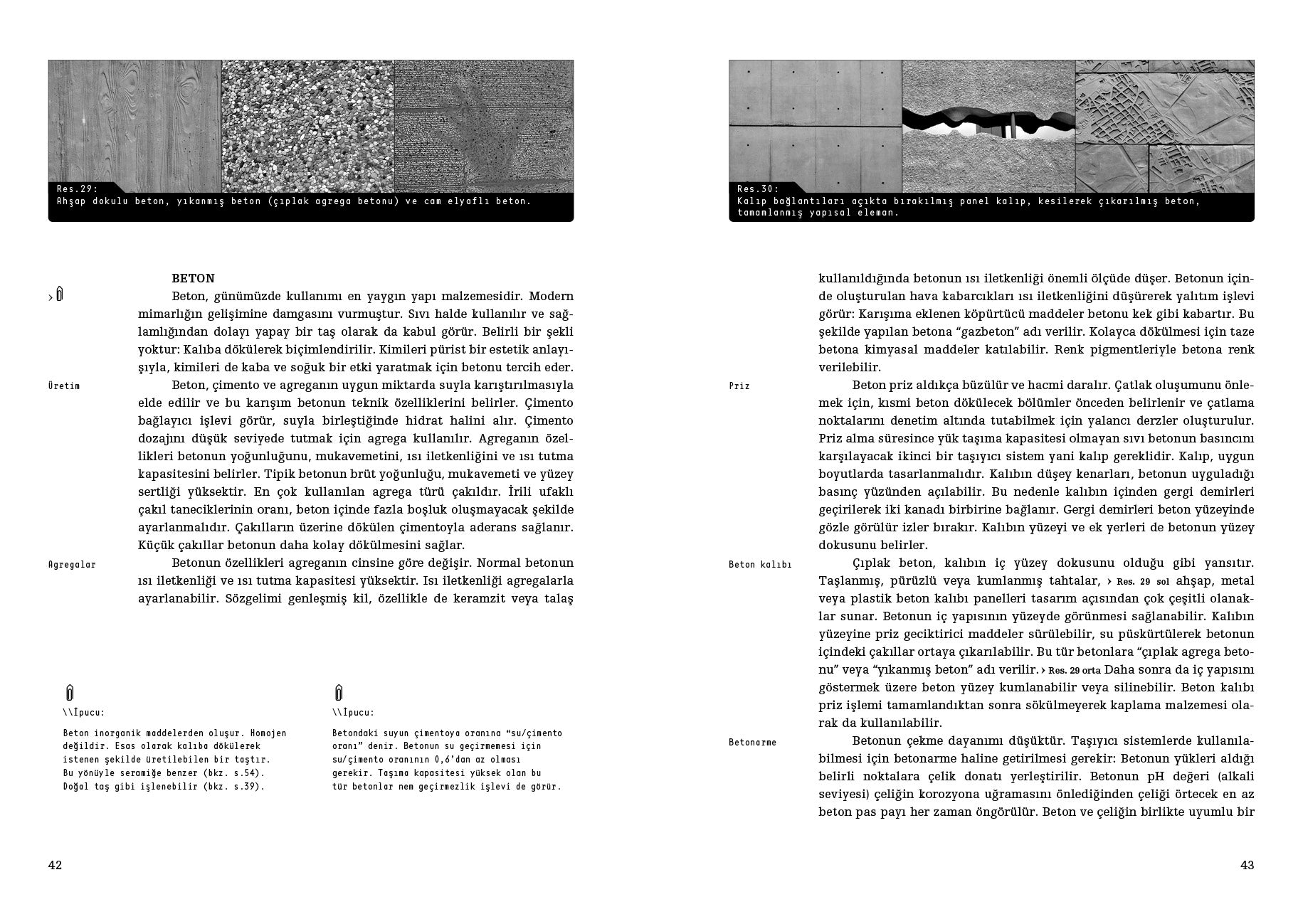
Concrete _42
Mineral-Bound Wall Blocks _45
Mineral-Bound Slabs _48
Plasters and Screeds _51
Ceramics and Bricks _54
Metals _57
Glass _62
Plastics _66
Textiles and Membranes _69
Designing with Building Materials _73
General Conditions _73
Basing Design on Material _75
Materializing Design with Material _76
Design Approaches _78
Conclusion _85
Appendix _86
STEP BY STEP SERIES BOOKS:
Step by Step Design Ideas
Step by Step Design Methods
Step by Step Structural Systems
Step by Step Building Materials
