
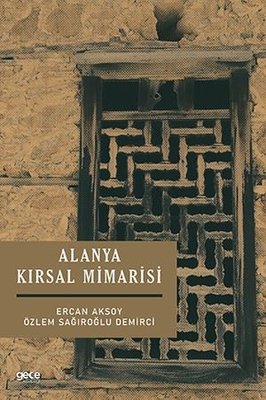
Rural Architecture of Alanya
280.00TL
Yazar: Ercan Aksoy
Brand: Gece Kitaplığı
Basım Tarihi: Nisan 2022
Basım Dili:
Sayfa Sayısı: 218Boyut: 16.0 x 24.0 cm
Out Of Stock
9786254300004
Product Description
Rural settlements encompass structures that are primarily functional yet also qualitative and aesthetic, shaped by a construction culture nourished by the most suitable material and craftsmanship relationship, accompanied by production dynamics and cultural and social life inherited from the past. In this context, it provides the opportunity to see and examine the purest examples of traditional construction culture in a continuous series. However, over time, due to changes in production dynamics or reasons such as migration to urban areas, they fall into disuse; unqualified additions and removals occur due to changing comfort conditions for infrastructure, lack of skilled workers, or materials; and they face problems such as destruction due to unconsciousness, carelessness, public works, or rent-seeking. One of the most important of these problems is uncontrolled tourism development. In rural settlements offered for tourism, it becomes difficult to preserve qualified and authentic values; changes and transformations in structures are not aimed at preservation but at user requirements. One of the most rapidly deteriorating examples of this situation is Alanya district of Antalya, which is located on the Mediterranean coast. The rural areas of Alanya district, which are rapidly transforming under the influence of rapid and unplanned urbanization as well as abandonment for various reasons, are rapidly losing their original architectural examples. This book work is fundamentally based on the doctoral study completed by Ercan Aksoy in 2022 at Gazi University Institute of Science and Technology under the supervision of Assoc. Prof. Dr. Özlem Sağıroğlu Demirci. By covering the content and importance of protection for rural architectural heritage, it primarily aims to document the original and qualified examples of rural settlements in Alanya district of Antalya province; and to create details for restitution and restoration to serve as a resource for future conservation efforts. For this purpose, 68 village settlements that were converted into neighborhoods by Law No. 6360 were examined and evaluated regarding their texture forms, building-parcel relationships, building conservation status, population changes, agriculture/livestock activities, and tourism activities; qualified original rural examples were detailed in the context of plan formations, construction systems and materials, and building elements; and their typologies were created according to their architectural features and elements. We hope that the book will be useful to individuals and institutions interested in rural architectural heritage and wishing to research and gain knowledge about Alanya's rural settlements and houses.
