
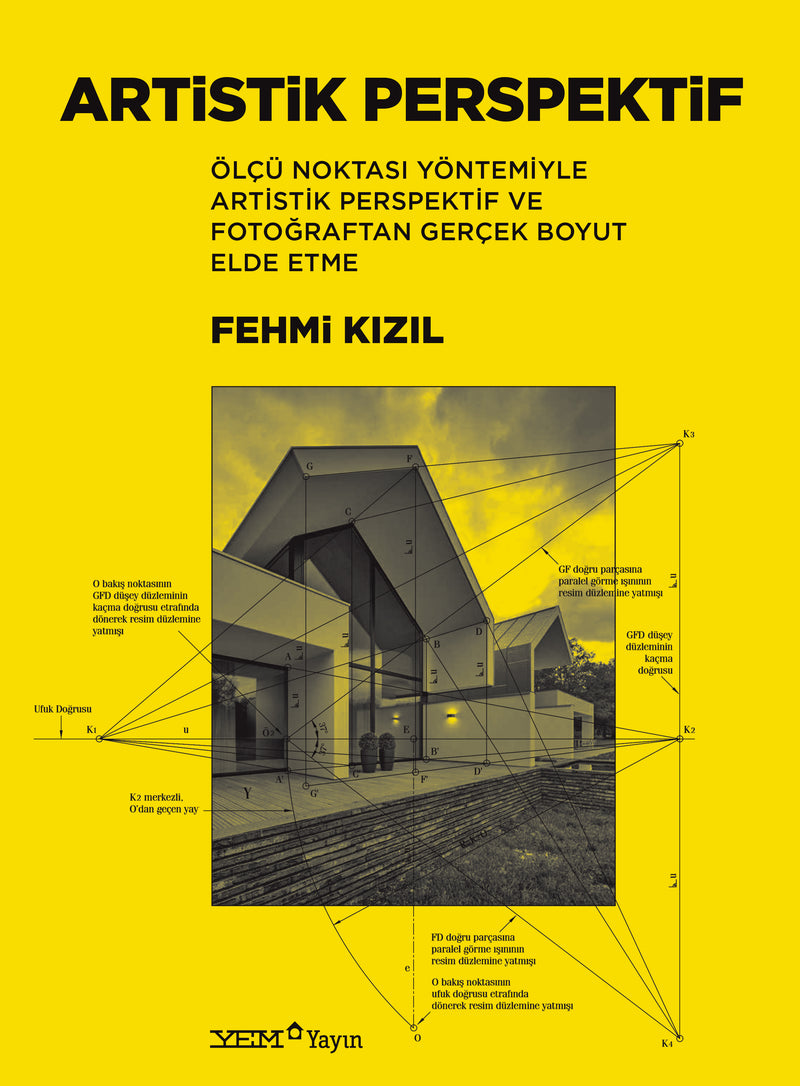
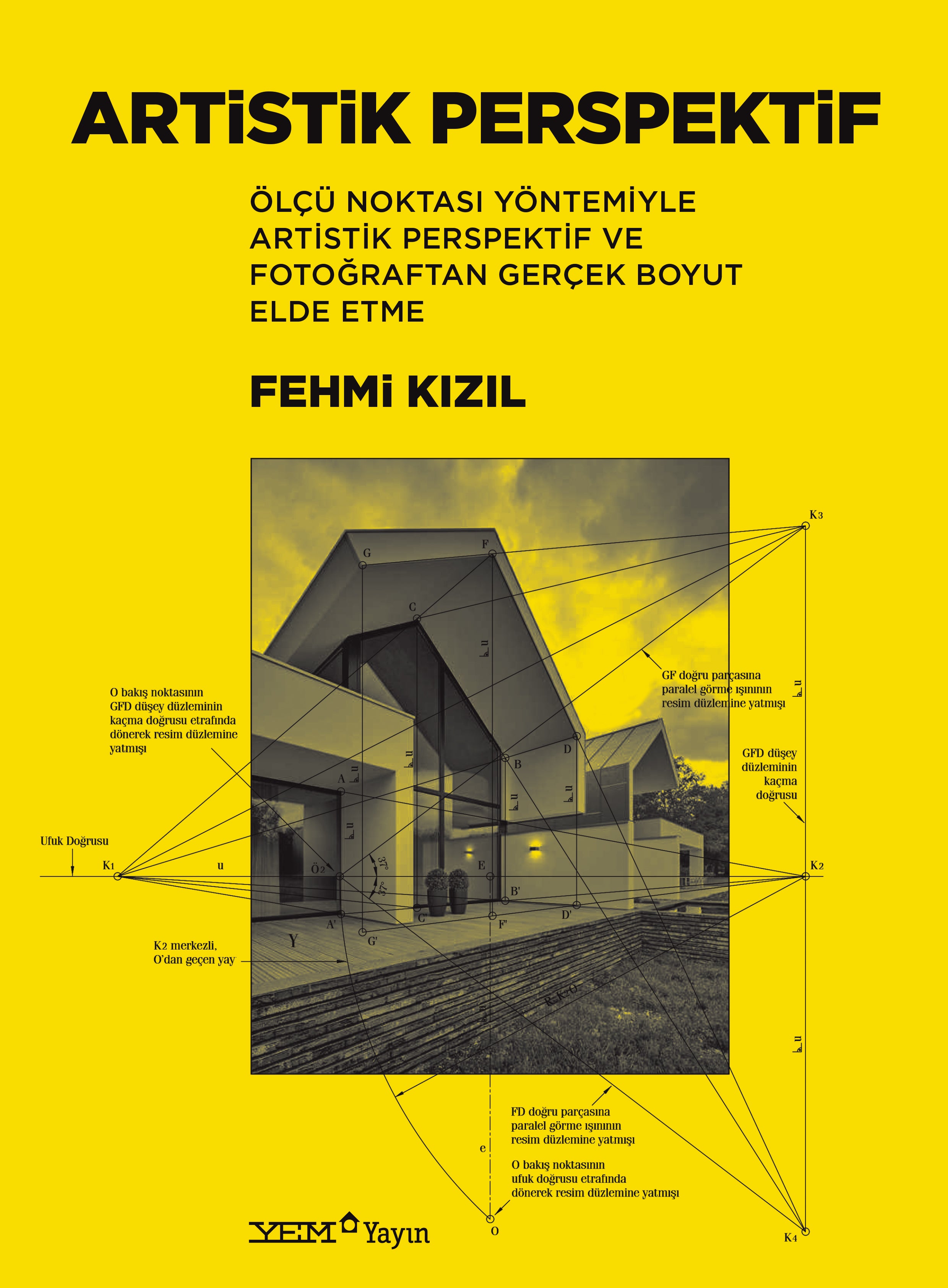
Artistic Perspective
Yazar: Fehmi Kızıl
Brand: YEM Yayın
Basım Tarihi: Ekim 2023
Basım Dili:
Sayfa Sayısı: 320Boyut: 21.0 x 28.5 cm
In stock
9786257008433
Product Description
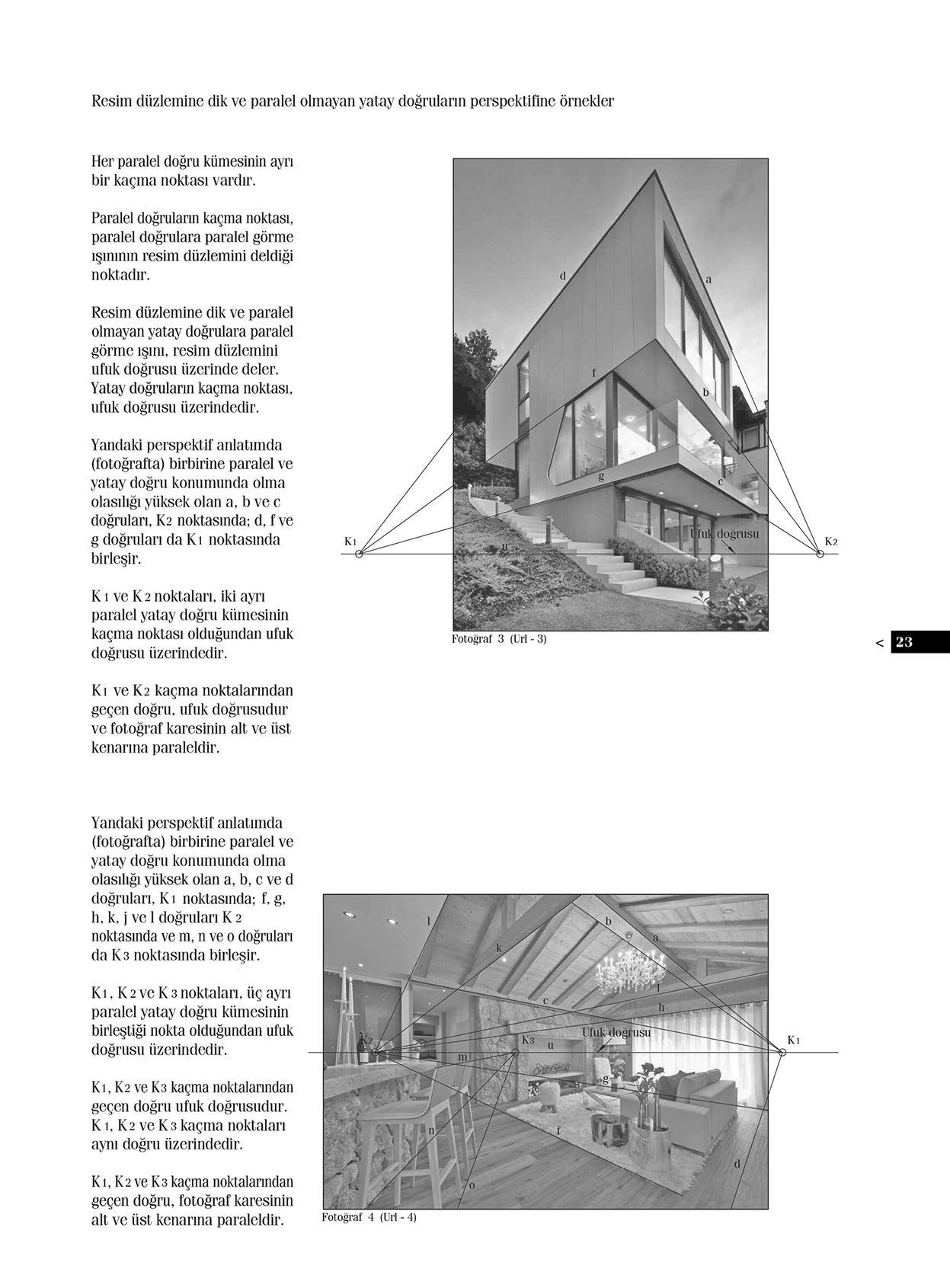
Fehmi Kızıl's new book, "Artistic Perspective," has been published by YEM Yayın. In addition to being a textbook for architecture, interior architecture, and landscape architecture education, it also serves as a fundamental reference for professional activities.
Prof. Dr. Fehmi Kızıl, with over 40 years of experience in technical drawing, perspective, and shadow drawing, especially keeping beginners in mind, addresses the subject in a comprehensive, detailed, yet easily understandable manner.
Kızıl describes his new book, "Artistic Perspective - Artistic Perspective with the Measuring Point Method and Obtaining Real Dimensions from Photographs," and the importance of the measuring point method as follows:
“This book covers the visualization of three-dimensional shapes in thought on a two-dimensional plane, as seen by a single eye – with central projection – expressing the third dimension linearly, and obtaining the real dimensions of elements and the true value of the angle of direction from a photograph, which is a central projection on a plane.
Perspective plays an important role in clarifying and maturing mental thoughts, in communication between architects, interior architects, landscape architects, industrial product designers, relevant technical specialists, and artists, and in the production of designs. Technical professionals and artists utilize perspective sketches during the study phase of their work and when explaining their designs to individuals without technical training. Furthermore, a high success rate in visualizing mental thoughts, in other words, success in perspective, fosters and accelerates creative thinking. Artistic perspective, with its artistic expressive capabilities, is more convincing and is therefore generally used in presentation drawings.
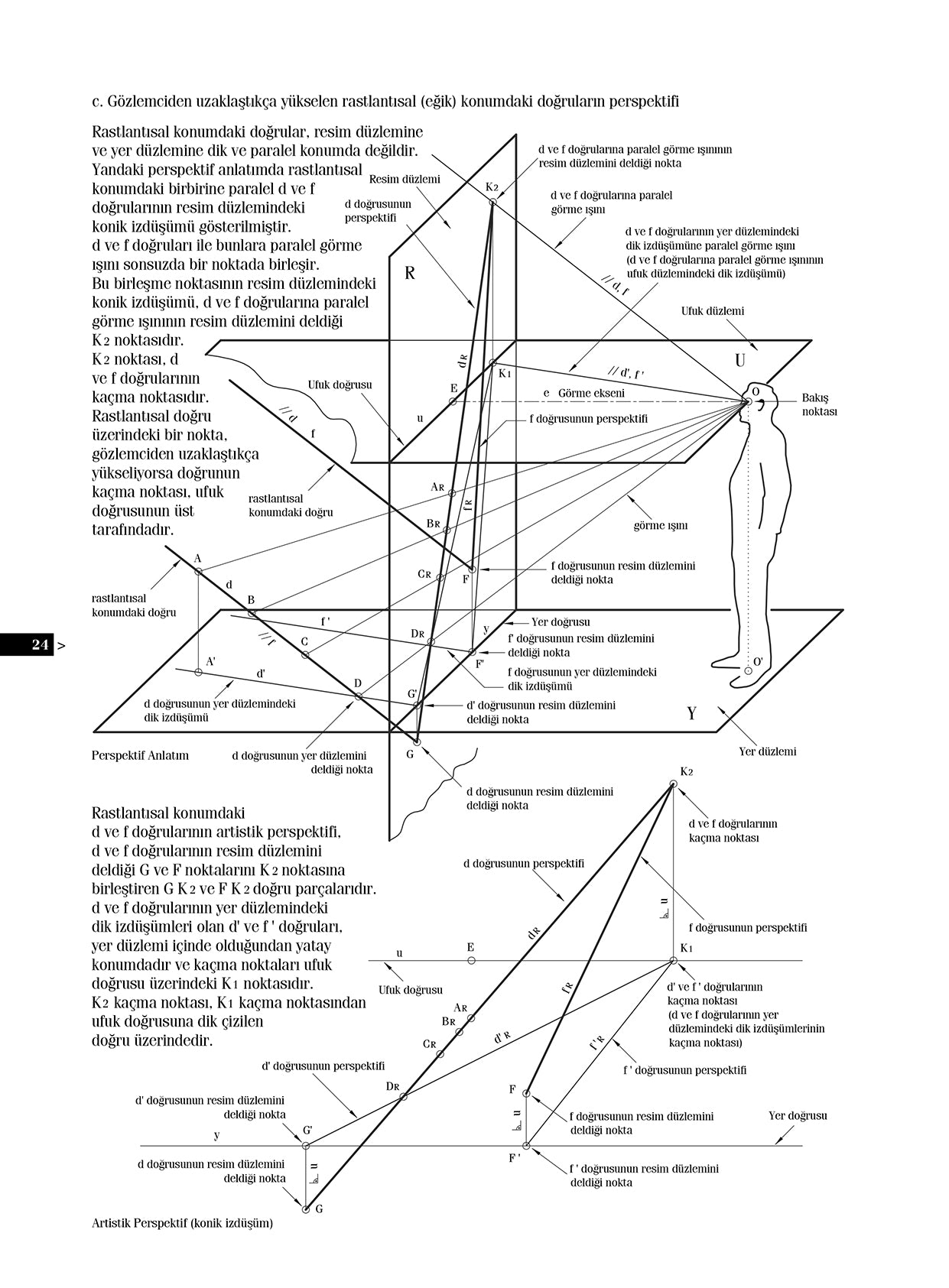
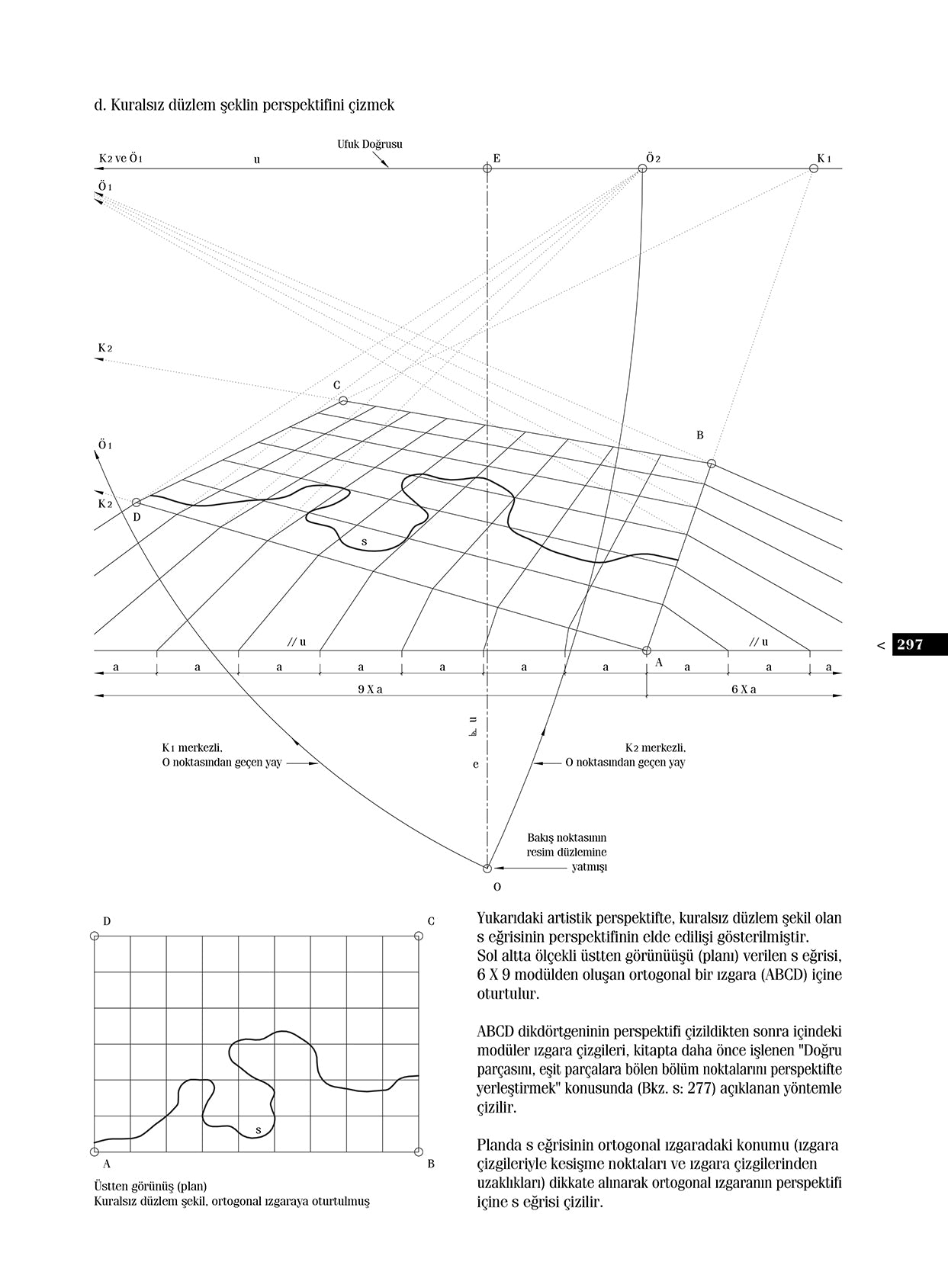
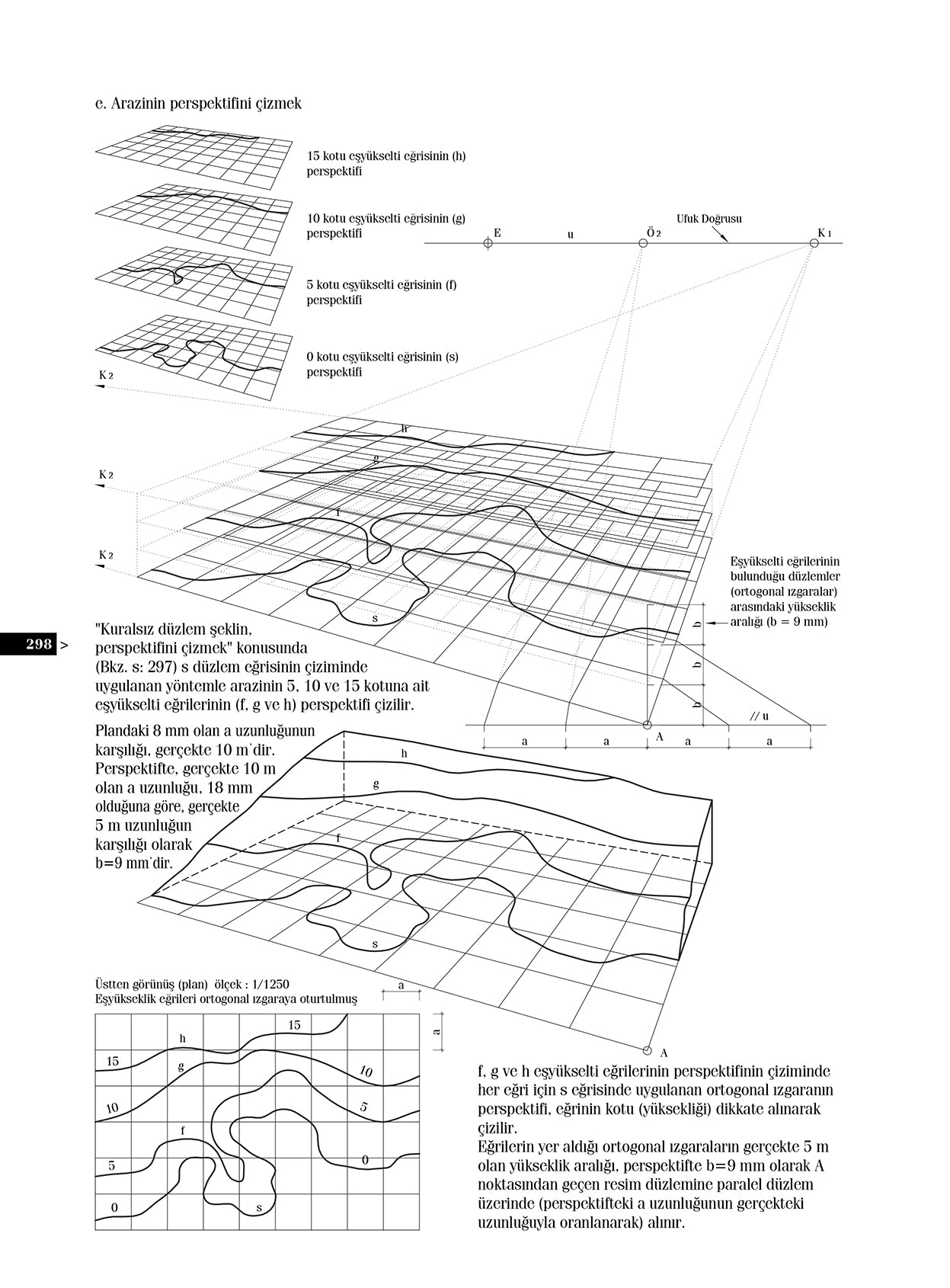
This book teaches a different method from the generally applied two-stage drawing method for obtaining perspective using the central (conical) projection method on a plane – where the picture plane and the viewing point are placed in a plan and lateral projection drawn to the same scale, and the perspective is transferred by finding the intersection of the sight lines passing through the characteristic points of the element whose perspective is desired with the picture plane. The designer first directly places some elements of the desired perspective in a single stage – on a two-dimensional picture plane – as desired in the perspective, and then determines the other elements relative to these, based on their true angle of direction and length. This method is the measuring point method.
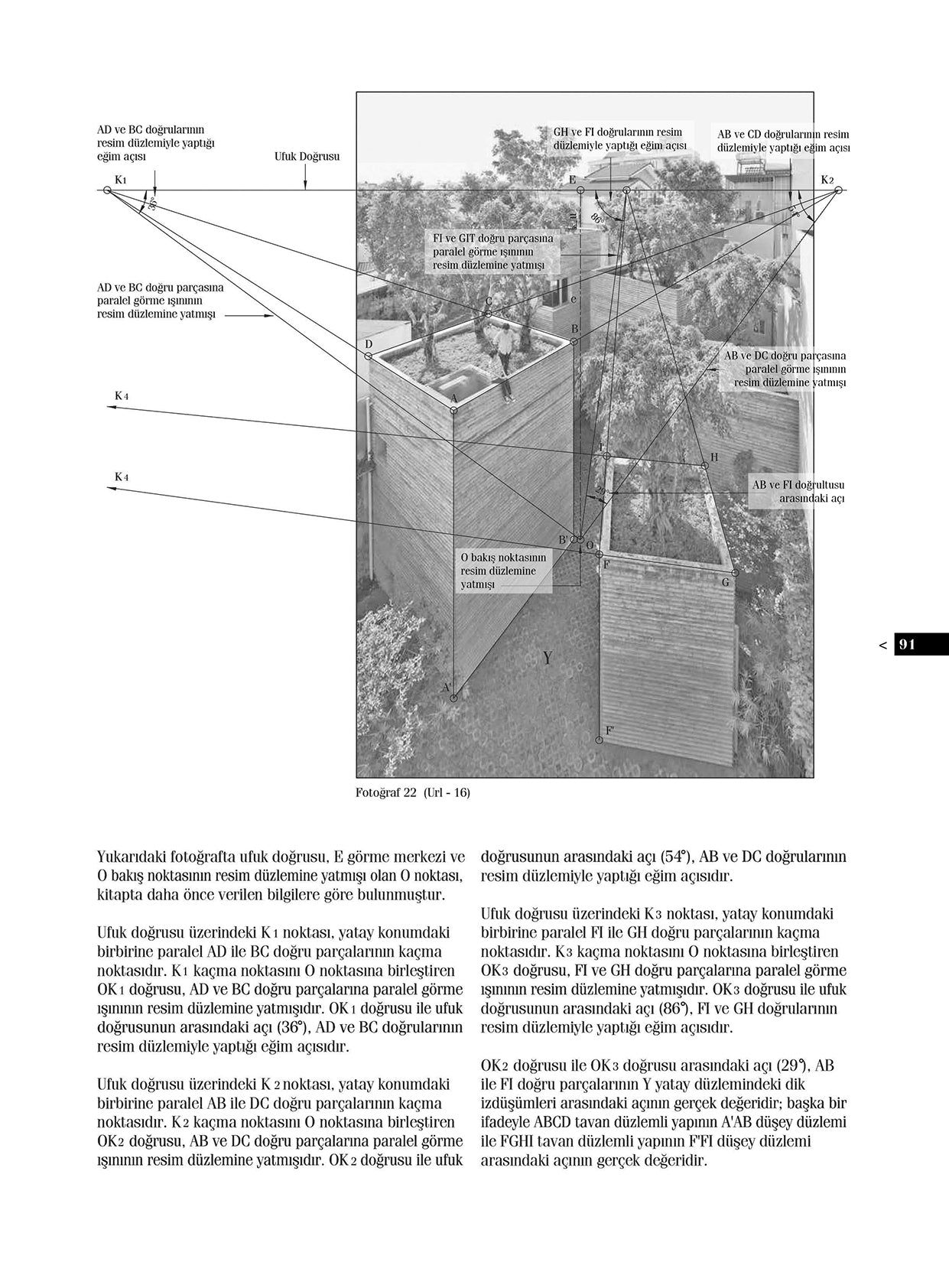
The measuring point method allows reaching the desired result with fewer operations without encountering an unsuitable outcome when obtaining perspective, and enables the designer to draw the perspective in the desired composition. The measuring point method also allows finding the true length of all elements and the true value of the angle of direction, and placing elements in a photograph, if the true dimension of an element in a photograph is known based on that element.
The measuring point method is the method resorted to by experts in their restitution project studies for the revitalization of a lost cultural heritage structure, to obtain the true dimensions of structural components and elements and the true values of the angles between their directions from archived photographs of the structure.
This book provides methods that will particularly help designers solve problems frequently encountered in their fields. These methods are made easy to understand through perspective illustrations.
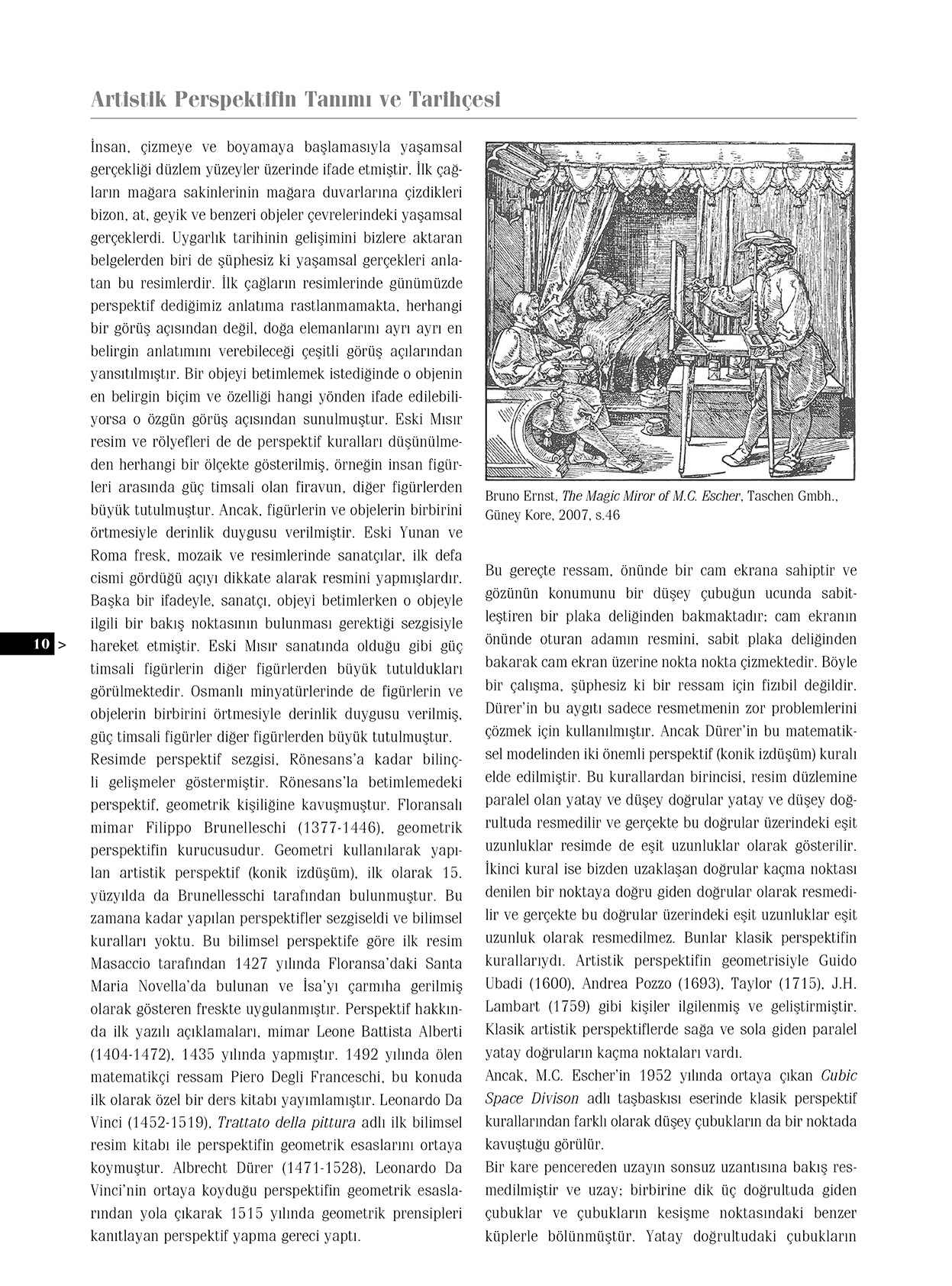
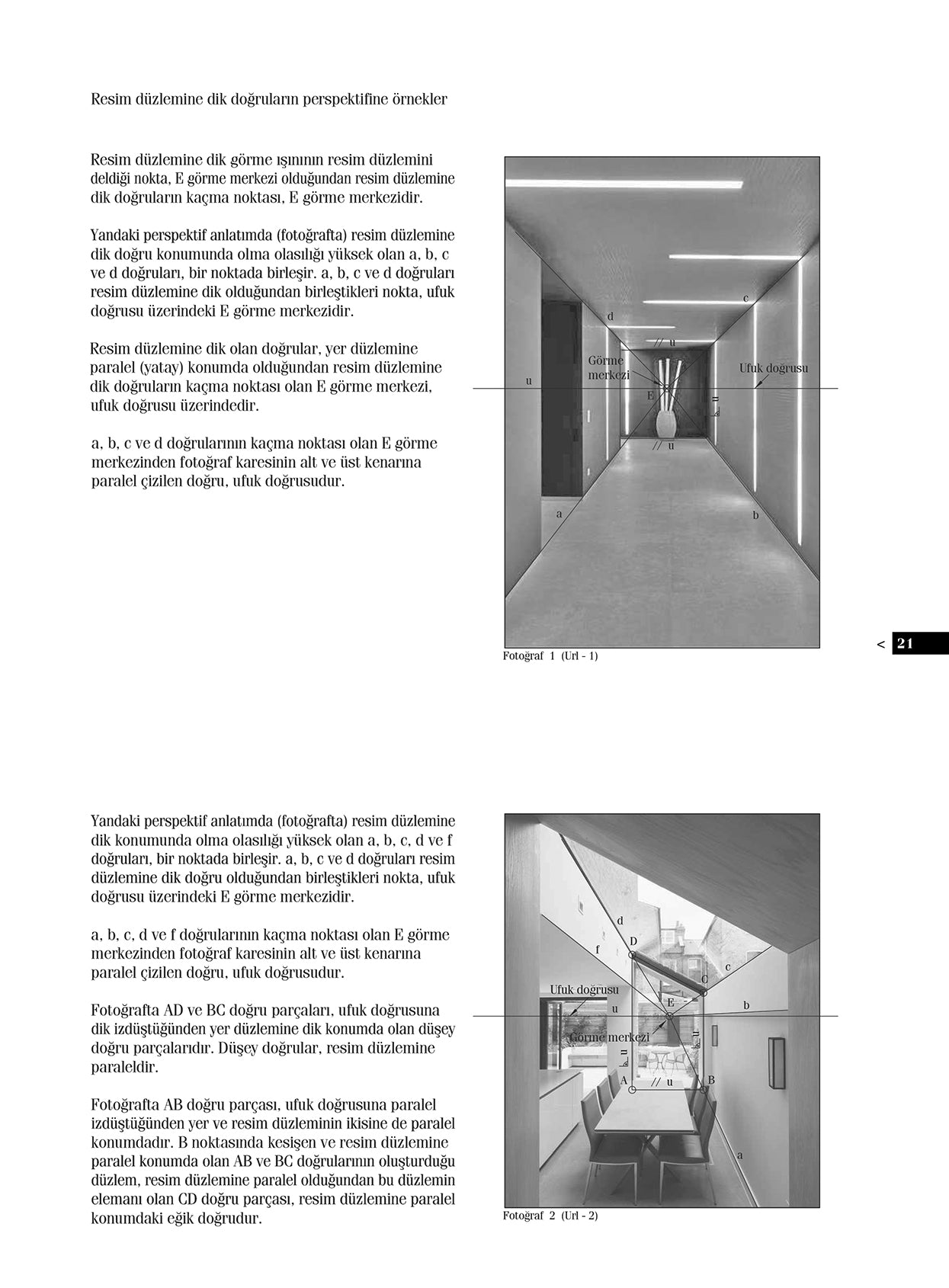
The figures in the book are supported by explanatory texts and indications of drawing directions to ensure better comprehension in addition to the descriptive text. In some figures, the solution to the problem is also provided in drawing stages for better understanding.
The book extensively covers the subject of reflections on mirror and calm water surfaces, which are commonly encountered, and the subject of shadow, which enhances perception by providing a sense of depth.
I believe that this book will assist architecture, interior architecture, landscape architecture, industrial product design students, and artists in solving perspective problems and obtaining real dimensions from photographs.”
Since "Artistic Perspective" is a complementary work to "Technical Drawing in Architecture," one of the fundamental reference sources for architecture and interior architecture education in Turkey, using these two books together will be more beneficial for the reader.
