
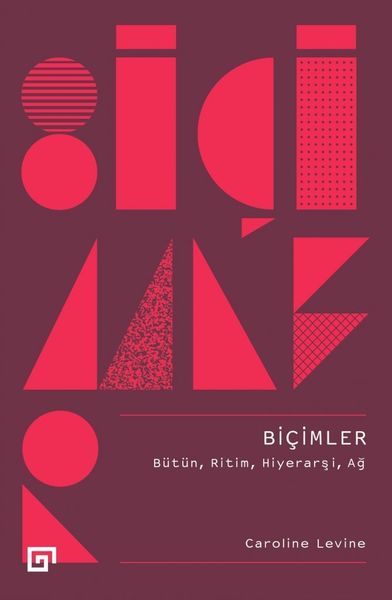
Formats
Yazar: Caroline Levine
Brand: Koç Üniversitesi Yayınları
Basım Tarihi: Nisan 2017
Basım Dili:
Sayfa Sayısı: 237Boyut: 13.5 x 20.0 cm
Out Of Stock
9786059389365
Product Description
2015 James Russell Lowell Prize, Modern Language Association
2016 Dorothy Lee Award for Outstanding Academic Achievement in Cultural Ecology, Media Ecology Association
One of Flavorwire’s 10 best academic titles of 2015
How can forms be related to their political, social, and historical contexts? Caroline Levine offers a new and compelling answer to this important question facing literary, critical, and cultural studies. According to Levine, forms organize not only works of art but also "life" in its broad sense: they overlap, contend, clash, cooperate, and ultimately construct our world. While examining how four main forms—wholeness, rhythm, hierarchy, and network—have shaped culture, politics, and academic knowledge in different eras, this book proposes insightful new ways to connect formalism with historicism and literature with politics.
Rereading formalist and anti-formalist theorists such as Michel Foucault, Jacques Rancière, Mary Poovey, and Judith Butler, Levine reveals the "formal story" at work behind numerous structures and works, from medieval monasteries to contemporary theme parks, from Sophocles's Antigone to Charles Dickens's Bleak House and the renowned television series The Wire.
Caroline Levine is the David and Kathleen Ryan Professor of Humanities in the Department of English at Cornell University.
