
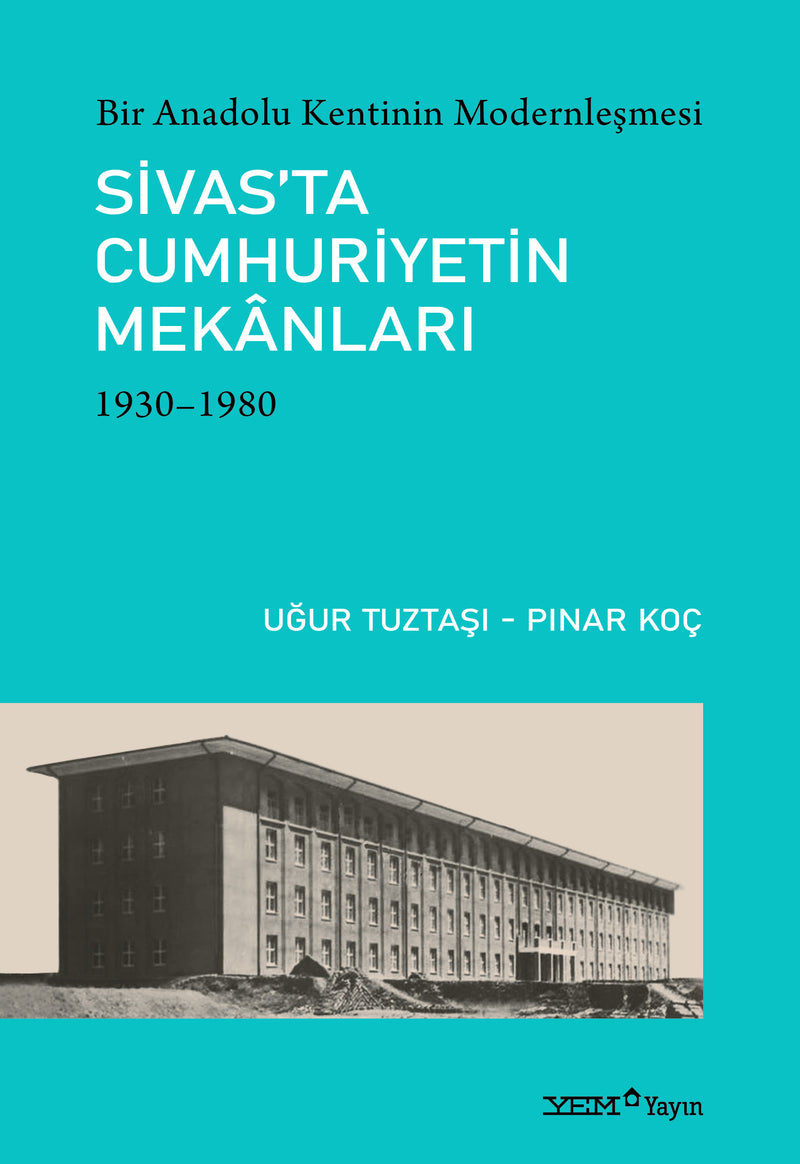
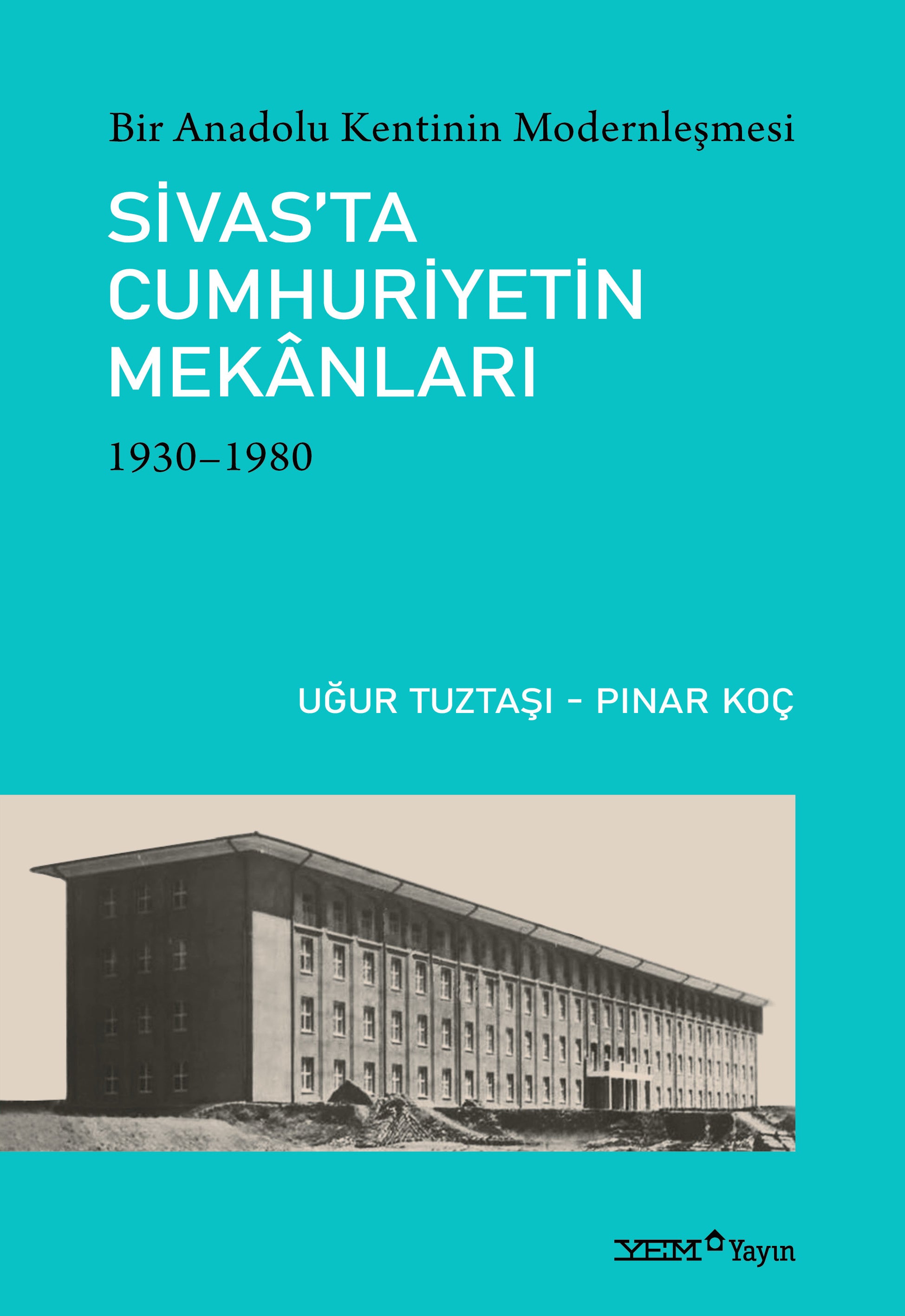



The Modernization of an Anatolian City: Republican Spaces in Sivas, 1930-1980
Yazar: Pınar Koç, Uğur Tuztaşı
Brand: YEM Yayın
Basım Tarihi: Aralık 2022
Basım Dili:
Sayfa Sayısı: 320Boyut: 16.5 x 24.0 cm
Out Of Stock
9786257008617
Product Description
The book “Modernization of an Anatolian City: Republican Spaces in Sivas, 1930-1980,” which presents a comprehensive inventory of Republican-era architectural works in Sivas, directed by Assoc. Prof. Uğur Tuztaşı and Dr. Pınar Koç, has been published by YEM Yayın.
Assoc. Prof. Uğur Tuztaşı and Dr. Pınar Koç describe the writing of this book, published with the contributions of SURTAŞ İnşaat ve Akaryakıt A.Ş., as follows:
“This study, which emerged from fieldwork, archival research, other documentation methods, and a continuously updated body of knowledge since 2016, aims to reveal the architectural situation of Sivas in the 20th century and to trace the modernization practices within the urban fabric. The universality of Modern Architecture, subjected to deconstruction, has been invalidated, and the 'modern' has produced its local wanderings primarily through locally established dialogue. Of course, the local is not just an architectural practice shown/selected as a deliberate form of presentation, but also a practice sensed/perceived in different spaces through local encounters. Therefore, the connection between local architectural corpus and Modern Architecture cannot be understood without an internalization process. In this context, this work, titled Modernization of an Anatolian City: Republican Spaces in Sivas, 1930-1980, goes beyond merely being a catalog, aiming to analyze the encounter and dialogue between modern and local in the performance of Sivas. In light of Mustafa Kemal Atatürk's words during his visit to Sivas, 'We laid the foundations of the Republic here,' and the modernizing dominance of the Sivas Railcar Workshop, one of the significant public initiatives of the Early Republican period, in an unknown space, this book is dedicated to the 100th anniversary of our Republic, to be celebrated on October 29, 2023…”
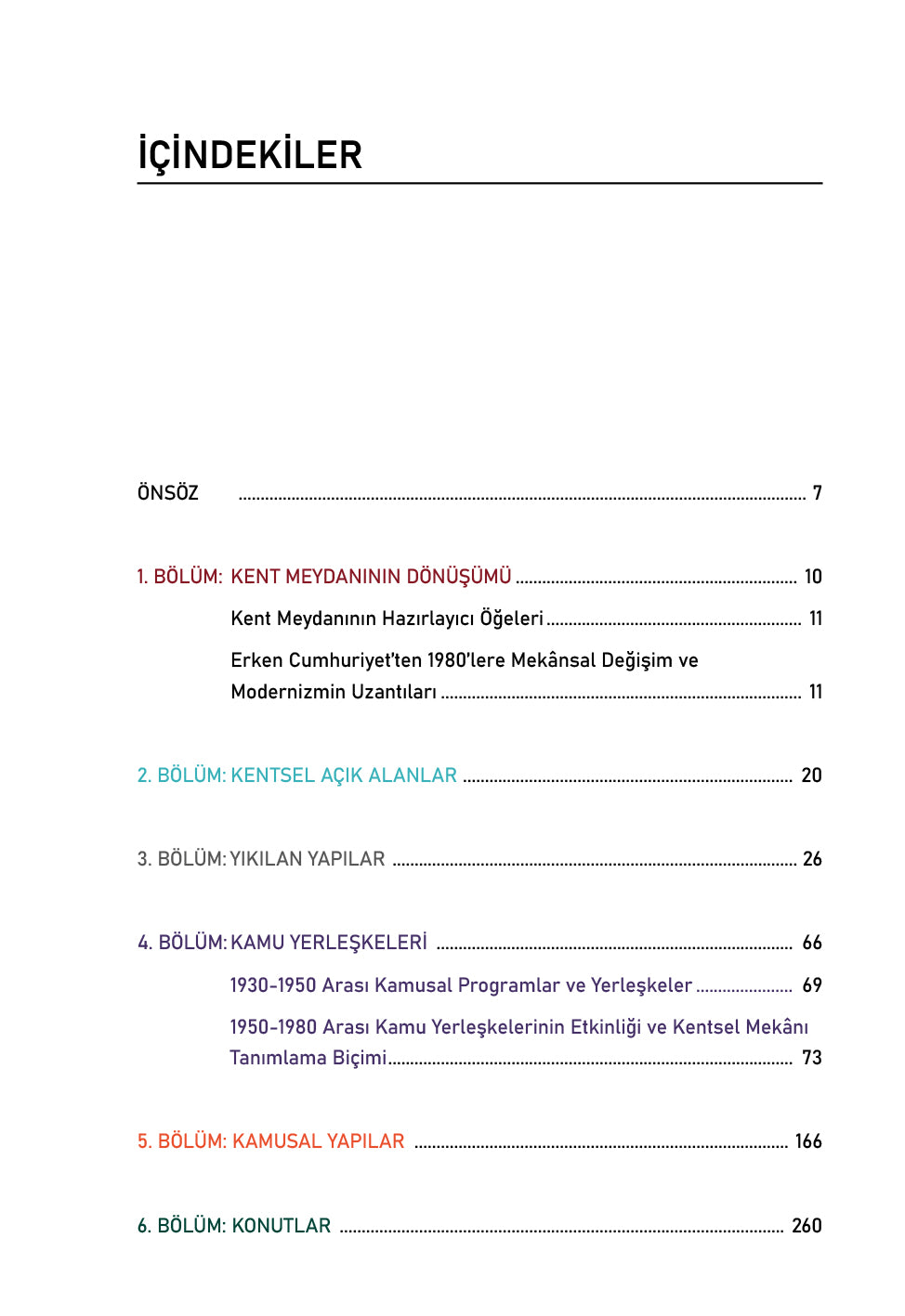
The book consists of six main chapters designed to decipher the experiments of modernization practice in Sivas in different spaces:
The first chapter, 'Transformation of the City Square,' is the core area most exposed to urban change, destruction, and reconstruction.
The 'Urban Open Spaces' chapter traces the greening of space, which is a new definition of public visibility.
The 'Demolished Buildings' chapter depicts structures built between 1930 and 1980 that were demolished for various reasons. This chapter also brings with it an irony. Unfortunately, some structures that were standing during the exhibition in 2018, the initial output of the study, were subsequently demolished and included in this group. Over a period of approximately four years, an accelerated demolition process took place for many buildings constructed in the 20th century. In short, the architectural flow in Sivas in the 20th century underwent a rapidly eroding process, and this book serves as a comprehensive documentation of this.
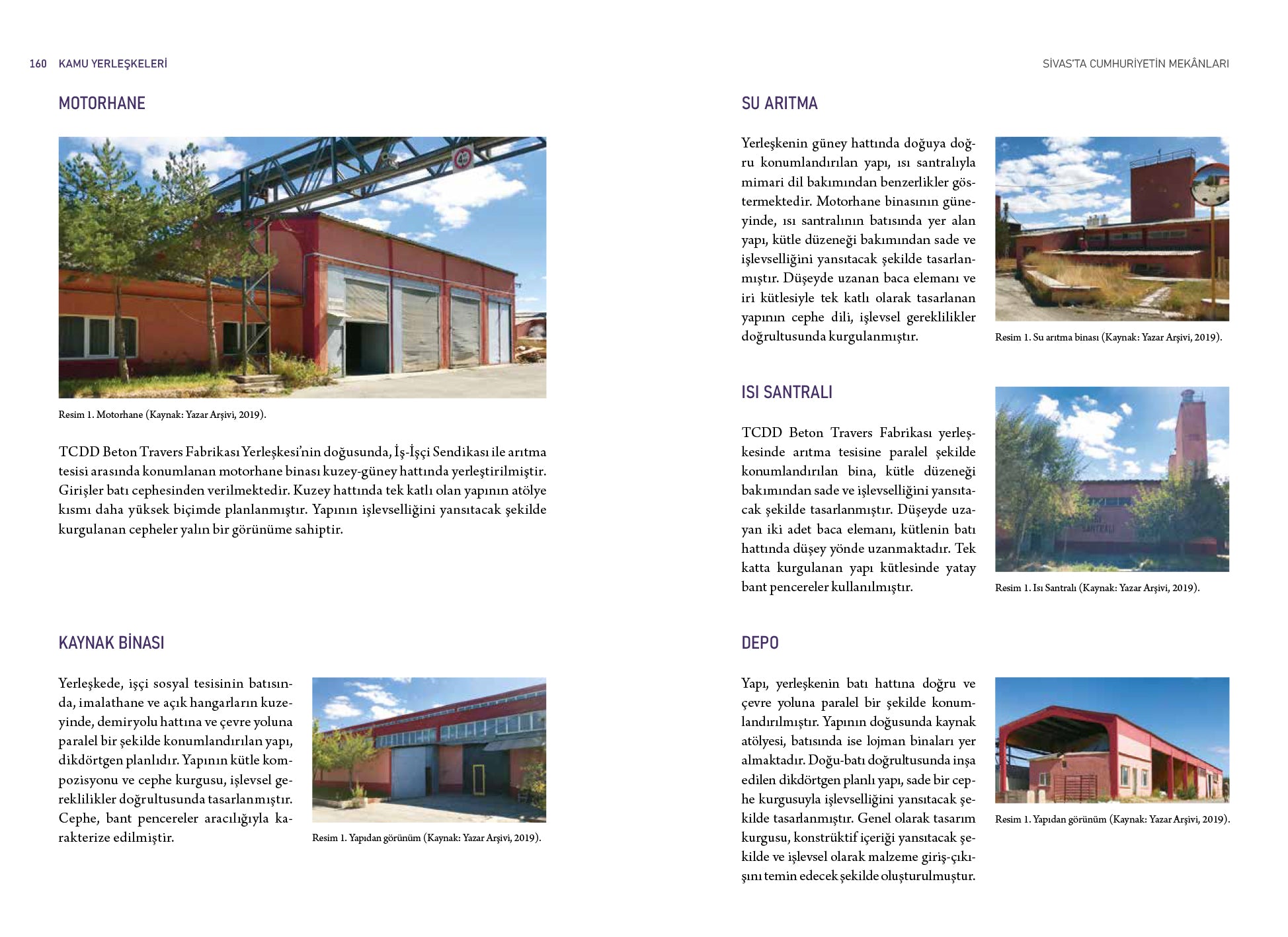
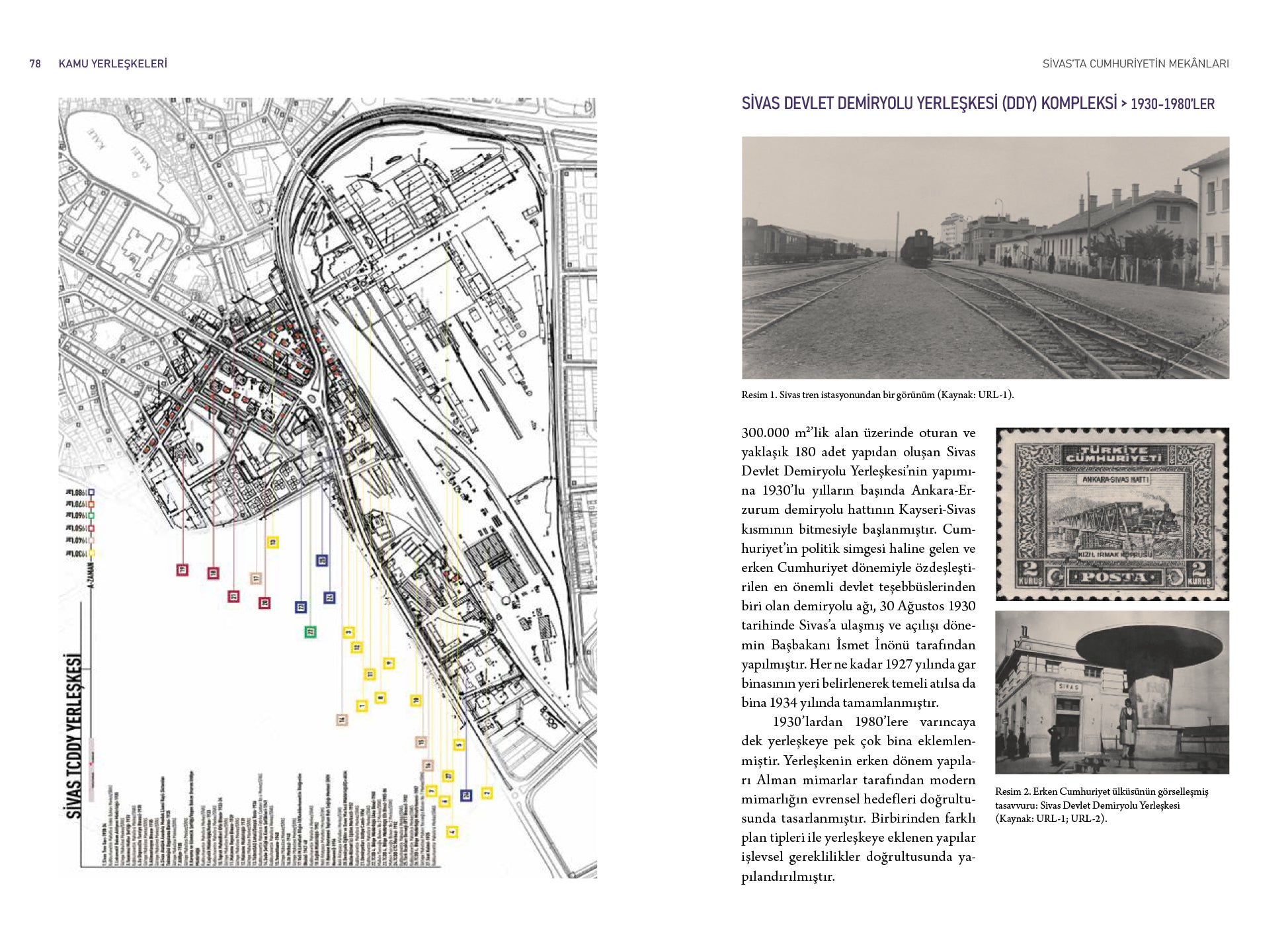
In the fourth chapter of the book, 'Public Settlements' in separate spaces are discussed. Important public institutional initiatives such as the State Railways Settlement, the Railcar Workshop Settlement, the Cement Factory and its Settlement emerged as modernizing tools of the Early Republican period in Sivas, while regional organizations like Highways and State Hydraulic Works, organized as provincial branches of public administration after 1950, were also transferred to the establishment in large parts.
The fifth chapter of the book, titled 'Public Buildings,' focuses on the effectiveness of public buildings in space and presents prominent building types such as business centers, schools, and hospitals, which represent the continuously growing public sphere in the city during the 20th century.
In the last chapter of the book, modern 'Residences' in the city are presented with a chronological approach. Attention has been paid to the diversity in this content, ranging from rental apartments to cooperative projects.
