

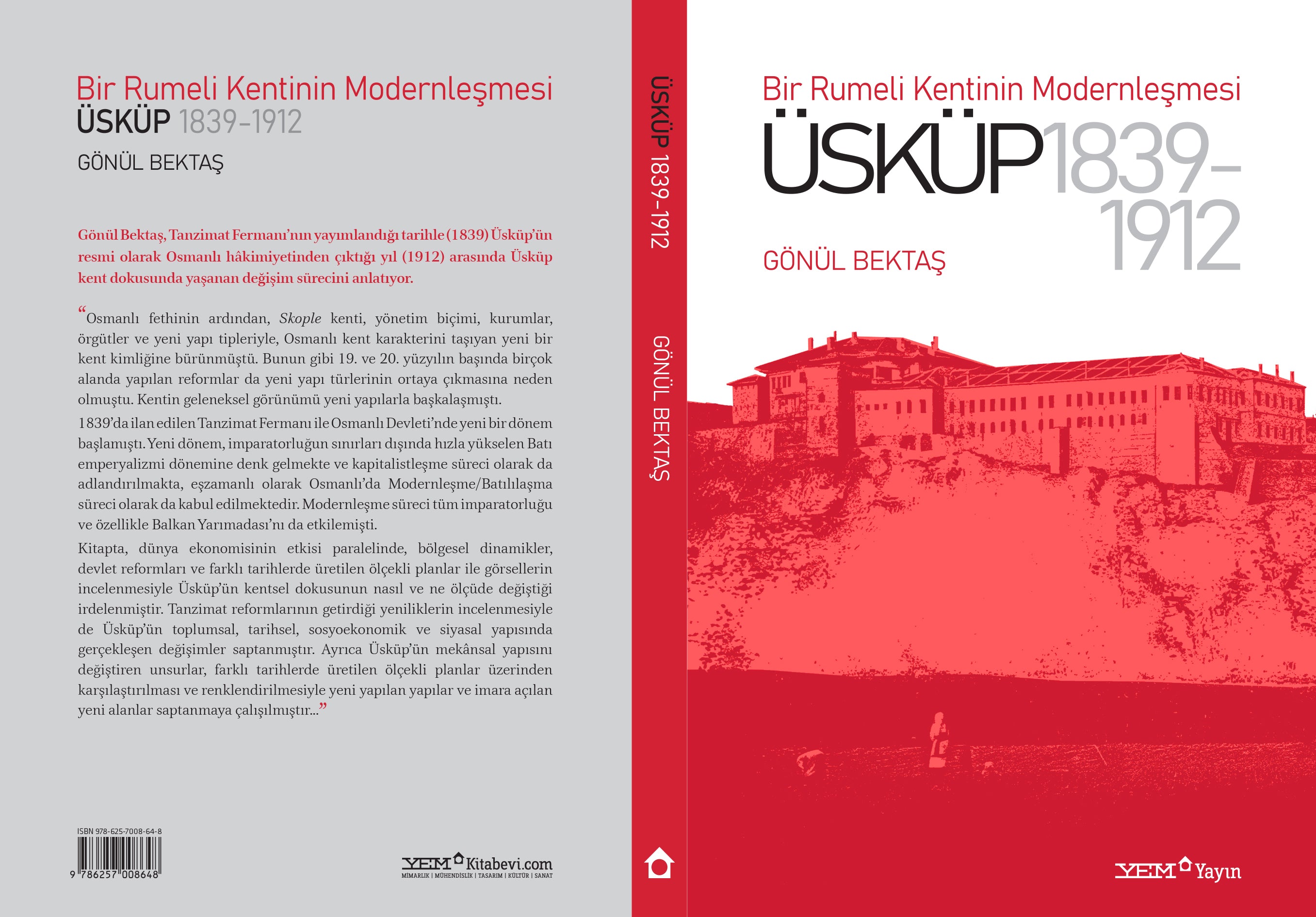
Modernization of a Rumelian City: SKOPJE 1839-1912
Yazar: Gönül Bektaş
Brand: YEM Yayın
Basım Tarihi: Mayıs 2023
Basım Dili:
Sayfa Sayısı: 208Boyut: 16.5 x 24.0 cm
Out Of Stock
9786257008648
Product Description
Gönül Bektaş's book, Modernization of a Rumelian City: SKOPJE 1839-1912, published by YEM Publications, describes the process of change and development in the urban fabric of Skopje between the date of the promulgation of the Tanzimat Edict (1839) and the year Skopje officially left Ottoman rule (1912).
In the book, Gönül Bektaş examines how and to what extent Skopje's urban fabric changed during that period, in parallel with the impact of the world economy, by analyzing regional dynamics, state reforms, and scaled plans and visuals produced at different times.
The story of the book is based on Gönül Bektaş, who was born in Skopje, beginning to work on the period and the city after discovering in a book she acquired in Skopje in 2012 that her grandfather's name was listed as 'founder of the theater' and that the theater was established in 1906.
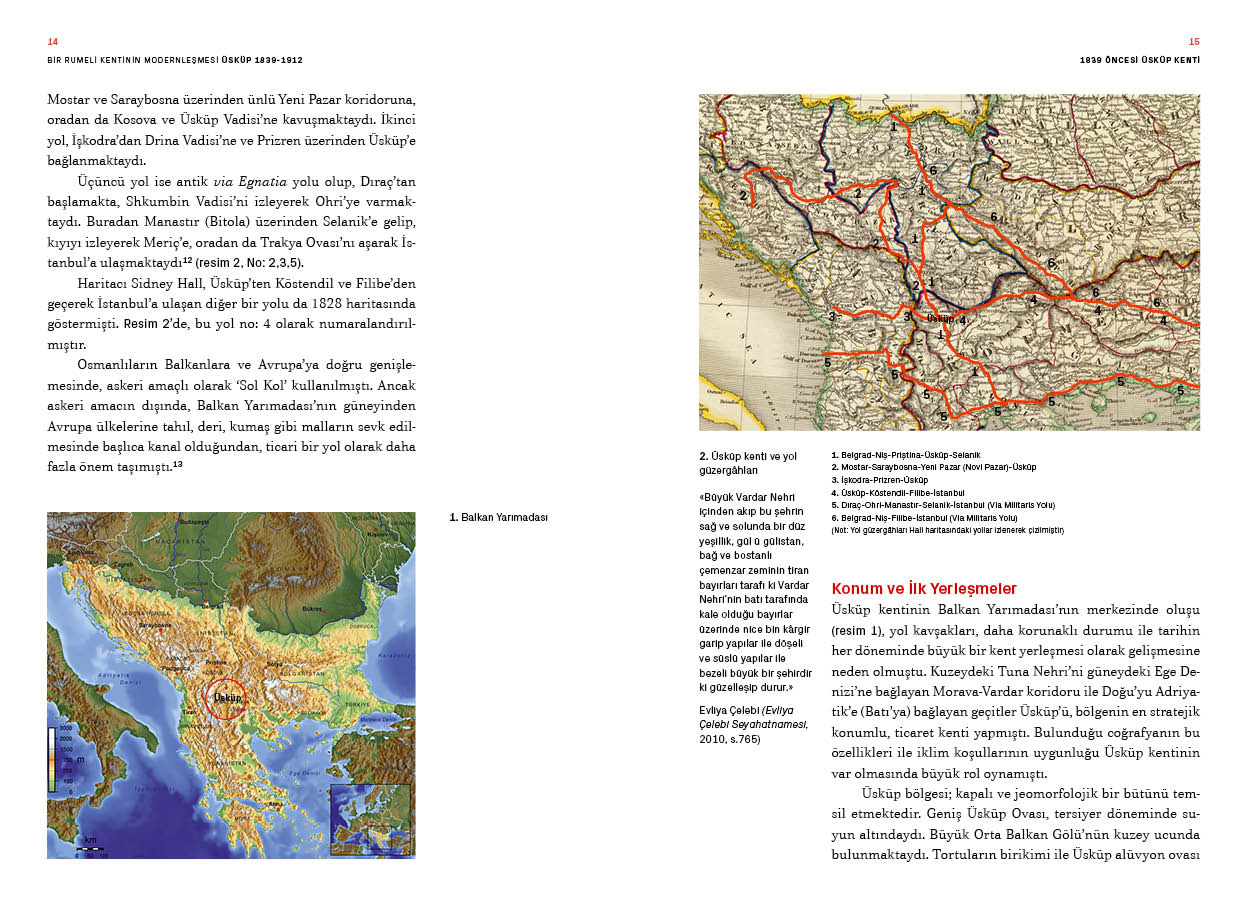
Bektaş describes her research on the city of Skopje, located in the heart of the Balkans at the crossroads of roads connecting the Aegean to Europe and the East to the Adriatic Sea, and the content of the book as follows:
“A new era began in the Ottoman Empire with the Tanzimat Edict, proclaimed in 1839. This new era coincided with the period of rapidly rising Western imperialism outside the empire's borders and is also referred to as the process of capitalization, simultaneously considered the process of Modernization/Westernization in the Ottoman Empire. The modernization process affected the entire empire, especially the Balkan Peninsula. Starting from the second half of the 18th century, with the development of trade and waves of migration from lost territories in the 19th century, many Muslim and non-Muslim populations flocked to cities in the Balkans. The change I mentioned, especially from the last quarter of the 19th century onwards, with the development of transportation technology, also occurred in the Macedonian region, which forms the heart of the Balkan lands. Many cities, especially Thessaloniki, Skopje, Bitola, Kavala, and Drama, entered a process of change and acquired their unique structures and characteristics.
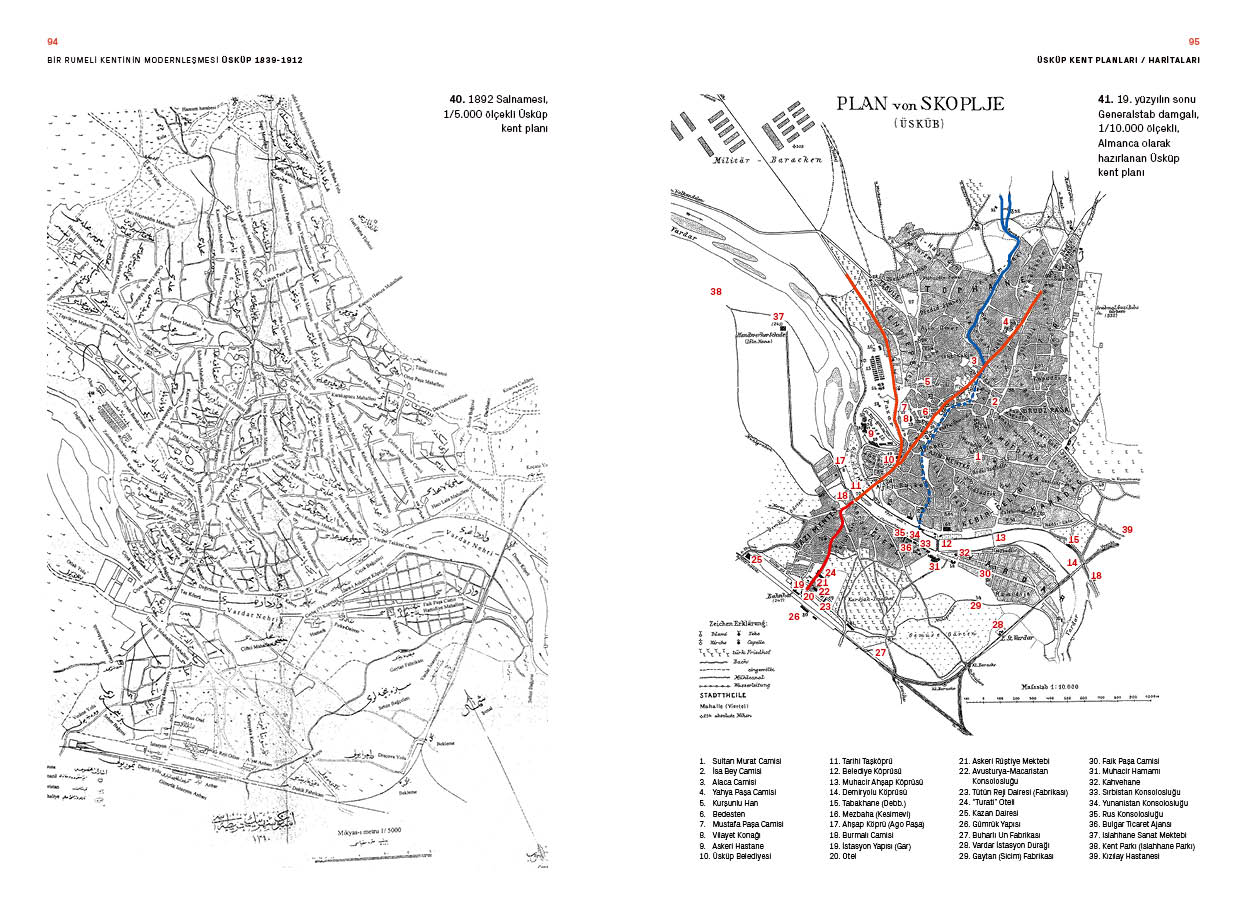
By examining the innovations brought by the Tanzimat reforms, changes in Skopje's social, historical, socioeconomic, and political structure were identified. Furthermore, elements that altered Skopje's spatial structure, new constructions, and newly developed areas were attempted to be identified by comparing and color-coding scaled plans produced at different times.
The importance of this study, unlike previous works, is that it addresses the process of change in the urban fabric of Skopje between 1839 and 1912. While Skopje in the 15th and 16th centuries gathered greater interest from researchers, periods when the city was striving for a new era and undergoing change, such as the late Middle Ages and the 18th, 19th, and 20th centuries, have been almost entirely overlooked. Yet, this new era of change that began in the 19th century is as important as the transformation of the city of Skople into Ottoman Üsküp in the 14th century.
After the Ottoman conquest, the city of Skople adopted a new urban identity with Ottoman urban characteristics through its form of government, institutions, organizations, and new building types. Similarly, reforms in many areas in the 19th and early 20th centuries led to the emergence of new building types. The traditional appearance of the city was transformed by new structures.
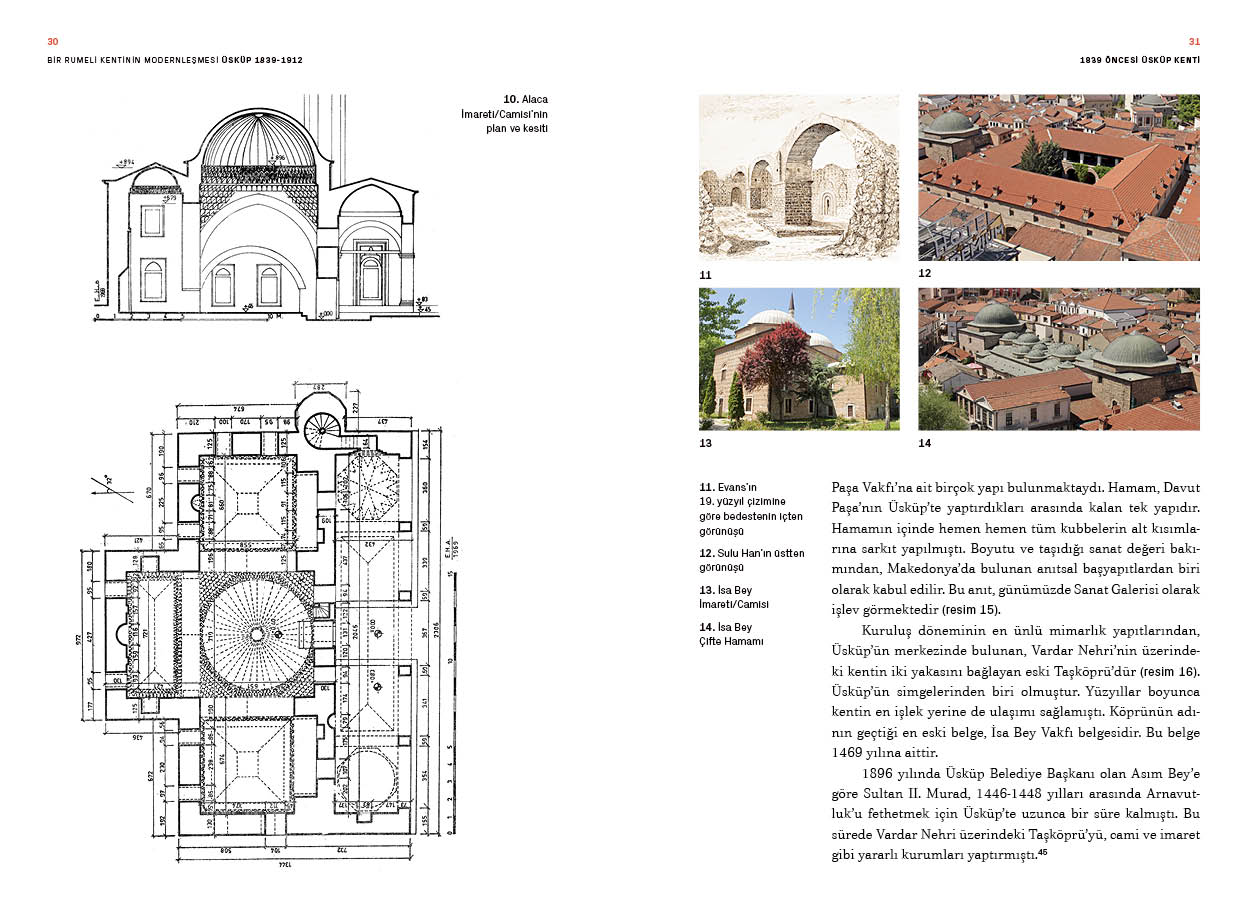
To identify the change, it was necessary to understand Skopje's physical structure and change up to the 19th century. For this reason, the city was examined in detail chronologically from prehistory to the beginning of the 19th century, focusing on its historical and social dimensions; its physical characteristics were tried to be revealed through visual materials, plans, and maps. All these were considered a foundation for a better understanding of the city's later periods.
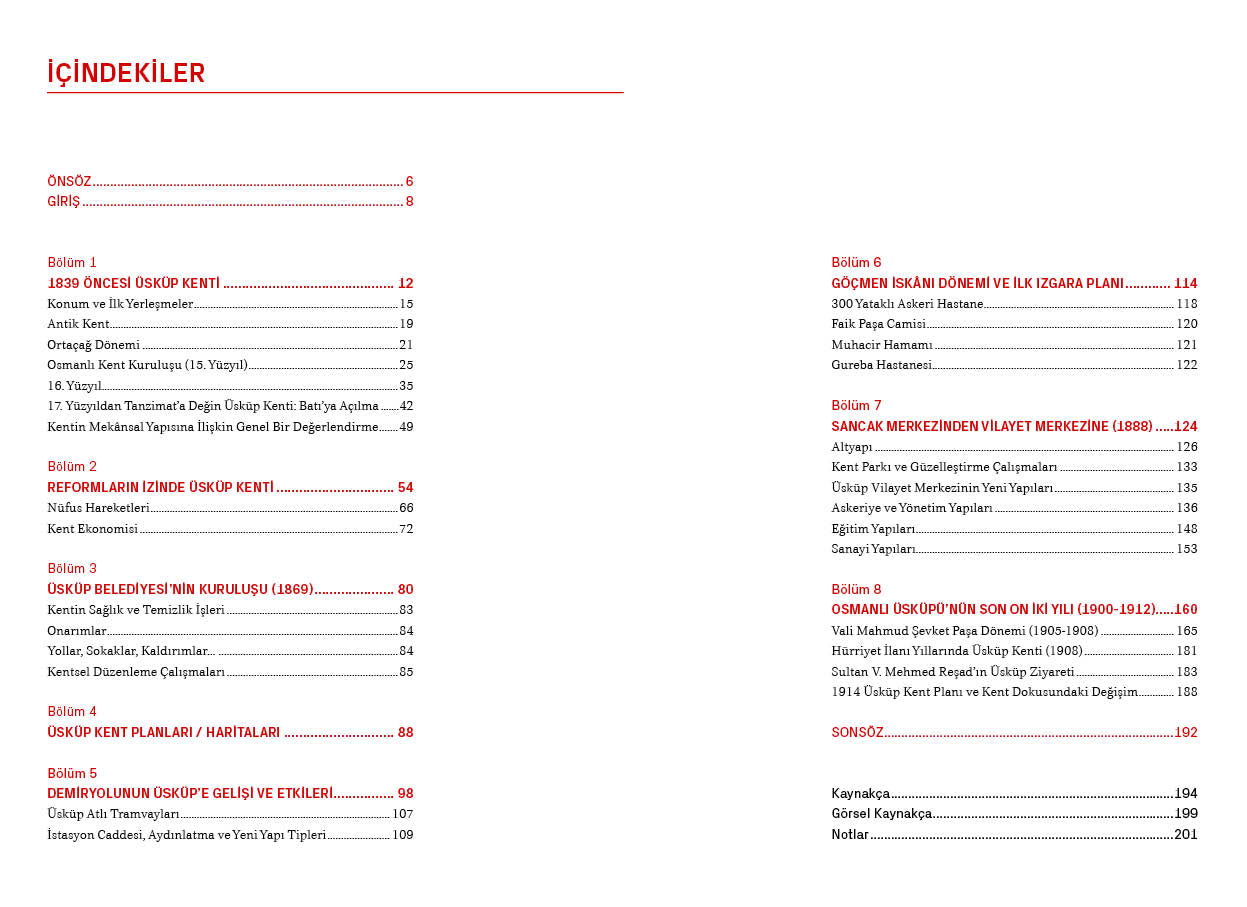
The book begins by reviewing Skopje's location, road system, and urban structure from the earliest settlements in 6400–5800 BCE until 1839, the year the Tanzimat Edict was proclaimed. In the second chapter, the extent to which the innovations brought by the Tanzimat reforms affected Skopje's social structure and the direction of change are attempted to be determined by examining the changes in the historical, socioeconomic, and political structure. The third chapter discusses the establishment of the Municipality of Skopje in 1869, thirty years after the Tanzimat Edict, and its contributions to the city. It examines how public services previously unseen, such as street cleaning, tree planting, infrastructure improvement, and road regulation, were evaluated by municipal authorities.
To find the beginning of the first planning practice, the plans/maps made in Skopje are presented in the fourth chapter as the initial data for planning. These plans/maps not only show the existing state of the city but also indicate that a level of organization and planning was reached in development activities. In this study, the primary importance of scaled urban plans/maps produced at different times lies in their being crucial sources for determining how and to what extent Skopje's urban fabric changed.
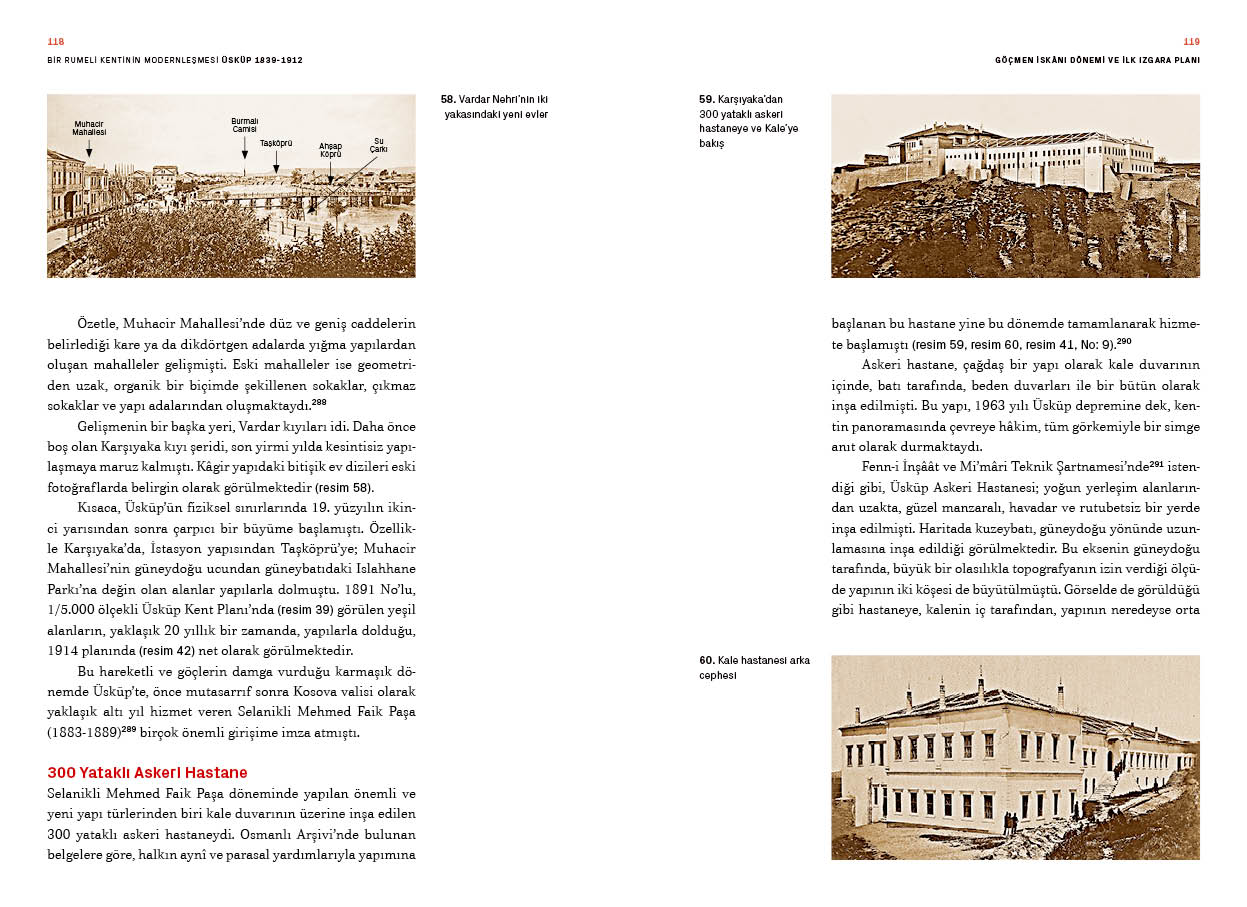
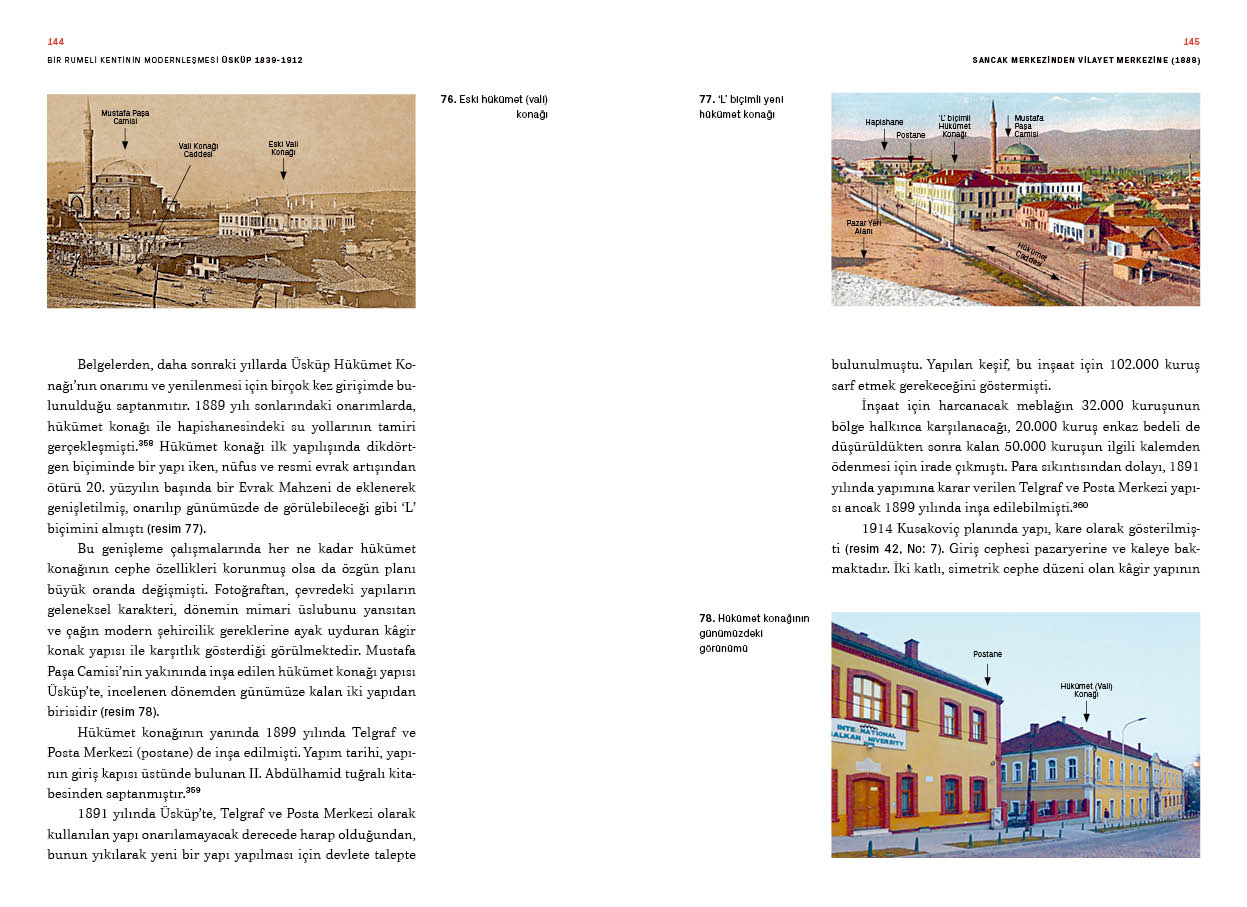
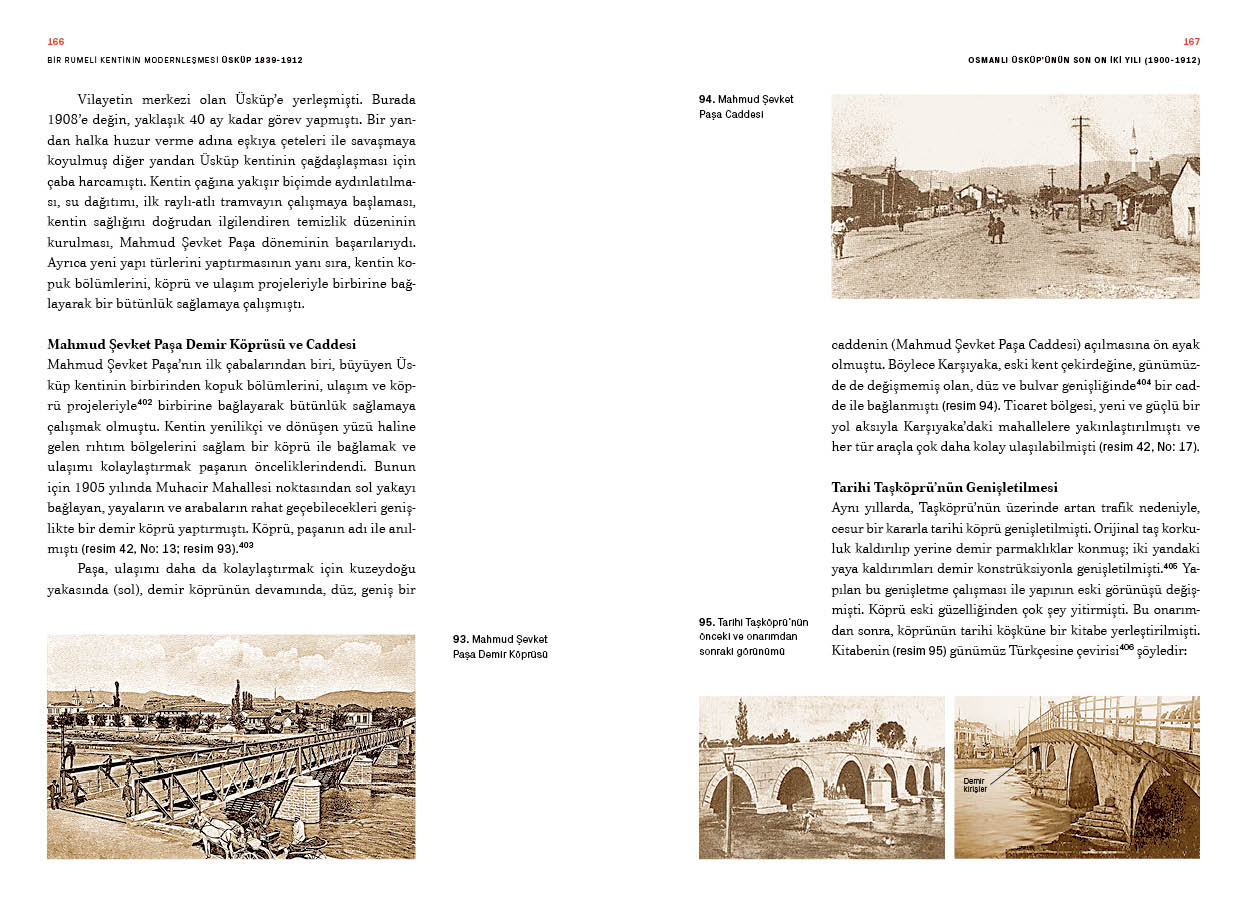
Physical changes in Skopje's urban space occurred in four distinct phases between 1873 and 1912. These phases are, respectively: the arrival of the railway in Skopje, the beginning of migration waves to the city after the Ottoman-Russian War, Skopje becoming the center of the Kosovo vilayet in 1888, and the last twelve years of Skopje. The situation of these phases, which are identified with the concept of modernization and witnessed significant physical changes in the urban area, is examined in the fifth, sixth, seventh, and eighth chapters. Finally, in the ninth chapter, after a brief generalization-summary of the study, the initiatives taken at the beginning of modernism in Skopje are attempted to be related to current developments..."
The book, edited by Burçin Yılmaz, with cover design by Çağıl Bektaş, and graphic design by Resul Atabay, promises to take those who wish to trace the footsteps of Turkish-Ottoman culture and architectural heritage in the Balkans, especially Balkan immigrants, on a historical journey to their homelands.
