
Natural Stone Facades / Planning Principles – Projects and Buildings
Yazar: Konstantin Krüger
Brand: STONELINE Yayınları
Basım Tarihi: Temmuz 2022
Basım Dili: ["Turkish"]
Sayfa Sayısı: 304Boyut: 22.5 x 28.0 cm.
In stock
9786057344700
Product Description
STONELINE Publications, established by STONELINE Yapı Ürünleri, which has been serving the natural stone sector for 25 years, has published its first book, Natural Stone Facades / Planning Principles – Projects and Structures.
The book, authored by Architect-Editor Konstantin Krüger, is enriched by texts from Philipp Meuser (Prof., Architect), Hermann Graser (President of the German Natural Stone Association), and Tobias Nöfer (Architect).
In the book, in addition to informative texts on theory and practice, selected projects from international architectural offices are examined one by one by Konstantin Krüger, presented with detailed drawings, photographs, and texts explaining the design principles. Among the 23 projects selected from 15 different world cities, including Istanbul, Izmir, and Muğla, are projects from five Turkish architectural offices (EAA-Emre Arolat Architecture, Atelier Han Tümertekin, Erginoğlu&Çalışlar, Teğet Mimarlık, DDA-Dilekci Mimarlık).
Natural Stone Facades aims to both demonstrate the diversity of natural stone application as a material and to create a discussion platform to guide its correct and appropriate use. It also aims to facilitate the collaboration between the investor (client), architect, and stone supplier company, which is of great importance, especially in the initial stages of planning, by drawing attention to its significance.
The book consists of five main chapters covering current design trends and technologies in facade design with natural stone, references and fundamental knowledge from architectural history, design methods, comprehensive and original examination of built structures and their facades, the journey of natural stone from block to structure, and main stone types:
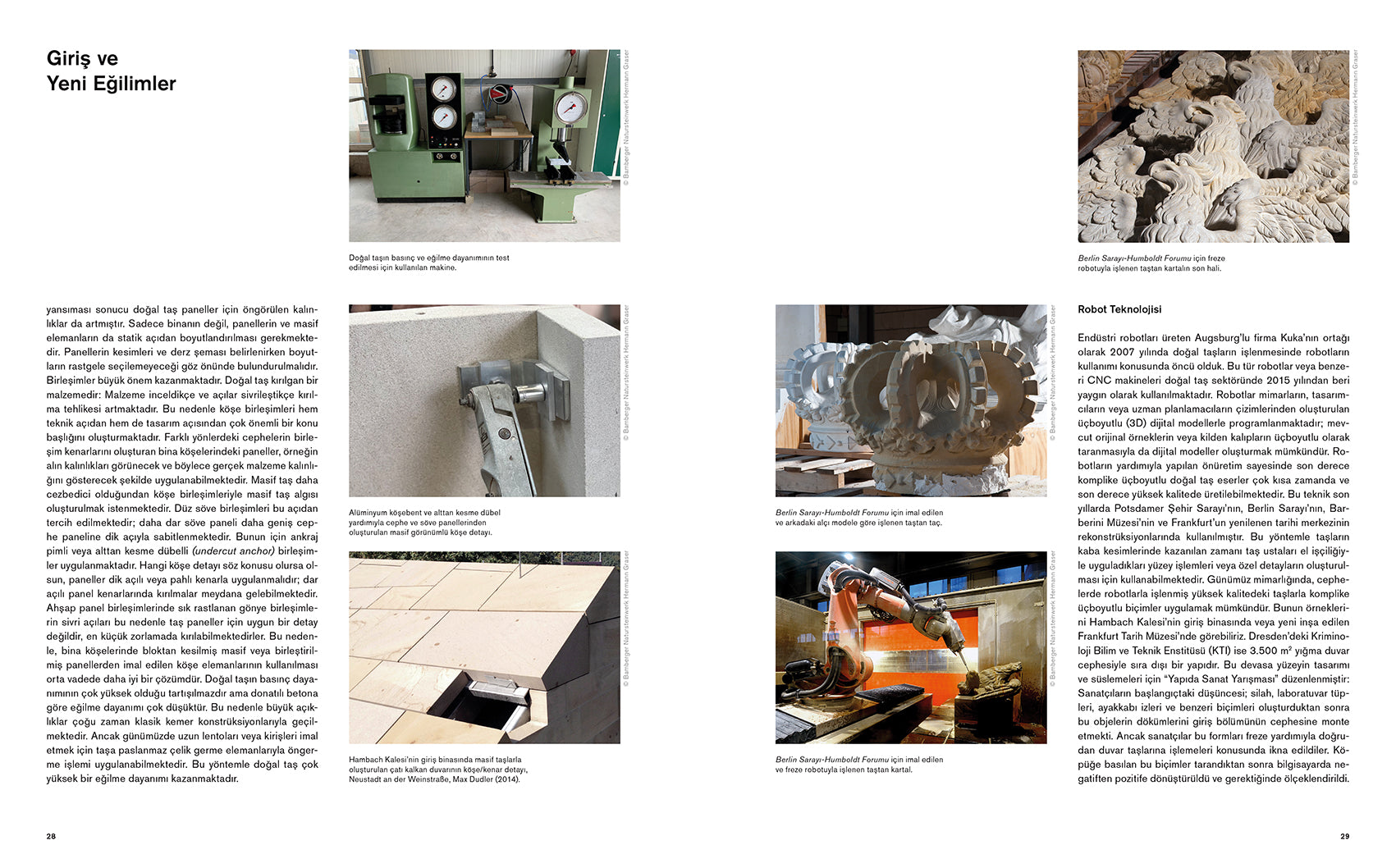
Introduction to the Subject and New Trends: In this chapter, Hermann Graser takes the reader on a broad journey from the still-valid advantages of natural stone as a building material to current applications, from traditional construction techniques to contemporary manufacturing methods. Under this heading, the advantages and disadvantages of the main facade construction types are introduced in relation to building construction methods, and the combined use of different construction types in the same project is explained with examples to adhere to the design.
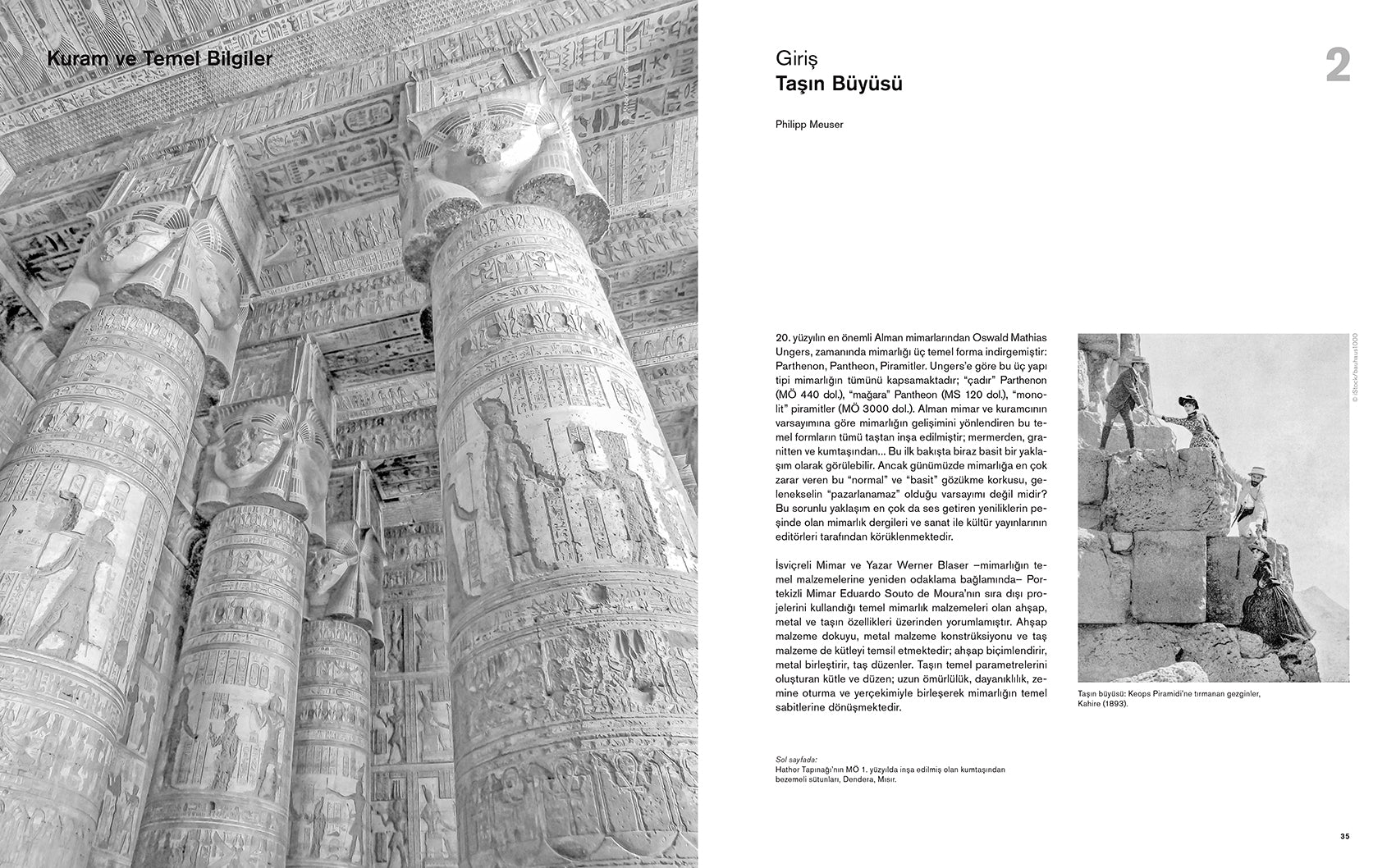
Theory and Fundamental Knowledge: Considering the thousands of years of history of stone as a building material, Philipp Meuser seeks an answer to the question "Does contemporary architecture need to break its connection with this traditional material?" and concludes that it does not.
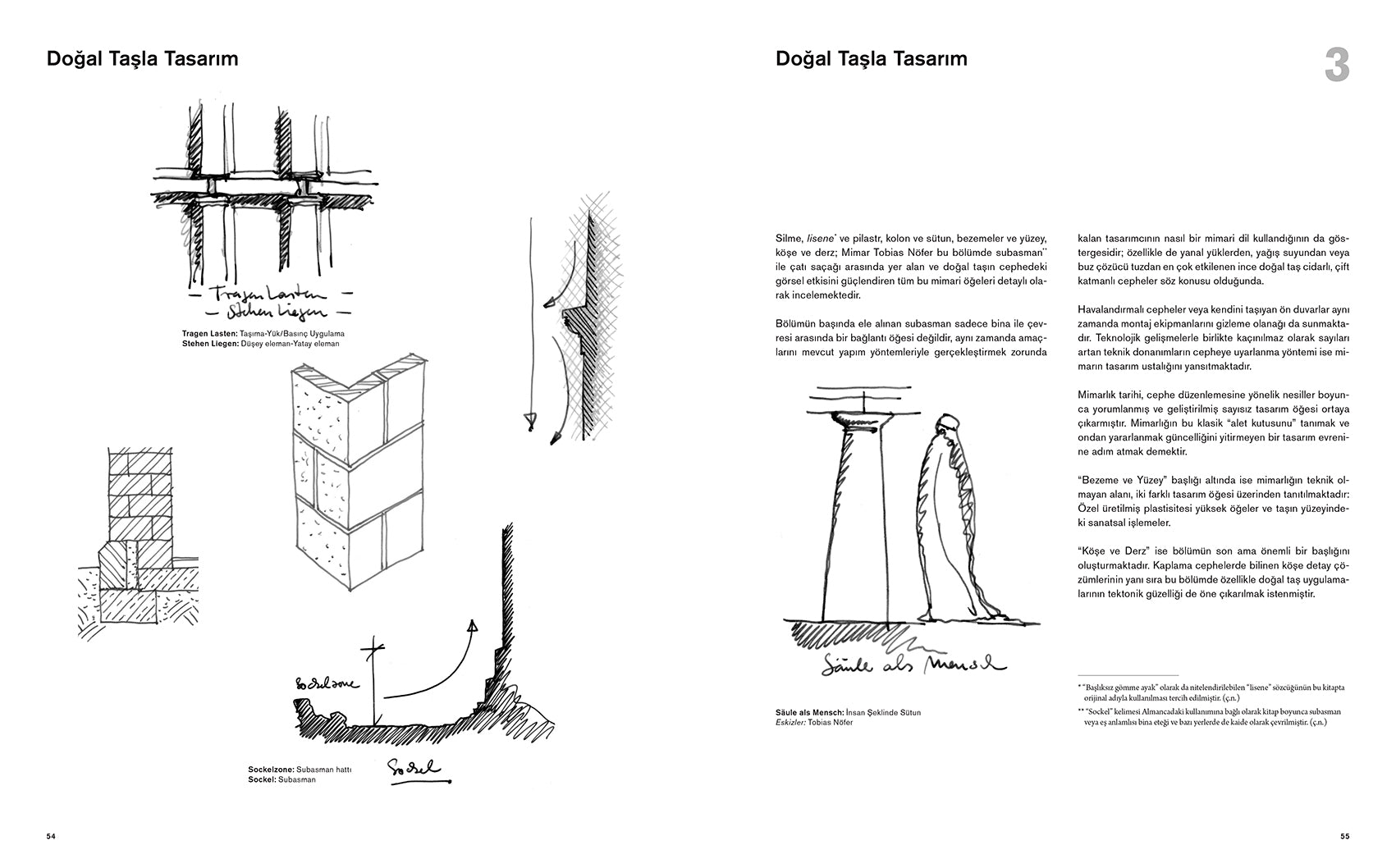
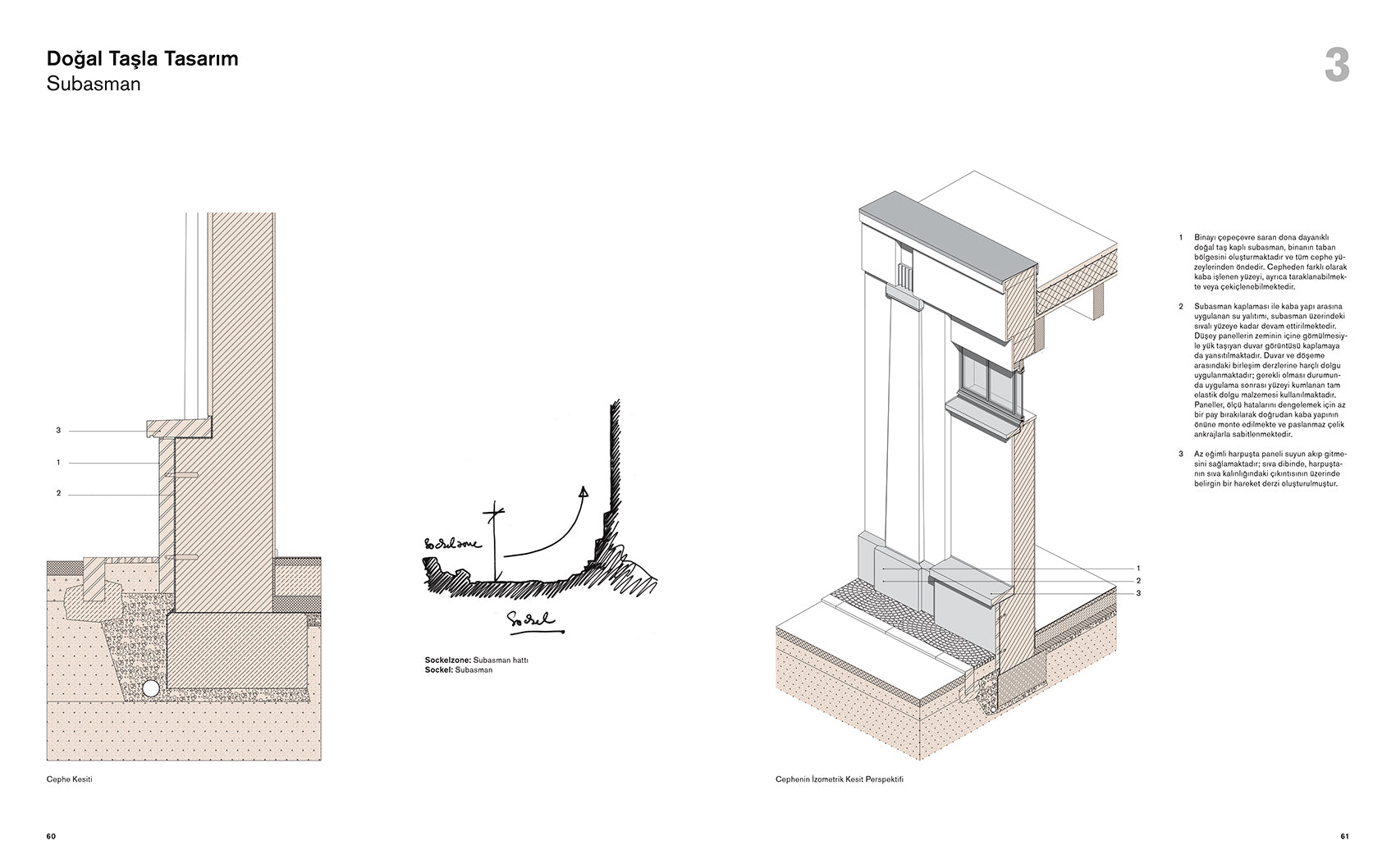
Design with Natural Stone: Tobias Nöfer, as a continuation of the subject, closely examines details such as cornices, pilasters, columns, decoration and surface, corners and joints, located between the plinth and the roof eave, both in terms of classical form language and plasticity in shaping.
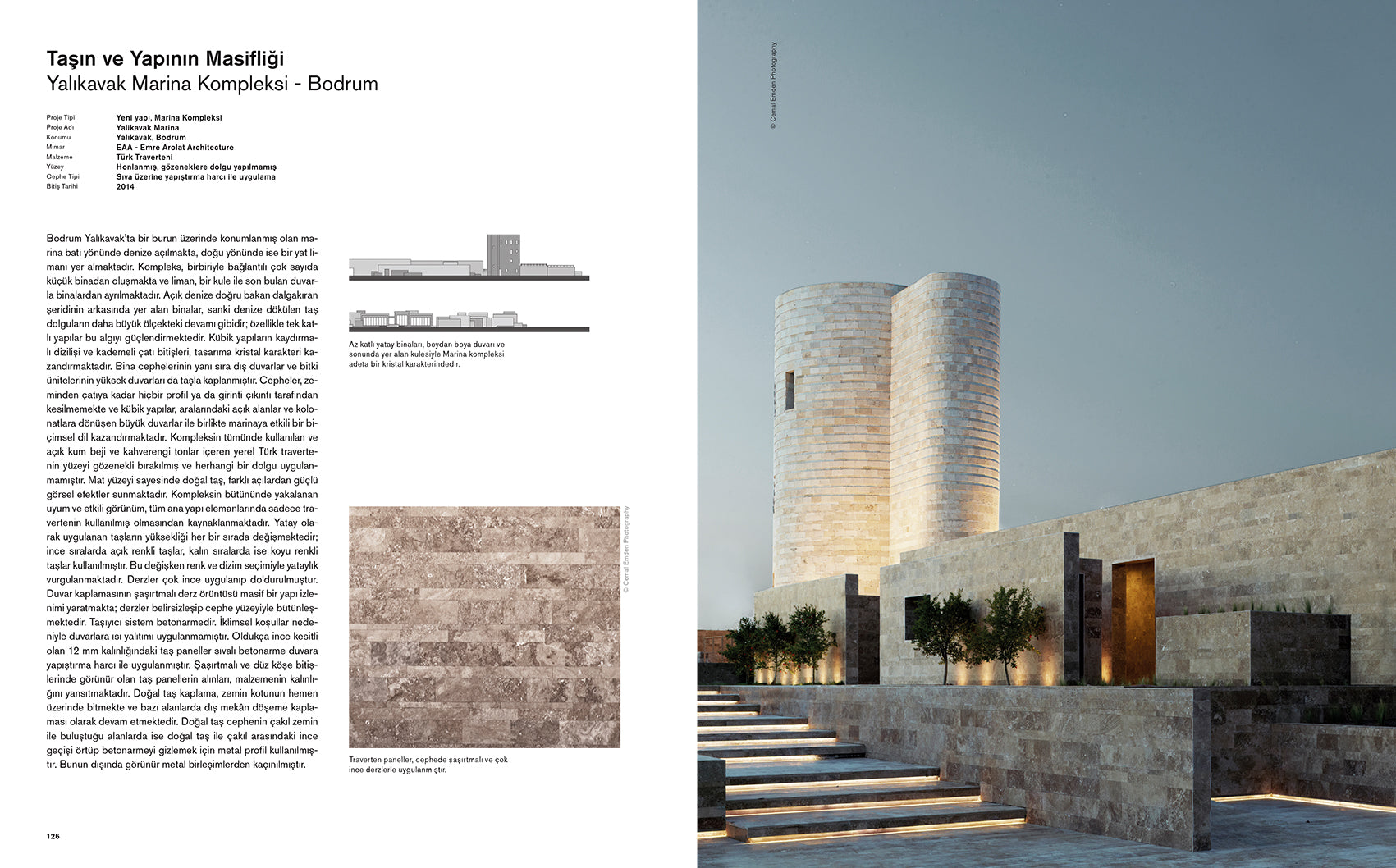
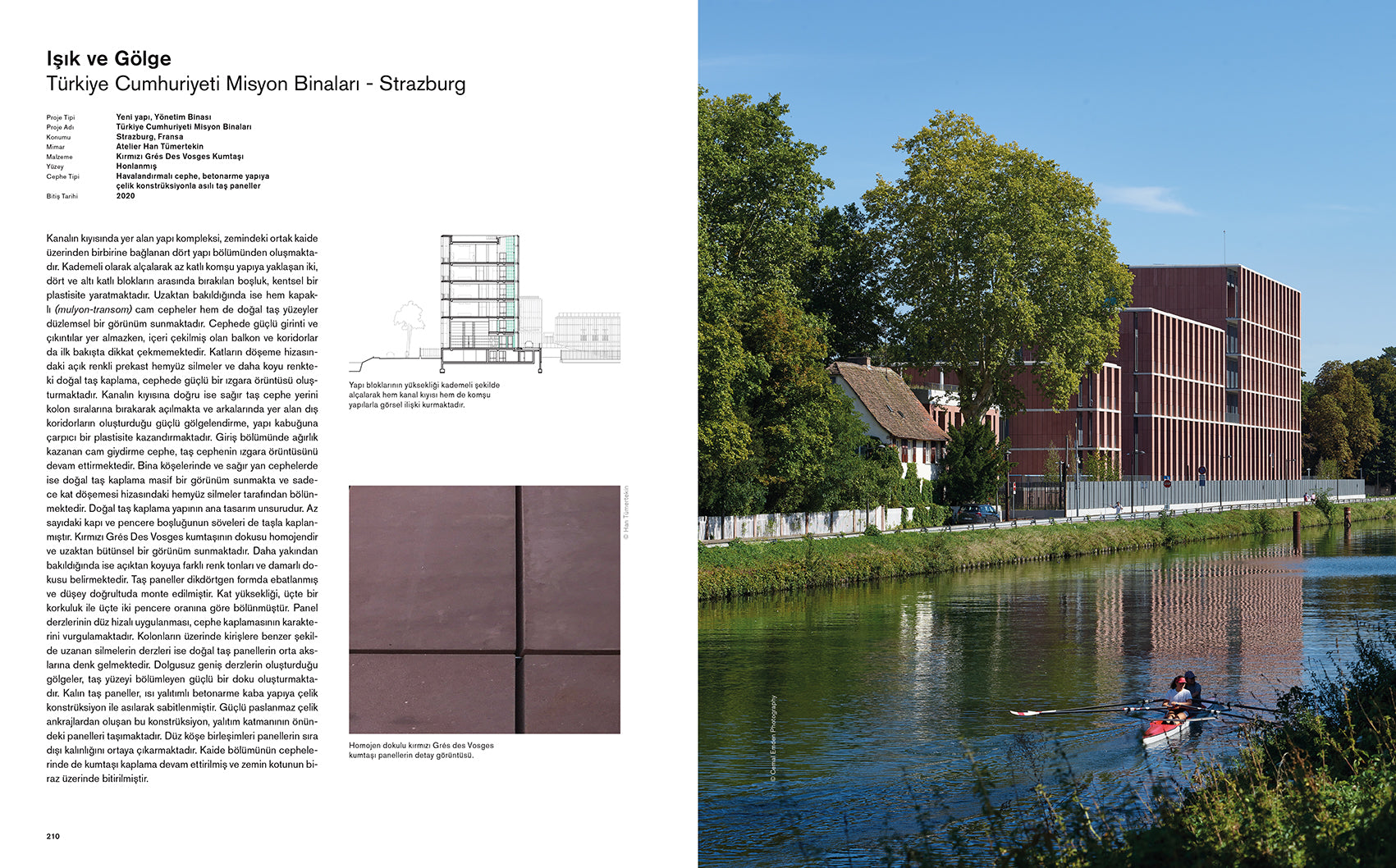
Structures and Facades: This chapter includes projects built in the last 20 years, as well as extensions, renovations, repairs, and reconstructions. The wide range of projects, from two-story gable-roofed houses to multi-story residences, includes different typologies such as residential, office, hotel, school, and museum built with reinforced concrete frame systems. The selected projects exemplify different facade types such as front walls, ventilated stone-clad facades, or self-supporting massive elements. With texts, photographs, and captions, each project is outlined almost from a city planning scale to joint details, and the relationship between design and material is examined. The projects are classified and examined based on their design approaches as those with relief effects, emphasis on massiveness, impressive location in terms of scale and positioning from a distance, unique relationships with their environment, and use of light and shadow effects.
Extraction, Processing, and Types of Natural Stone: In the final chapter, Graser and Krüger explain the processes natural stone undergoes from quarry to cladding and its main types with examples. The book concludes with example application plans at the end.
Written in a language that even non-architect readers can easily understand, with texts accompanied by nearly 1,000 photographs and technical detail drawings, the book thoroughly informs the reader about natural stone, although its focus is on its use in facades.
The book, prepared for publication under the coordination of Gülçin İpek (Architect), Publishing Director of STONELINE Publications, was translated from German into Turkish by Zuhal Nakay (Architect). The Translation Review and Technical Consultancy were provided by Neslihan Güçmen (Architect), Translation Consultancy by Dr. Serkan Angı (Geological Engineer) and Sinan İzgi (Architect), and the Art Consultant of the book is Cem Günübek.
STONELINE Yapı Ürünleri aims to promote natural stone, enrich the literature in this field, and support academic research that serves as a resource, by establishing a publishing house with a sense of social responsibility and publishing books according to a program.
