
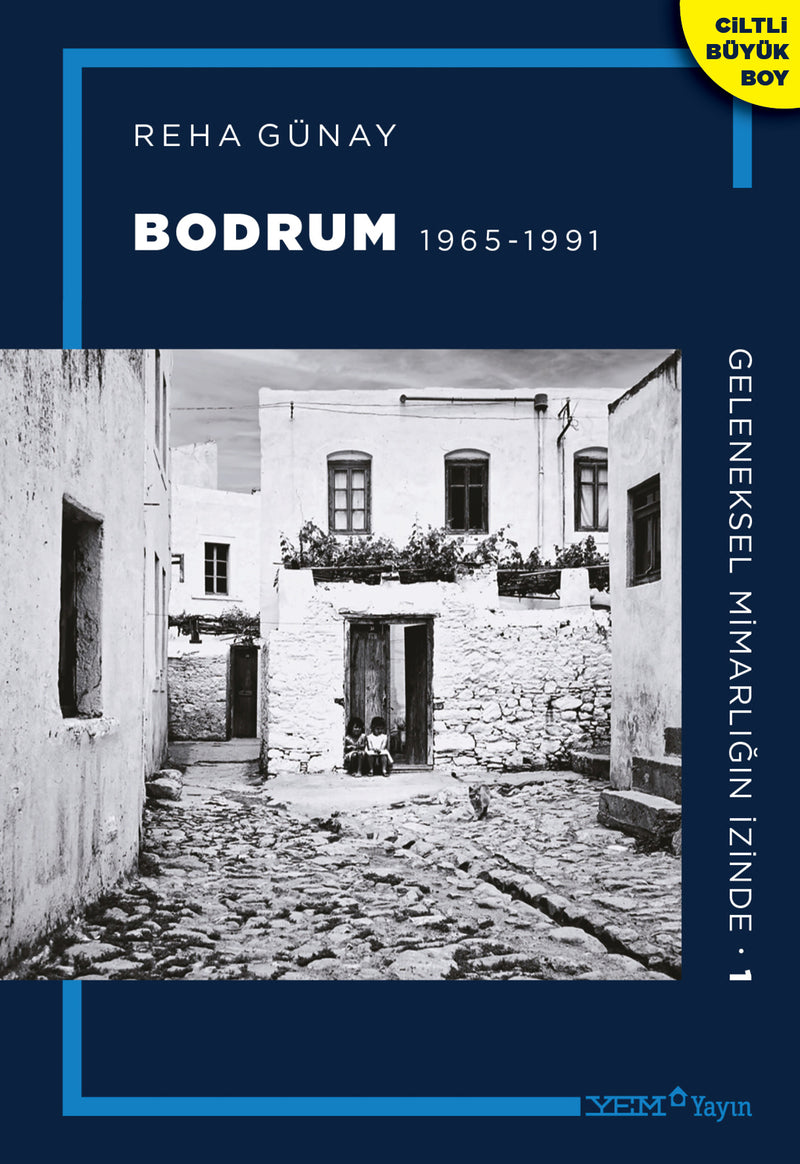
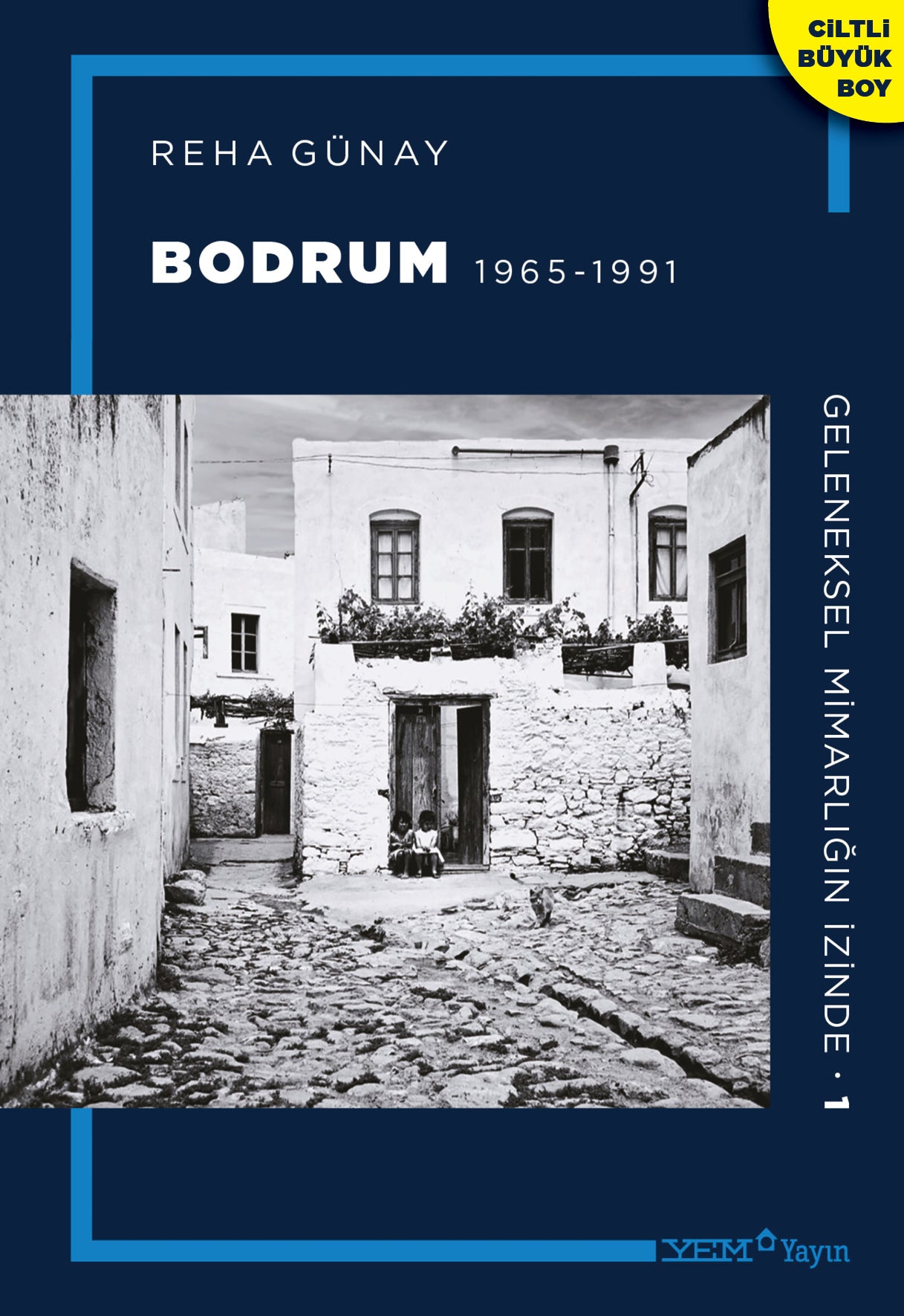
In Pursuit of Traditional Architecture 1: BODRUM 1965-1991 (Hardcover, Large Format)
Yazar: Reha Günay
Brand: YEM Yayın
Basım Tarihi: Kasım 2023
Basım Dili: ["Türkçe"]
Sayfa Sayısı: 196Boyut: 21.0 x 29.7 cm
In stock
9786257008761
Product Description
Reha Günay's new book, In Pursuit of Traditional Architecture 1: BODRUM 1965-1991, created by utilizing his identity as both a traditional architecture expert and a photography artist, has been published by YEM Yayın.
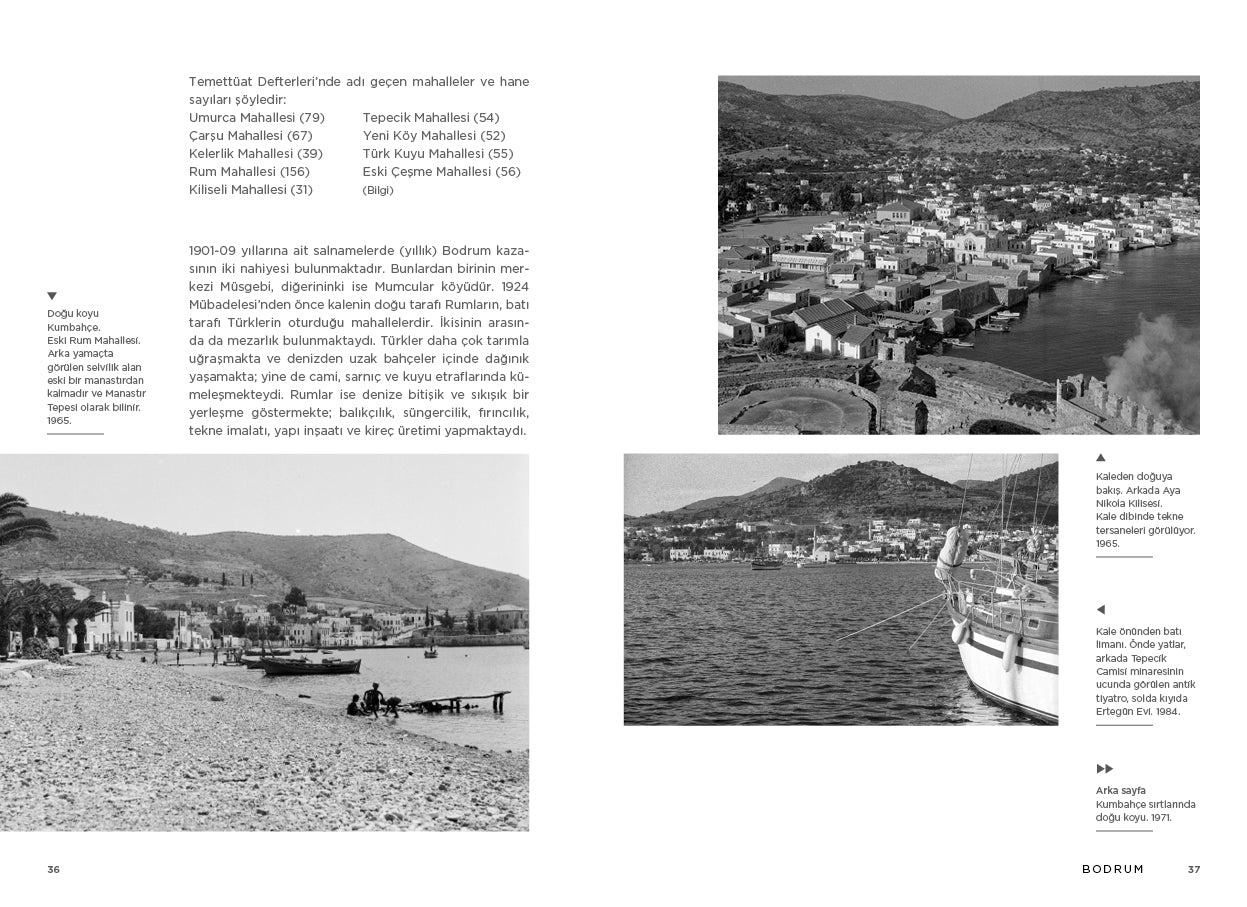
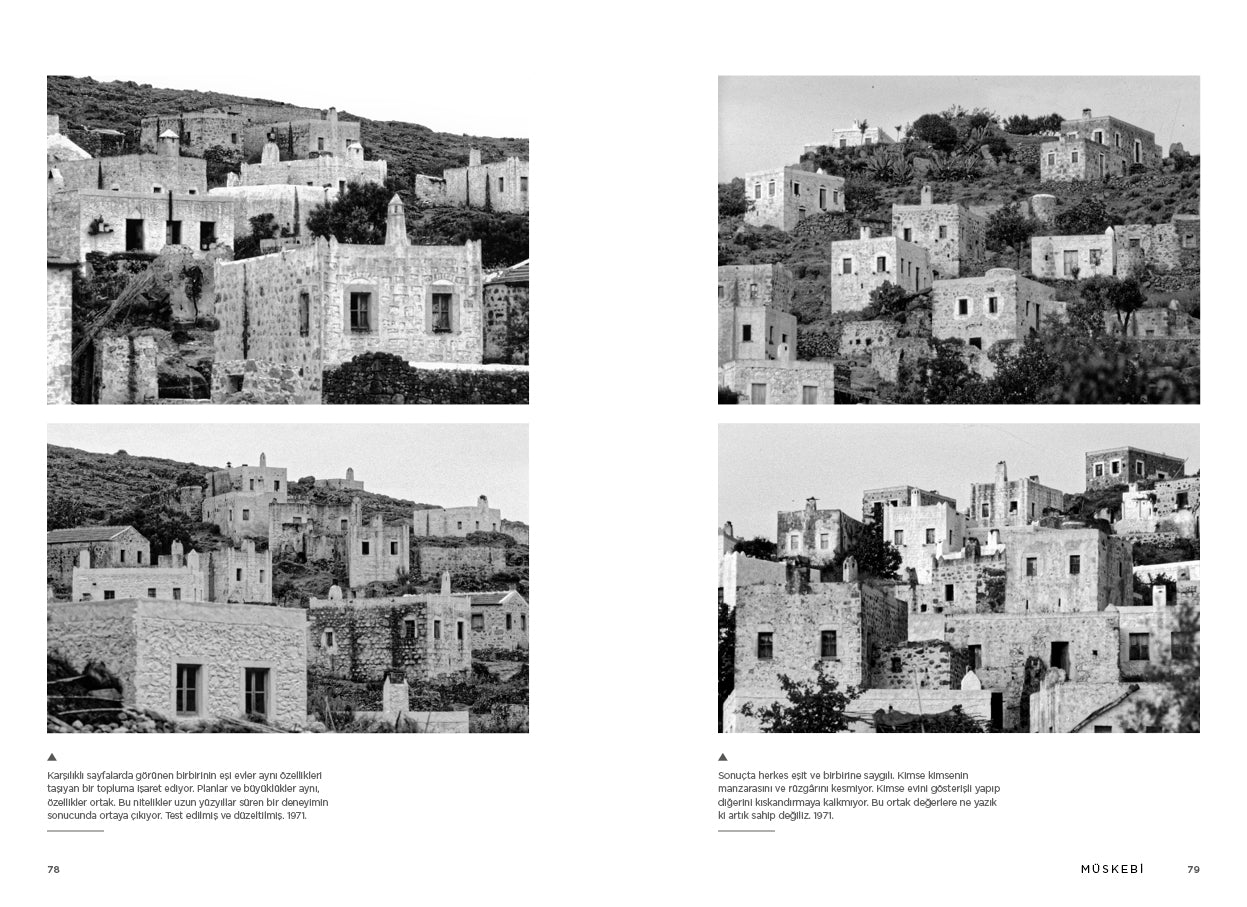
Prof. Dr. Reha Günay, who has worked multifaceted, meticulously researched, and produced with an artistic perspective for many years, presents Bodrum, Turkey's tourism capital, through his original black-and-white photographs taken between 1965-1991 and its traditional architectural features in this work, published with the valuable contributions of the Bodrum Municipality.
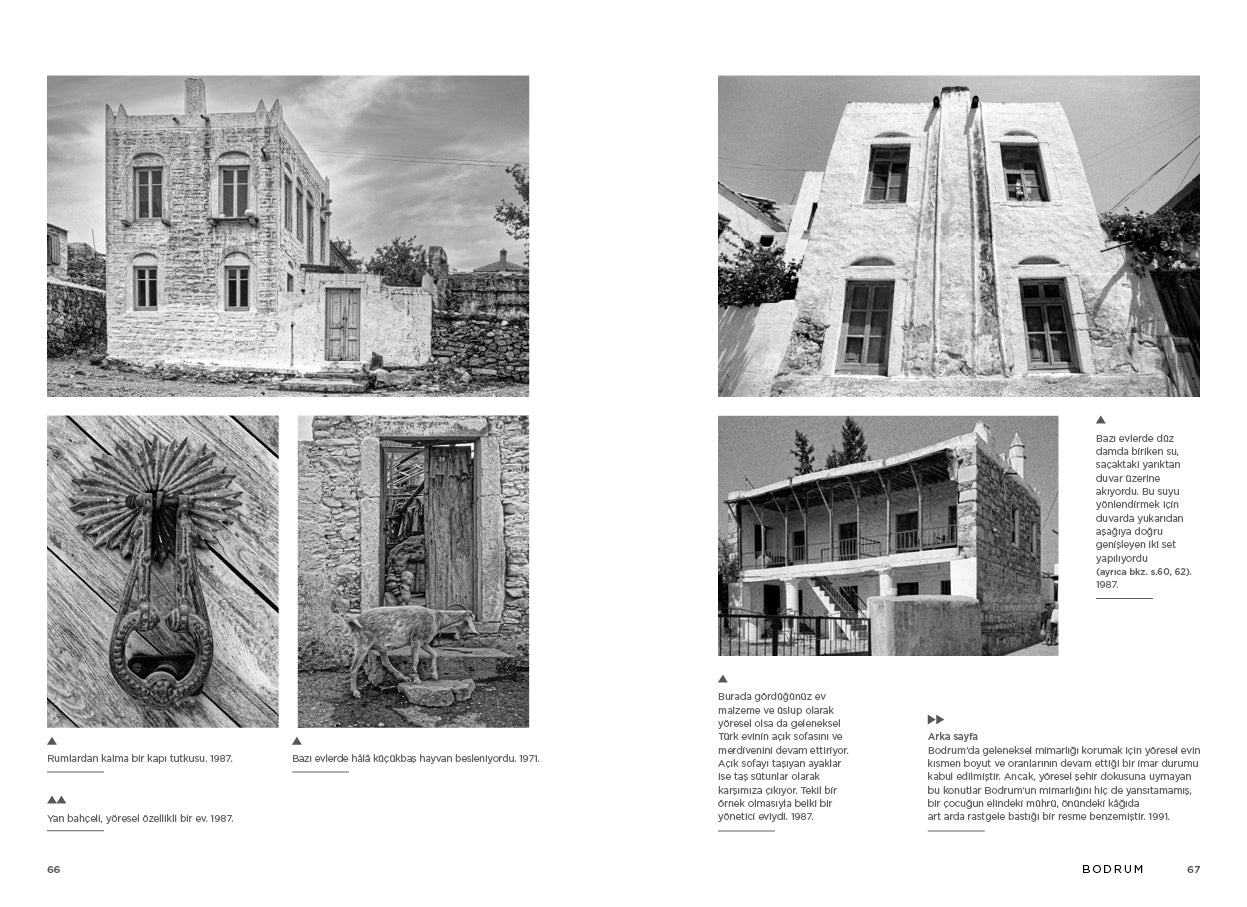
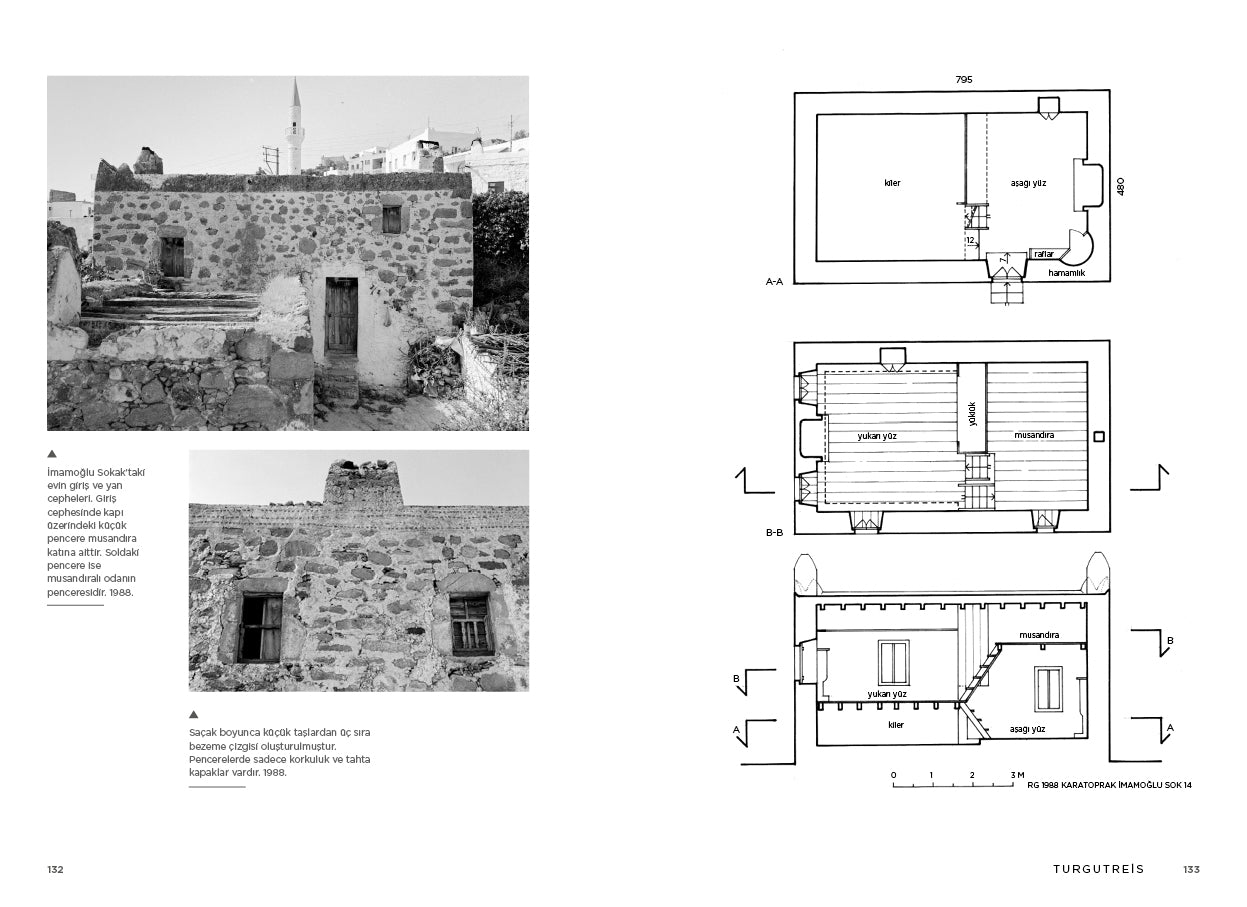
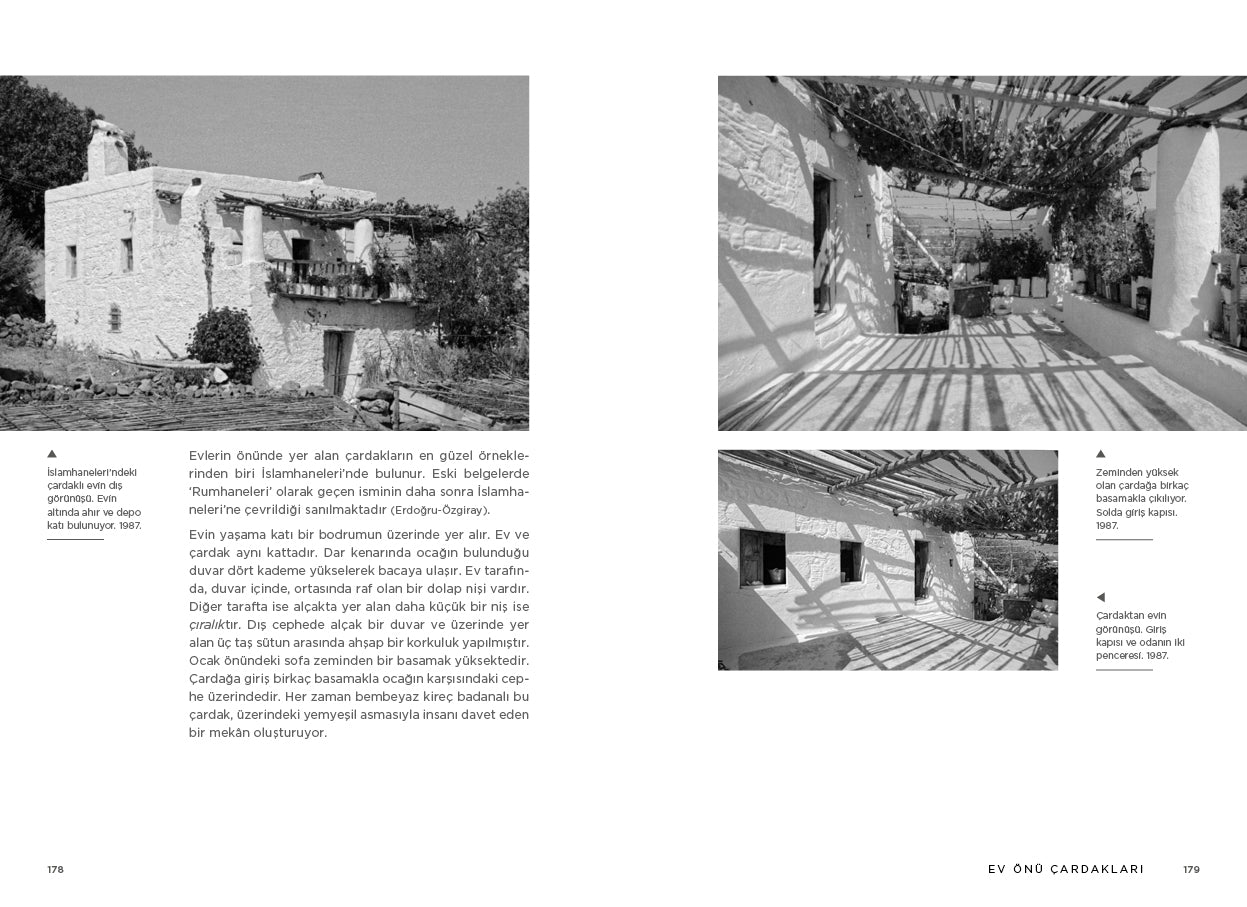
Günay's observations and findings on traditional Bodrum architecture are presented in 10 chapters under the headings: "BODRUM PENINSULA, BODRUM, MÜSKEBİ, TURGUTREİS, YALIKAVAK, GÜMÜŞLÜK, KARAKAYA, AKYARLAR, HOUSEFRONT ARBORS and DEMİR HOLIDAY VILLAGE."
Reha Günay's views on Bodrum and the content of the book are as follows:
"Due to difficulties in transportation, the Bodrum Peninsula was isolated for hundreds of years from the political-cultural environment of the Middle Ages and beyond, where great changes occurred, and from mainland Anatolia. This situation continued until the construction of a highway in the 1930s that more or less allowed the passage of motorized vehicles. In the 1960s, with the opening of a new highway, it was greatly affected by the sudden explosion of tourism movements. While for centuries it maintained a settlement pattern suitable for its own way of life within its own surroundings, this activity almost destroyed the traditional fabric.
In this book, you will follow observations and visuals mostly from 1965 to 1991, and a small amount from 2011, when the degradation was just beginning. This unique and very simple residential architecture, formed under very little external influence within environmental conditions, perhaps bearing traces of thousands of years of history, led us directly to nature and humanity with its uniform architecture and settlement pattern. A comparison with the current situation reflects the ruthless dimensions of change. It is now almost impossible to even recognize many places..."
Bodrum Mayor Ahmet Aras, in his "Foreword" written in the book, states the following:
"We were sea children with hopes and dreams in a unique, small fishing town. We played with the sea in mandarin gardens, on the shore, in the street. With the zeferiye wind in our hair, the sunburn and saltiness of the sun and sea on our faces; we smelled of sea salt. Our breath rose and fell with shouts of joy.
As we grew up, our free city of Bodrum transformed into a modern tourist city. In the hustle and bustle of life, while gaining on one hand, we often didn't even realize what we were losing on the other.
The streets we ran in our childhood; our neighbor whose door we knocked on, whose window we broke, our corner grocer remained in memories. Our neighborhood, where we played the leading role, as our own history, our own world, is now the mark on our leg from cutting it while passing from tree to tree in the mandarin gardens, dancing hand in hand.
.....
The tourism boom and the demand for holiday homes in Bodrum led to rapid construction across the peninsula. Most of us struggled to resist this demand and its financial returns. Our gardens, lands, and coves turned into concrete.
I don't want to use what has been experienced as a tool in the spiral of politics. I'm not saying 'he' did it, 'this one' did it; 'could we have avoided it?' is a separate discussion. Without hiding behind a weak statement like 'I wish it hadn't happened!', not just because I am the mayor, but because I have not been disconnected from my own geography and culture since my childhood, because I am Ahmet Aras from Bodrum, I think about what I need to do and what we can do together. I believe that we need to refresh our memory regarding what we want to find and what we don't want to lose about Bodrum, our common love.
We are not yet a city with closed air corridors, breathless and suffocated; the imbat and meltemi winds of the Archipelago still sweep through our coves. Giant blocks do not build castles on our shores like impenetrable walls. Even though our winter population has skyrocketed from 180,000 to 600,000 in the last three years, I believe we are not without solutions with our two-story white houses and our resistance to multi-story, vertical construction: By turning our faces to Bodrum, analyzing Bodrum's dynamics correctly, with the responsibility of being the inhabitants of Bodrum, with decisions we will make together, by planning locally, we must approach construction with a 'sustainable city' approach.
.....
Our professor, who examined examples of Chios-type, musandaralı, and tower-type houses specific to Bodrum architecture; who defined forgotten concepts of Bodrum house life such as ayazlık, çanaklık, yunmalık, yüklük, and terek, describes the traditional Müsgebi neighborhood architecture where my childhood passed as follows: 'In the end, everyone is equal and respectful of each other. No one blocks anyone else's view or wind. No one tries to show off their house and make others jealous. Unfortunately, we no longer possess these common values.'
We are happy to have been involved in the publication of the book In Pursuit of Traditional Architecture•1 BODRUM 1965-1991. I would like to thank Umut Ülkümen for directly contributing to the publication of the book, Prof. Dr. Suha Özkan, the creator of the Bodrum Architecture Library, to which we are emotionally connected, and YEM Yayın. I extend my gratitude to my colleagues who contributed; well done.
I do not want my childhood and the Bodrum where my childhood was spent to disappear. I do not want to be generations whose past has been forgotten, watching Bodrum with a heavy heart and a sigh.
The fundamental question I ask myself is: "It's not what we expect from Bodrum, but what we want to do with Bodrum and how we will do it?" I sought the answer to this question even before becoming the Mayor of Bodrum, and I am still seeking it."
The graphic design of the book, whose photographs are by Reha Günay, was done by Gökçen Yanlı Atmaca, and the graphic application by Resul Atabay, and it has reached the readers.
