


Hey! Imaginable Design Guide (Game Cards)
Yazar: Alexis Şanal
Brand: YEM Yayın
Basım Tarihi: Aralık 2022
Basım Dili:
Sayfa Sayısı: 108 Kart (216 Sayfa)Boyut: 14.0 x 14.0 cm.
In stock
9786058119109
Product Description
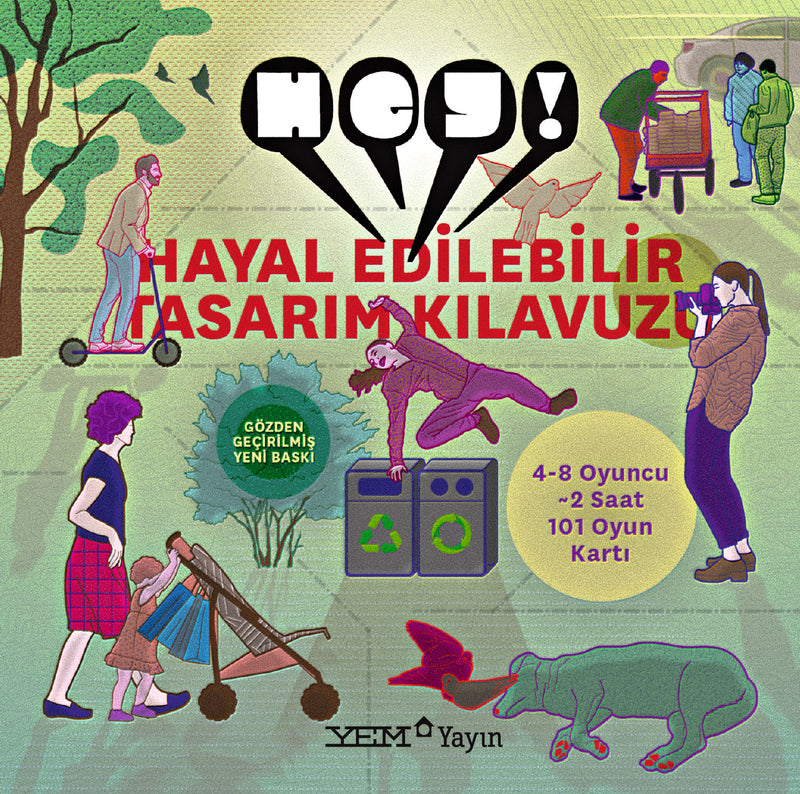
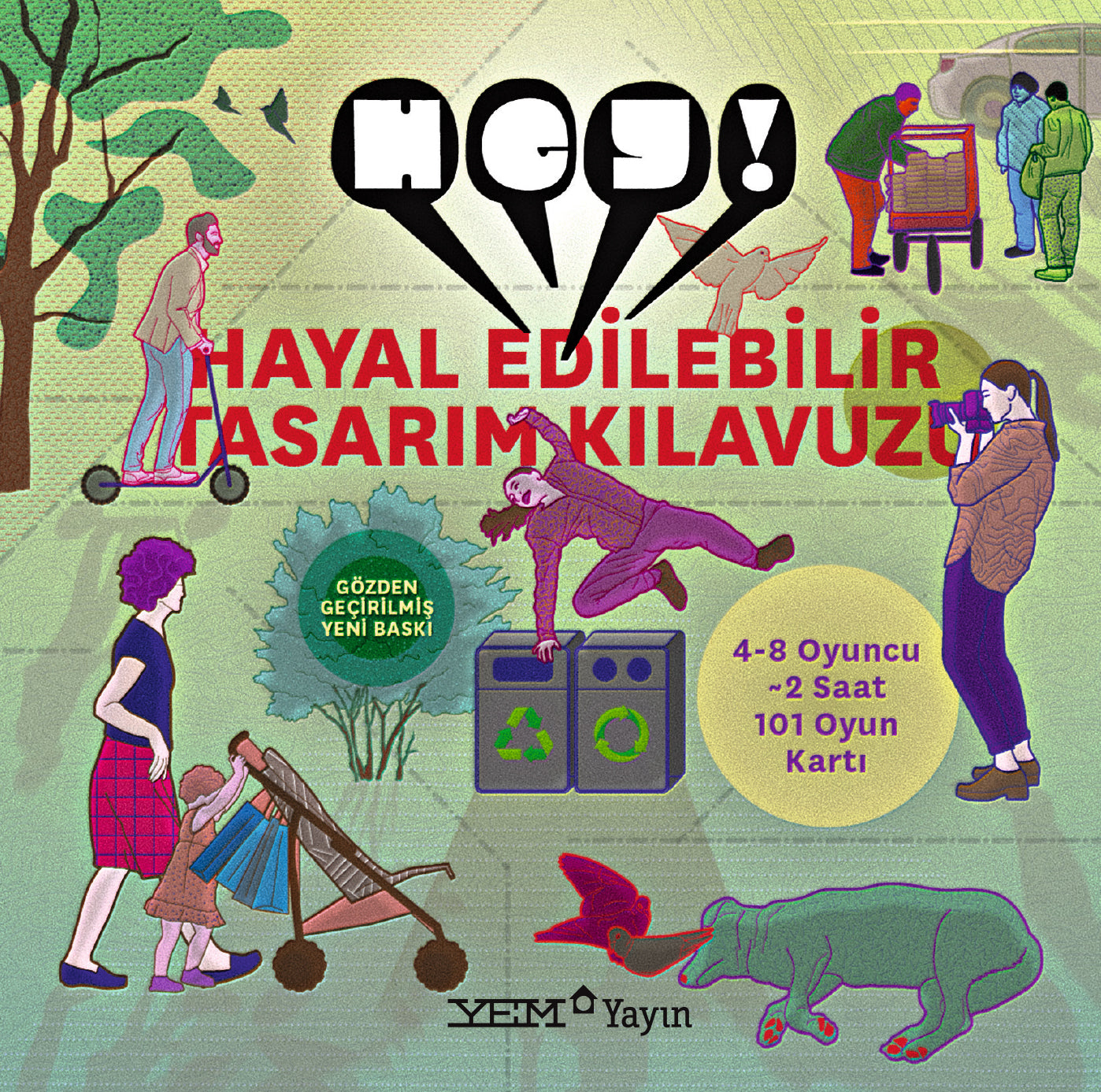
The revised 2nd edition of HEY! The Imaginable Design Guide, prepared by Alexis Şanal (SANALarc) as an inspiring and encouraging ‘card deck,’ has been published by YEM Publishing.
HEY! The Imaginable Design Guide offers an experience where you can explore and learn about urban planning processes, discuss and share information about public space design, take action for your city, and have fun while doing it.
The art direction and graphic design of HEY! The Imaginable Design Guide were done by Okay Karadayılar, illustrations by Mrnië Godanca, and logo design by Memed Erdener. Linda Shahinian and Serhan Ada were the text editors, and Simon Johnson was the pedagogy consultant.
In our daily lives, we experience many things and encounter many problems in public spaces. As an important part of our lives that surrounds us completely, public space can be open to contribution and change. To offer designers and citizen-designers the opportunity to imagine, explore, discuss, and share common future urban designs so they can create livable, lovable, and walkable cities, HEY! The Imaginable Design Guide was launched as an open call for everyone to contribute and came to life in a deck of 101 cards.
HEY! The Imaginable Design Guide is a card game that allows users to explore how cities are designed. It also provides a resource that brings neighbors together to make real decisions, as well as a design tool for exploring the city's boundaries and opportunities. The cards were prepared with an interdisciplinary methodology for city-building, aiming to achieve a spontaneously organized urban design that nurtures vibrant public life and highlights neighborhood unity.
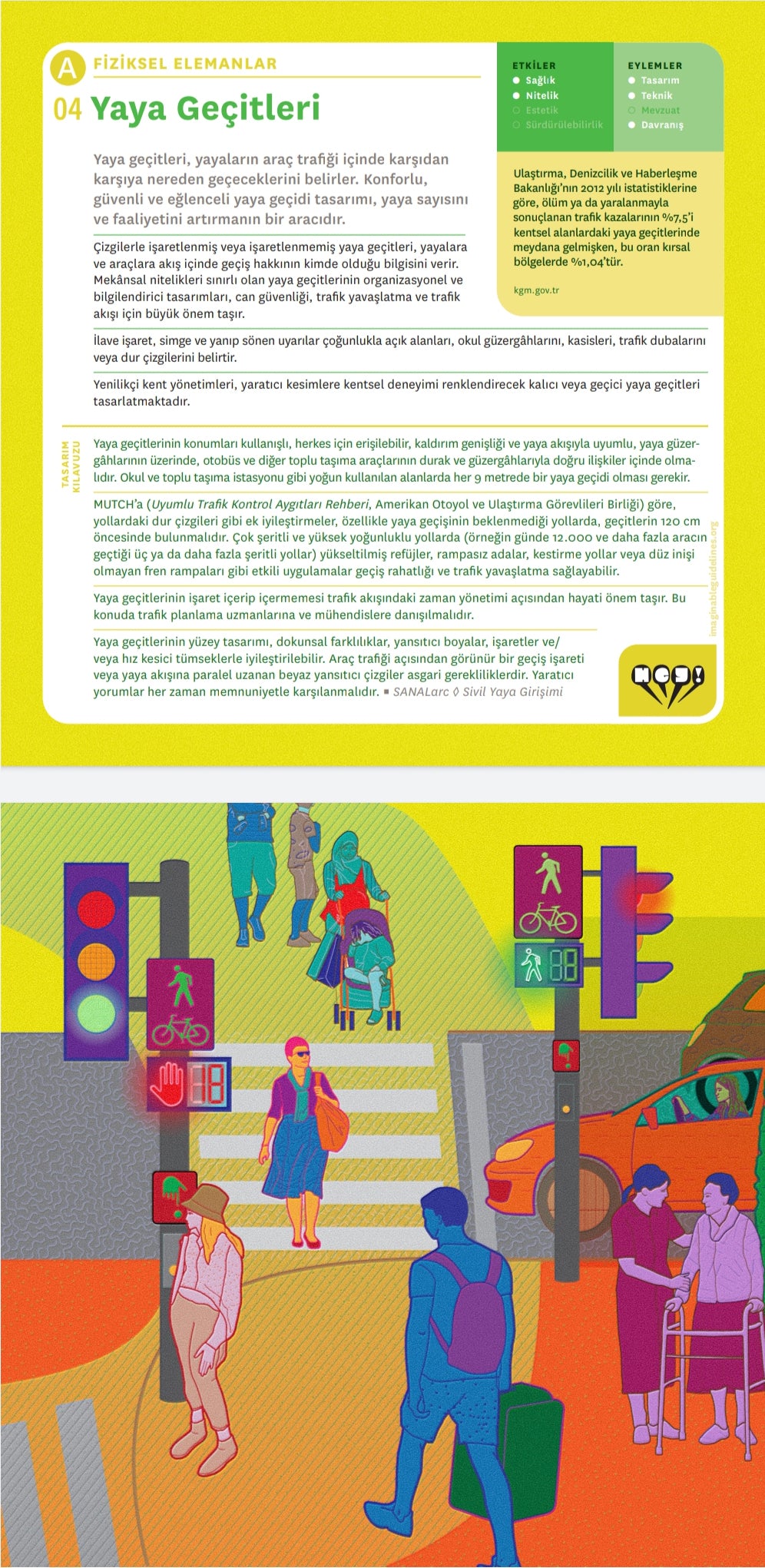
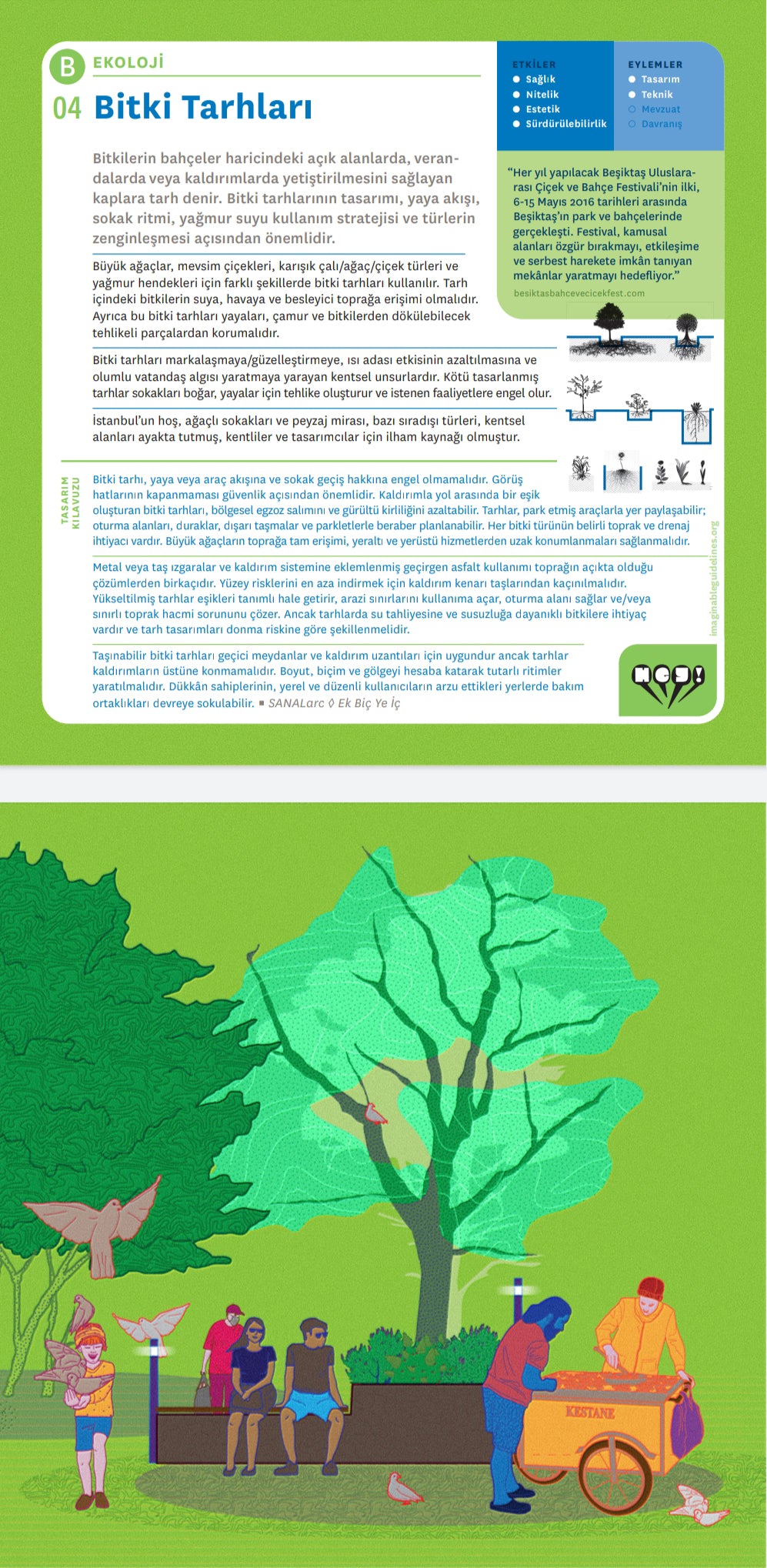
The 101 topics, grouped under six categories, cover the fundamental components of public space. In this regard, it serves as an indispensable reference that prioritizes, negotiates, and tests expert support, good practice standards, and performance parameters to open up space for the imagination of urban design initiatives. Categories:
- Physical Elements (Users and products in public spaces such as pedestrians, human scale, crosswalks, sidewalk dimensions, lighting, street furniture, connecting elements, etc.; natural and artificial elements)
- Ecology (Daylight and shade, trees, light pollution, heat island effect, rainwater, urban athletes, etc. Practices and elements necessary to create a sustainable environment)
- Technology And Innovation (Energy saving, water features, tracking systems, mobile applications, innovative infrastructure systems, etc. Contemporary, future-oriented, and pioneering initiatives, applications, systems)
- Socio-Economy (Local identity, urban branding, festivals, maintenance, real estate value, etc. Urban values that increase economic and social well-being)
- Governance (Accessibility for all, overflowing, time-oriented management, waste, pedestrian safety, urban facilities, waste management, etc. Laws, rules, and regulations that create a functioning order in public spaces and our neighborhood)
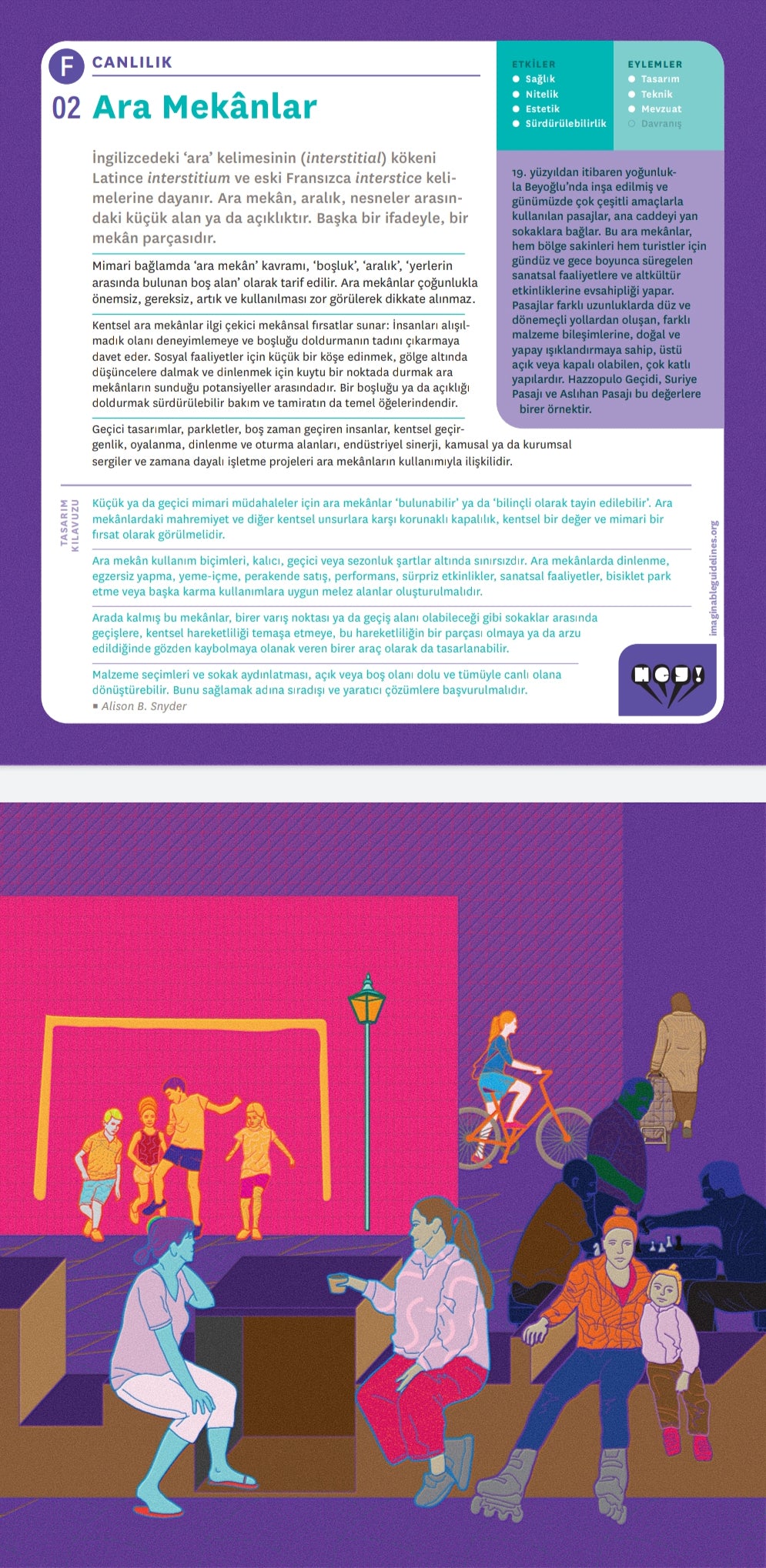
- Vibrancy (Spatial diversity, interstitial spaces, urban permeability, characters, waiting, resting, physical comfort, security, street vendors, street art, information access, pedestrian flow, etc. All elements that express the spirit of the place as energetic, vibrant, original)
The content of the cards was prepared by experts, design activists, NGOs, and art professionals, bringing together the analytical, practical, and creative minds necessary for a meaningful and enduring urban design to flourish. The card game approach offers each participant a dynamic path within the complex field of urban design. Players who participate by writing, discussing, and thinking reorganize the cards according to the priorities and desires of their own urban designs, creating a new design guide.
The concept of a "card deck" as an object and "game" represents the social learning dimension that can be used in workshops. Facilitators of NGO workshops, policymakers of local governments, and design professionals can create an imagination-based role-playing simulation where a "winning solution" (in other words, a customized design guide) will emerge, relying on exploration and strategic thinking in parallel with stakeholders' consensus, in-depth discussions, and priorities.
HEY! The Imaginable Design Guide empowers designers, citizens, and municipalities, providing a holistic discussion platform created with the artworks and design ideas of over 150 participants. Heated conversations, discussions about priorities, stakeholder accountability, and open-ended suggestions regarding physical, social, and economic issues are ultimately part of this game.
Imagine- Cities are products of design. Now, we want you to imagine them better designed! They can be more useful, more intimate, more inclusive.
Explore- Become aware of the design decisions made for you! Learn urban design terms, explore different solutions, and become part of decision-making mechanisms.
Discuss- Bring your neighbors together! Identify your problems, turn your differences into advantages! By playing the game, you can improve your social life by shaping your city and public space, and support local businesses.
Share- A good city cares for all its citizens. Who provides this? The citizens themselves! Discuss your design decisions with your neighbors, work to make your living place better; organize workshops that bring together citizens, designers, and city planners.
Take Action- Open up discussions about your neighborhood's issues with HEY! The Imaginable Design Guide. The guide you need to collaboratively design the city you love, find attractive, and is livable is in your hands.
