
 Yeni Baskı
Stainless Steel and Glass in Interior Architecture - 4th Edition
Yazar: Genco Berkin, Gökhan Mermi,
Brand: YEM Yayın
Basım Tarihi: Mart 2026
Basım Dili: ["Turkish"]
Sayfa Sayısı: 100Boyut: 19.5 x 26.0 cm.
In stock
9786257008754
Product Description
The book Stainless Steel and Glass in Interior Architecture, prepared by Genco Berkin and Gökhan Mermi primarily for students of interior architecture, architecture, and industrial product design, as well as for designers and practitioners new to the profession, has been published by YEM Yayın.
To achieve successful results in interior design, it is necessary to thoroughly understand the materials to be used. In Stainless Steel and Glass in Interior Architecture, detailed information about stainless steel and glass materials, supported by details and carefully prepared drawings, is conveyed to young designers in particular, in a simple and easily understandable manner, focusing on details and materials.
Stainless steel and glass are two of the five most commonly used basic building materials (plasterboard, MDF, ceramic, stainless steel, glass) in interior design today. These two complementary building materials, with their technical specifications and application details, are primary construction materials that designers must master.
Stainless Steel and Glass in Interior Architecture aims to be a guide for the use of stainless steel and glass materials in schools, design offices, and construction site applications. The information contained in the book includes contemporary and valid detail solutions currently in active use.
The book Stainless Steel and Glass in Interior Architecture consists of six chapters:
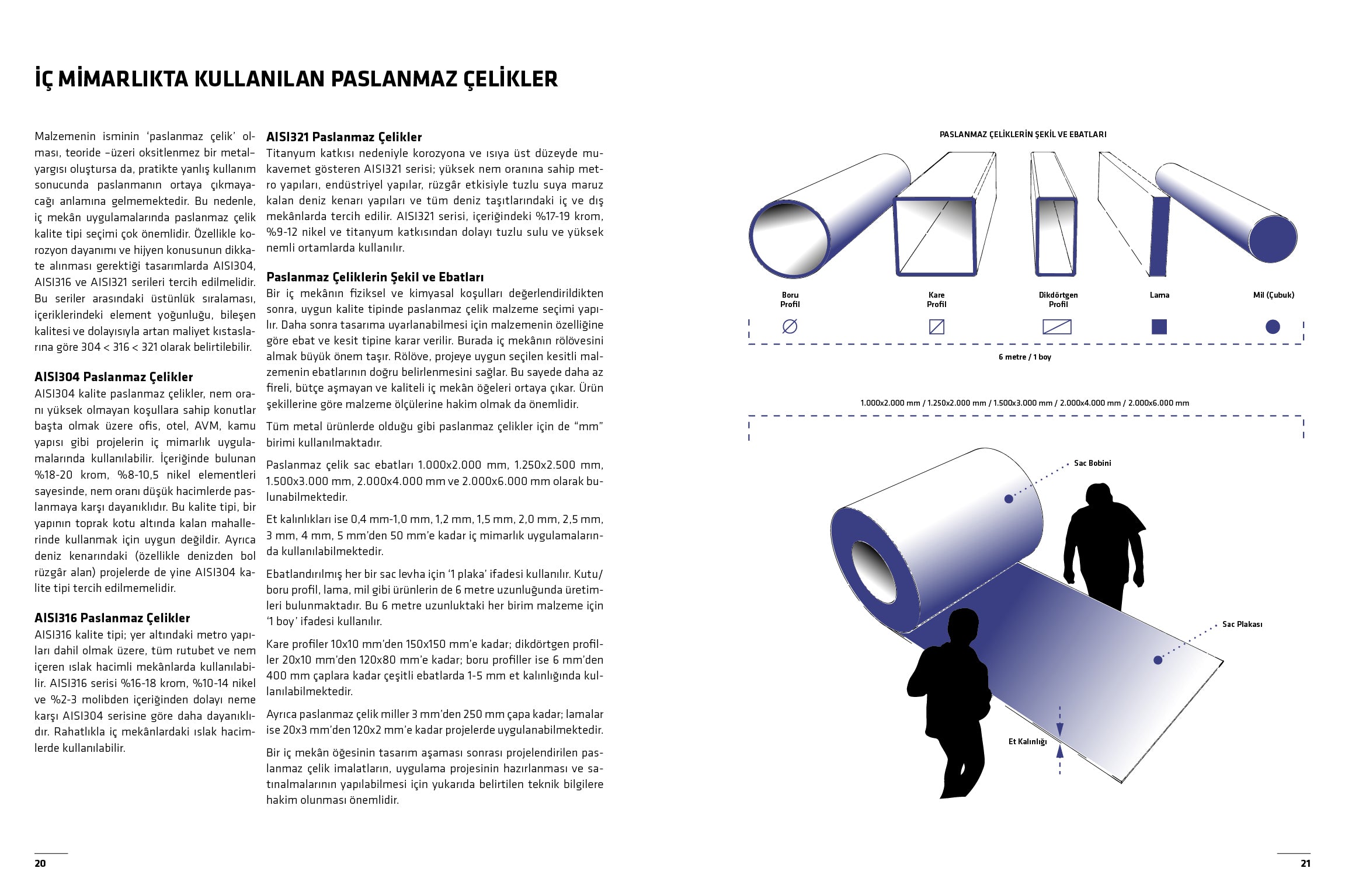
- Chapter 1 examines the production and technical characteristics of stainless steel, its manufacturing methods, and the types of stainless steel used in interior architecture.
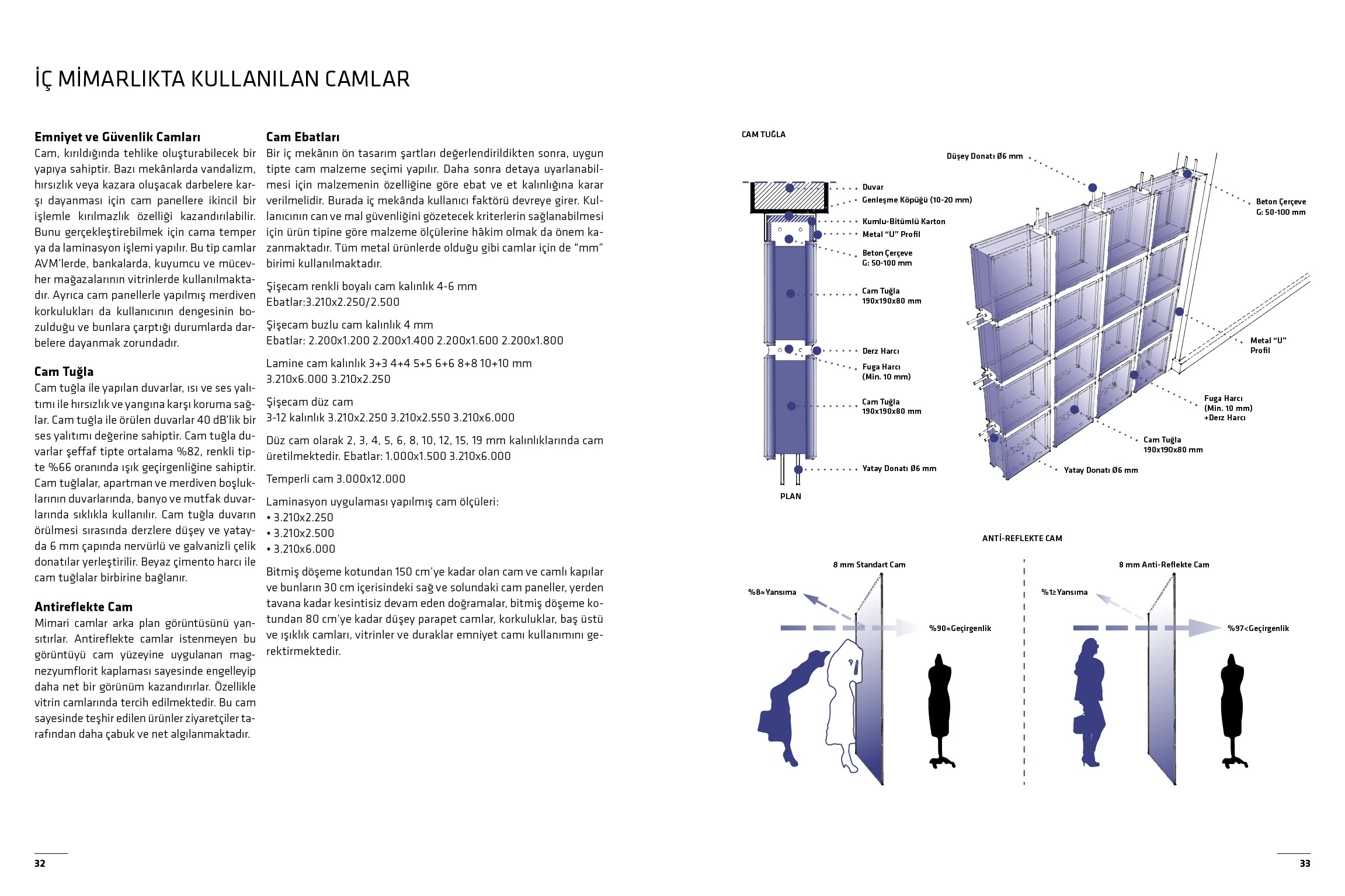
- Chapter 2 covers the production and technical characteristics of glass, its manufacturing methods, and the types used in interior architecture.
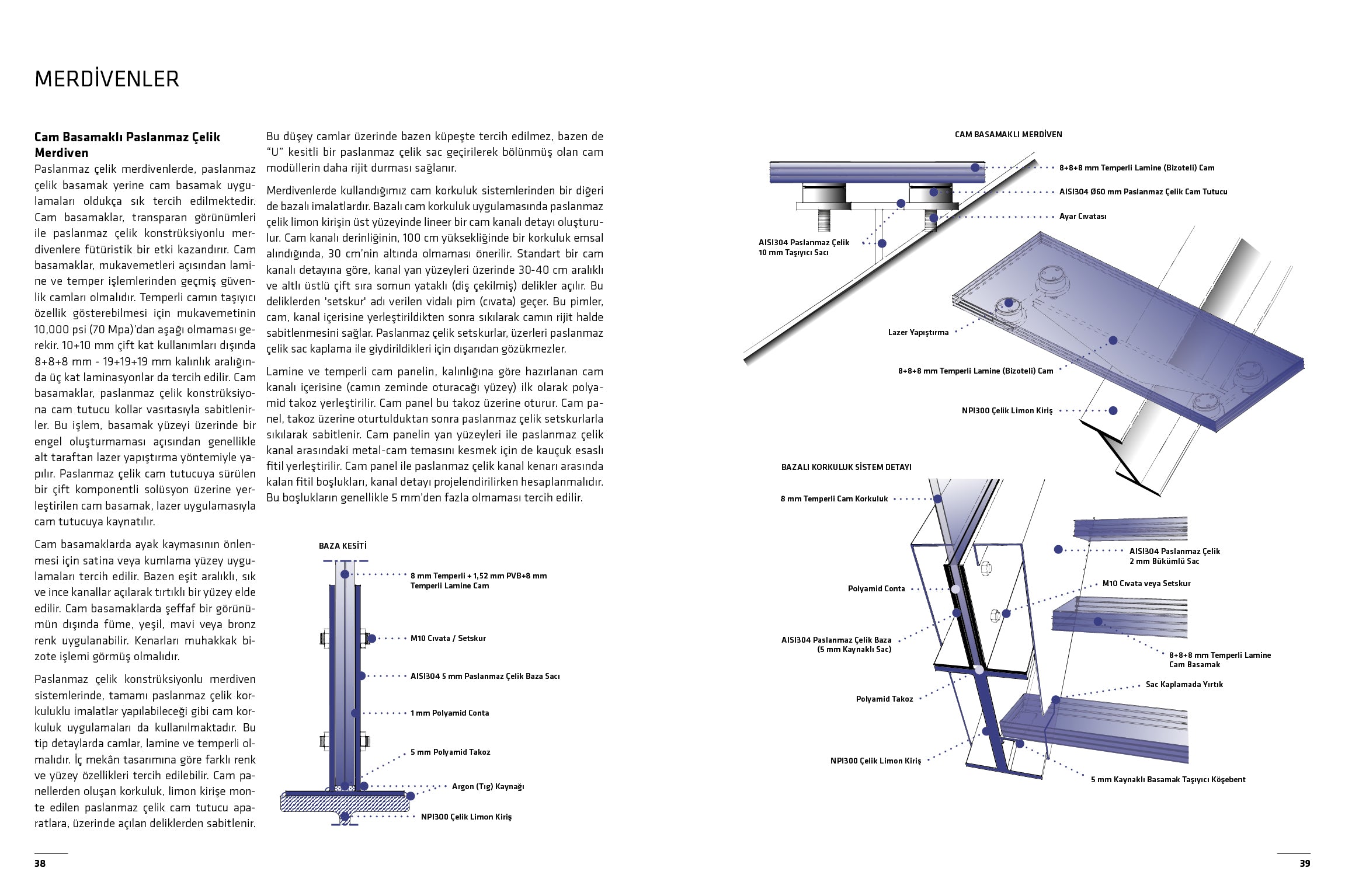
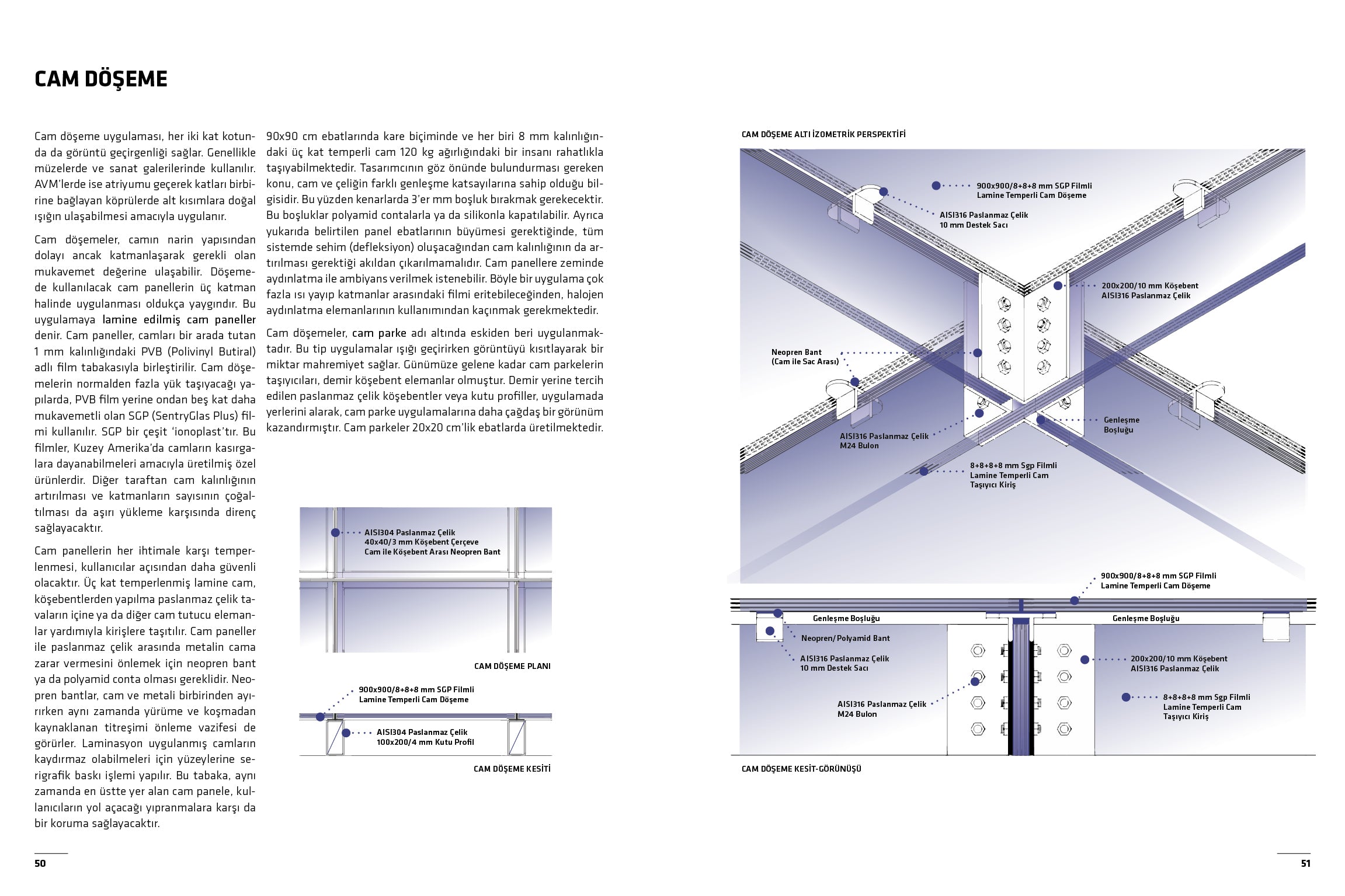
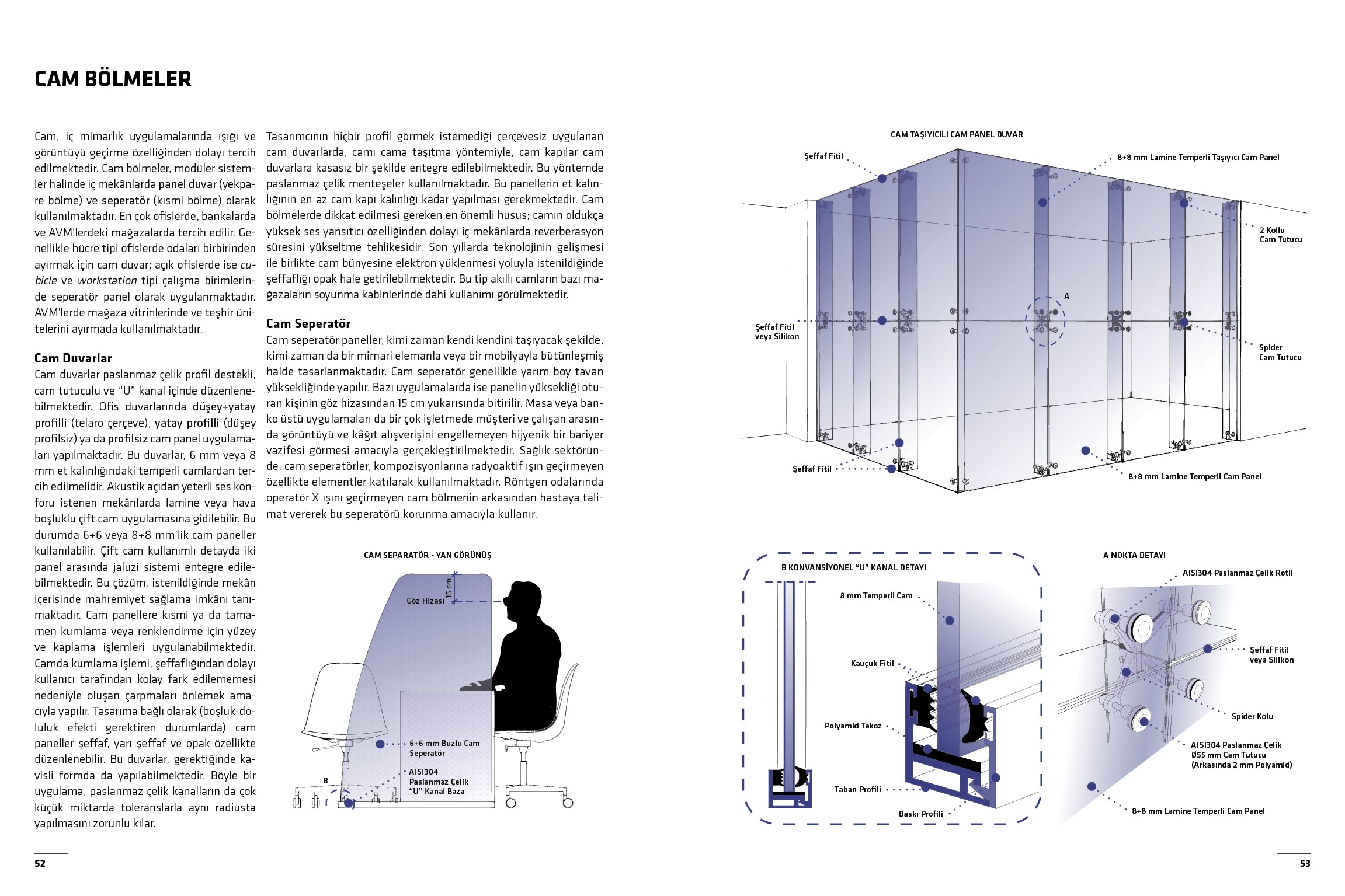
- Chapter 3 presents all elements used in interior architecture, separately as both stainless steel and glass materials, to the reader; examples including both materials are also discussed.
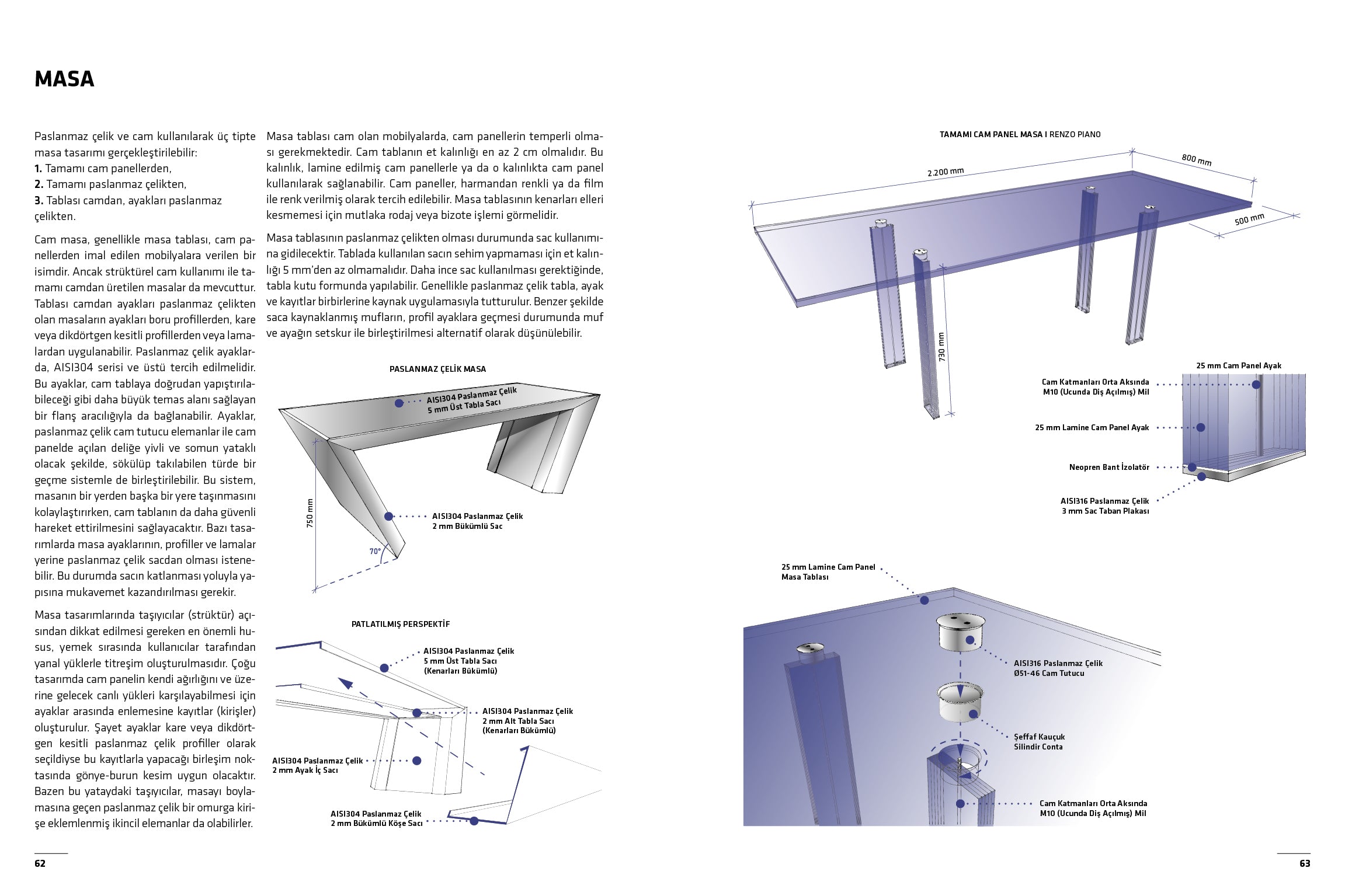
- Chapter 4 investigates how various pieces of furniture in interior spaces are made with stainless steel and glass, detailing them to the finest points.
- Chapter 5 examines the sustainability characteristics of both materials.
- Chapter 6 consists of additional detail drawings that can serve as alternatives to the details provided in the previous chapters.
Prof. Dr. Genco Berkin and Interior Architect Gökhan Mermi's reasoning for preparing the book is summarized in the "Introduction" as follows:
"...This book serves as a guide for interior architects and architects on the use of stainless steel and glass materials in design offices and construction site applications. We are fully confident that such a resource will become an indispensable reference book, especially for interior architects. The information in the book includes contemporary and valid detail solutions currently in active use. It should be kept in mind that, in addition to the stainless steel and glass duo, a third material can also be used in detailing..."
We hope that the detail drawings and graphics in the book will serve as useful and guiding examples for architecture and interior architecture students and our colleagues who have started their professional careers, in their designs involving stainless steel and glass. We would like to state that the drawings are not to scale and designers should examine these details only for inspiration for their work..."
Mechanical and Aeronautical Engineer Mehmet Engin Kılınç, who also worked with Genco Berkin and Gökhan Mermi in the past, states the following in the "Foreword":
"Dear Interior Architects, Architects, Industrial Product Designers;
The inadequacy of practical application in university education manifests itself as various shortcomings in professional life. Although students undergo a short period of internship training, this is often insufficient. True success comes from supplementing theoretical knowledge with real-world applications.
Our young people, who lack practical training in universities, often feel inadequate in terms of practical knowledge focusing on materials and details. This situation should be remedied by reading technical books written by experienced interior architects, architects, and engineers with practical knowledge in the field.
After graduating from the ITU Mechanical Engineering Department, Aeronautical Engineering in 1972, I experienced the same difficulties in my professional life. I learned how to use the theoretical knowledge I gained at university in the field, through trial and error over time. I always longed for helpful books on this subject, but there were not enough resources.
After gaining experience in various companies for about 30 years, I established my own design firm in 2002. At that time, my young, hardworking, and eager-to-learn architect colleague, Genco Berkin, who had just graduated from university, started working as an architect in my company. He personally experienced and witnessed the applications in business life and was involved in very good projects in this field. Later, he received an offer to start an academic career and became a faculty member. Our connection never broke during this period. I always followed his work with appreciation. Subsequently, with Genco Berkin's reference, I brought interior architect Gökhan Mermi, who graduated first in his department, into our team. We worked together successfully on many projects for a long time. I enthusiastically conveyed to him how to apply academic knowledge in the real manufacturing industry, especially regarding materials and details. I felt immense pride when I read the first draft of this book, a collaborative effort by my two designer colleagues.
There was a significant need for a technical handbook in the field of interior architecture that focused on stainless steel and glass materials and included all application details. Both materials are unforgiving of even the smallest mistake and require specific detailed solutions. This work has become a guide that provides technical knowledge to interior architecture students and recent graduates for construction site applications.
This work by Genco Berkin and Gökhan Mermi blends fundamental theoretical knowledge with implemented manufacturing practices. The book Stainless Steel and Glass in Interior Architecture has been very beneficial because it supports its technical information with application drawings.
I congratulate them for bringing this valuable book, which also describes the latest developments in stainless steel and glass production technologies, to the design world, and I hope for its continuation."
The concept design for Stainless Steel and Glass in Interior Architecture, the 4th book in YEM Yayın's "Material and Detail Series," is by Sedef Sav, the designer of the series. The book's detailed drawings and layout were done by Gökhan Mermi; it was prepared for printing by Resul Atabay.
TABLE OF CONTENTS
Chapter 1 STAINLESS STEELS
12 Production and Technical Characteristics
16 Manufacturing Methods
20 Stainless Steels Used in Interior Architecture
Chapter 2 GLASSES
24 Production and Technical Characteristics
26 Manufacturing Methods
30 Glasses Used in Interior Architecture
Chapter 3 INTERIOR ARCHITECTURE ELEMENTS
36 Stairs
42 Railings
44 Elevators
46 Panoramic Elevators
48 Escalators
50 Glass Flooring
52 Glass Partitions
54 Glass Doors
56 Column Cladding
58 Fireplaces
Chapter 4 FURNITURE
62 Tables
64 Benches
66 Display Units
68 Shelves
70 Lighting Fixtures
Chapter 5 SUSTAINABILITY
74 Stainless Steel Material Type Selection
76 Glass Material Type Selection
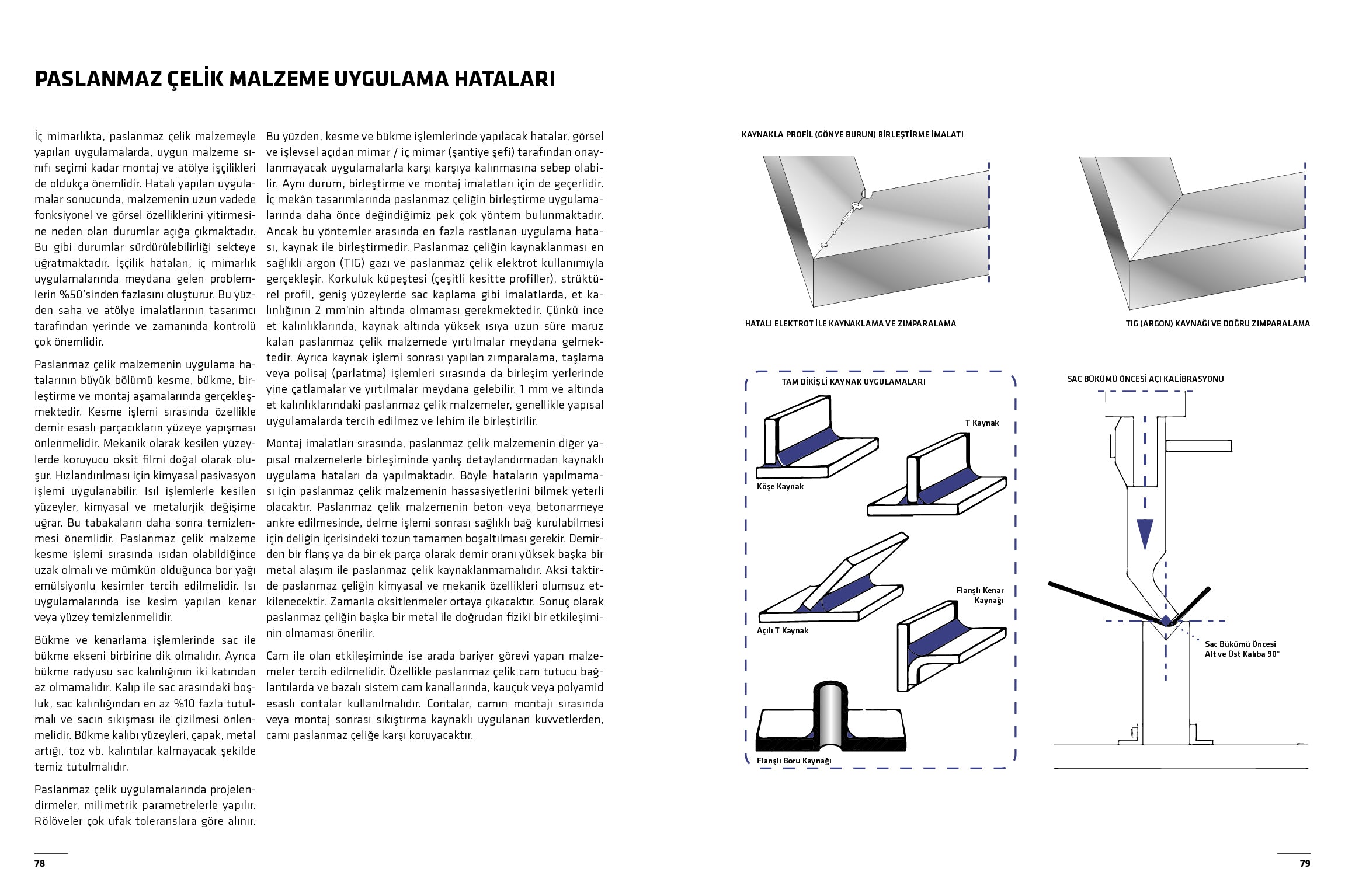
78 Stainless Steel Material Application Errors
80 Glass Material Application Errors
82 Transportation and Stacking
84 Stainless Steel Maintenance Methods
Chapter 6 APPENDICES
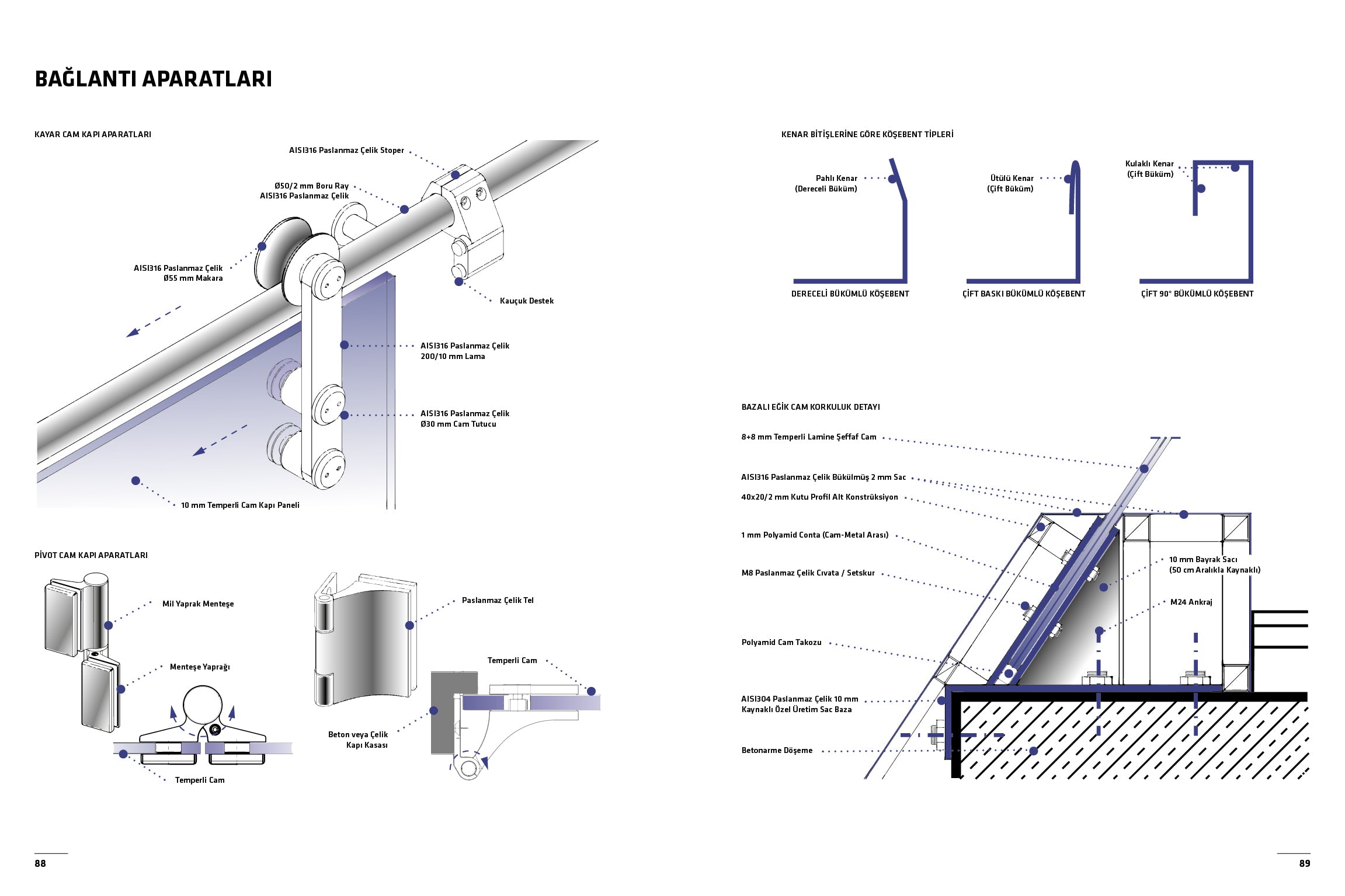
88 Connection Apparatuses
90 Floor Drains
92 Grab Bars
94 Details for Visually Impaired
96 Pool Ladders
WHO IS PROF. DR. GENCO BERKİN?
Born in Niğde in 1971, Genco Berkin completed his secondary education at Kadıköy Anatolian High School in 1990. Genco Berkin, who studied architecture at Brighton (England) and European University of Lefke (TRNC), began his academic career as a research assistant in 1995 after being offered a position by his alma mater.
In 1998, he completed his master's degree at Eastern Mediterranean University with his thesis "Architectural Utopias" in the field of Architectural History. In 2006, he earned his doctorate (Ph.D.) degree with his studies at the Mimar Sinan Fine Arts University, Faculty of Architecture, Department of Building Physics and Materials; he became an associate professor in 2015; and in 2020, he became a professor at Fatih Sultan Mehmet Vakıf University, Faculty of Architecture and Design.
Genco Berkin, who teaches architecture and interior architecture courses at various universities, has conducted research and development studies on "ecological glass in architecture" and developed ideas on "improving project-design courses." Berkin, who particularly emphasizes combining ergonomics and technology in furniture designs, has also produced numerous works on this subject. Prof. Dr. Genco Berkin currently serves as the Dean of the Faculty of Arts and Design at Istanbul Nişantaşı University.
Genco Berkin's books published by YEM Yayın:
- Materials and Details in Architecture
- Materials and Details in Interior Architecture
- Materials and Details in Furniture Design
- Stainless Steel and Glass in Interior Architecture (with Gökhan Mermi)
- In the Footsteps of Wood: A Dictionary of Forest Products in Design
- Modulor and Le Corbusier's Cabin
- From Square to Plan: Module and Architecture (with Yusuf Civelek)
WHO IS INTERIOR ARCHITECT GÖKHAN MERMİ?
Born in Istanbul in 1987, Gökhan Mermi completed his secondary education at Şehremini Anatolian High School in 2003. Gökhan Mermi, who studied interior architecture at Haliç University, graduated as the top student in his department with honors in 2008. After graduation, he began his master's degree with a scholarship at Haliç University.
In 2012, he completed his master's degree in Interior Architecture with his thesis "Evaluation of Stainless Steel Material in Interior Architectural Applications from a Sustainability Perspective." With this thesis, he served as a designer and controller for the fabrication of stainless steel and glass in many projects, primarily metro, hotel, and residential projects in the private sector. As of 2013, he has served as a project manager in several architectural offices, including Alarko Contracting Group. He has undertaken roles as both a designer and site chief in hotel, metro, shopping mall, office, restaurant, and residential projects. One of his successfully completed projects, where he served as a designer and site architect, is the "Levent-Hisarüstü Metro Project."
Currently, Gökhan Mermi works as a full-time lecturer for interior architecture courses and is also pursuing his doctoral studies at Mimar Sinan Fine Arts University, Department of Architecture, Building Physics and Materials.
