
From Square to Plan Module and Architecture
Yazar: Genco Berkin, Yusuf Civelek
Brand: YEM Yayın
Basım Tarihi: Haziran 2021
Basım Dili:
Sayfa Sayısı: 100Boyut: 19.5 x 25.0 cm
Out Of Stock
9786257008341
Product Description
From Square to Plan: Module and Architecture, prepared by Prof. Dr. Genco Berkin and Assoc. Prof. Dr. Yusuf Civelek, aims to help architecture, interior architecture, and landscape architecture students overcome the problems they experience with scale and dimensioning during design. The book serves as a fundamental reference source with its structure that enables readers to gain knowledge about modules and scaling, learn architectural history, and become acquainted with important architects.
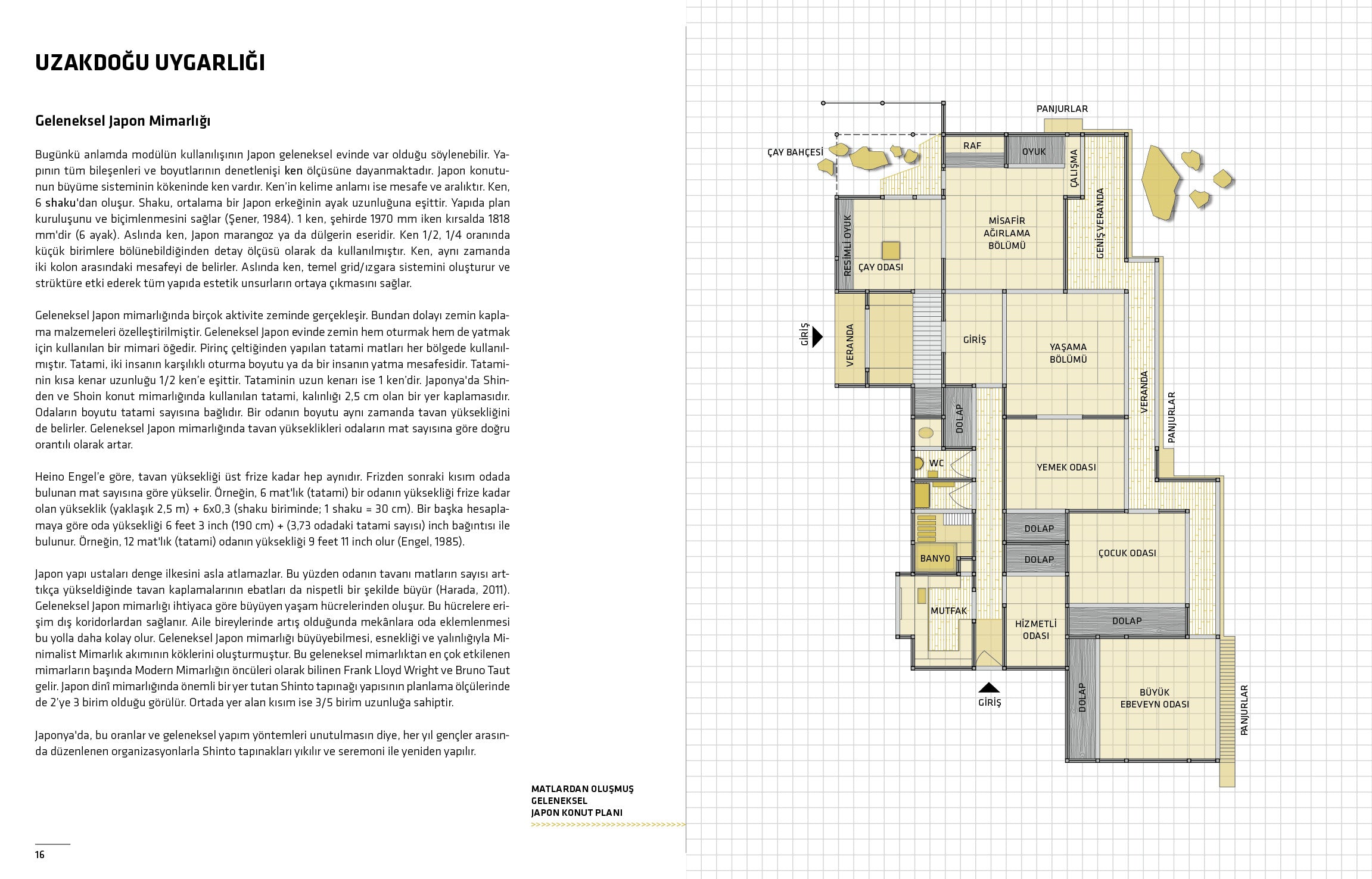
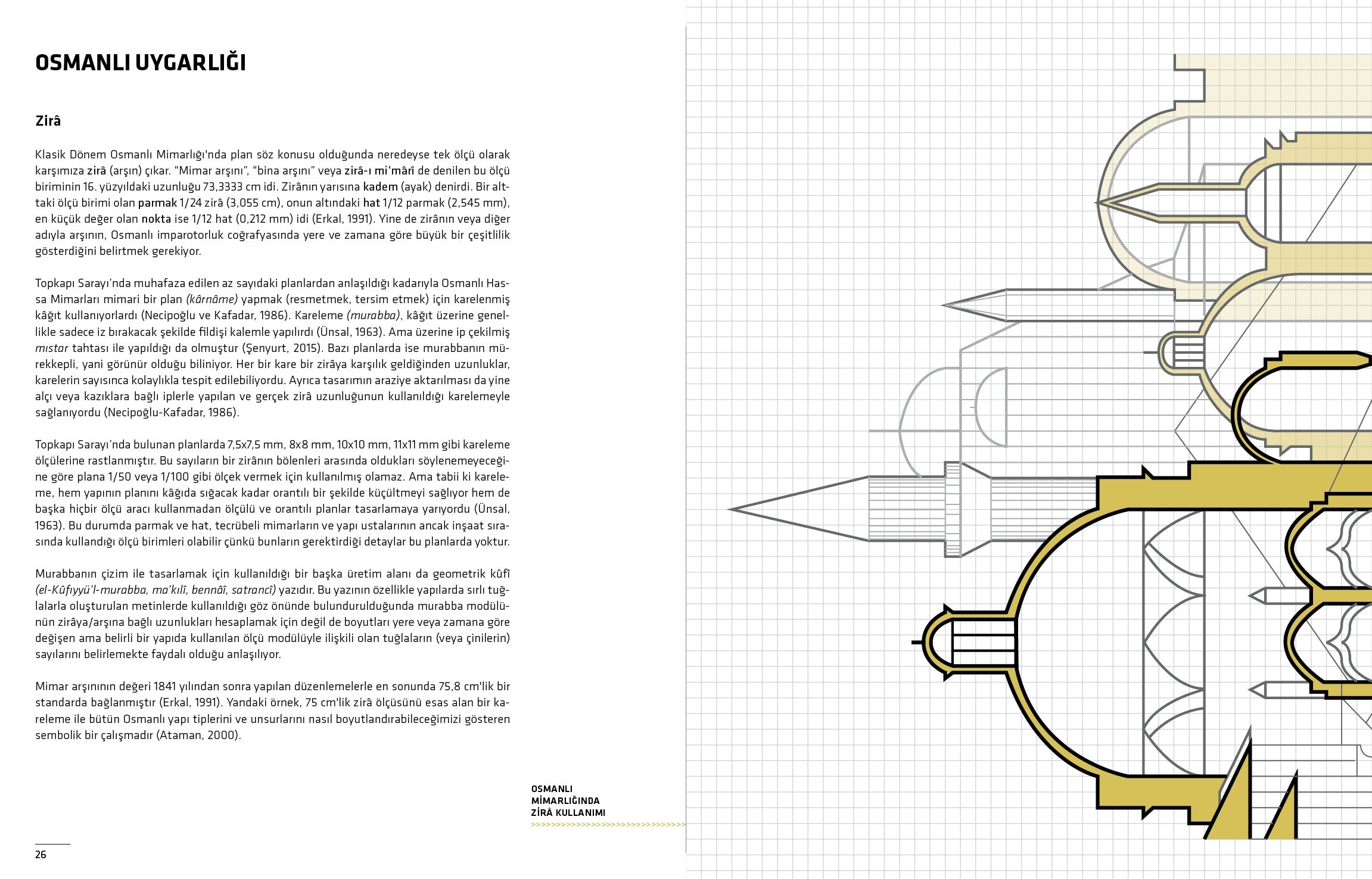
The first section, titled CIVILIZATIONS, examines the stages of organization and standardization in the architectural profession of the Egyptian, Far Eastern, Greek-Roman, Byzantine, and Ottoman civilizations.
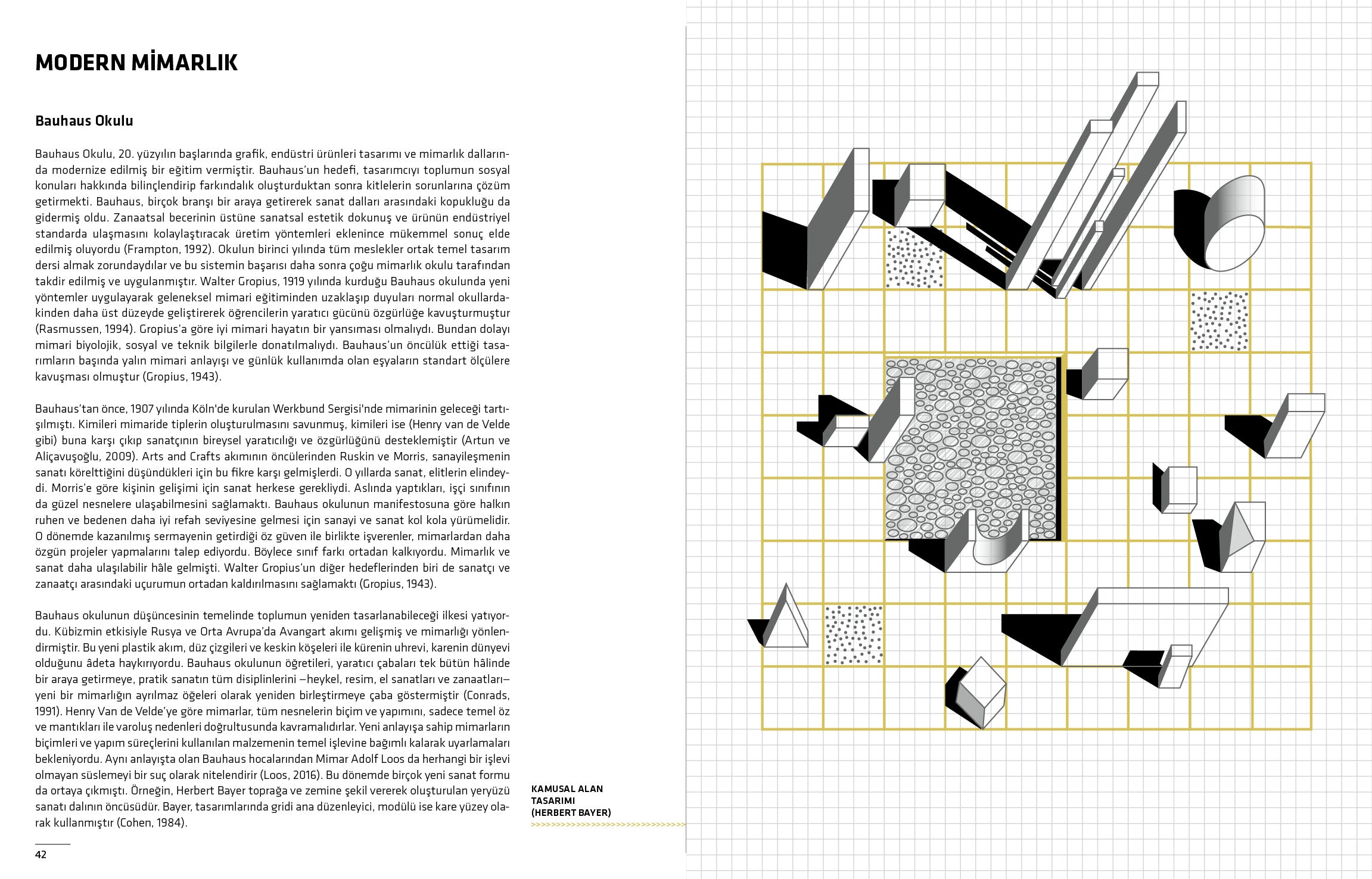
The second section, titled MOVEMENTS, reveals the connection of modules to movements such as Renaissance, Baroque, Art Nouveau, Art Deco, Modernism, Brutalism, Minimalism, and Postmodernism.
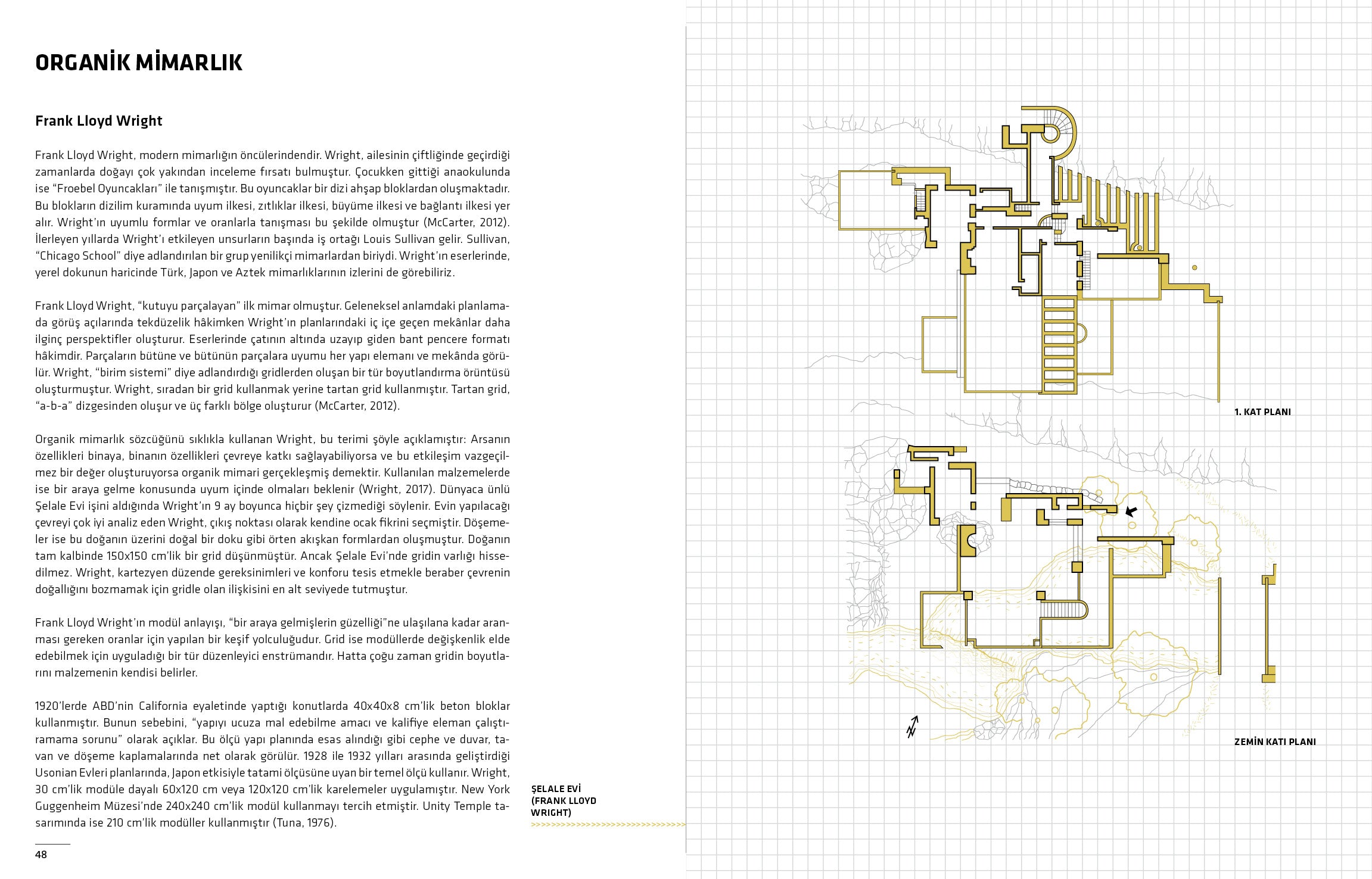
The last section, titled CONTEMPORARY ARCHITECTURE, deals with growth and multiplication matrices shaped by economic and aesthetic concerns in contemporary designs. Examples from the works of pioneering architects who used modules in their designs, ranging from urban design to buildings, from kitchens to furniture in interiors, such as Gaudi, Rietveld, Wright, Kahn, Ando, Utzon, Botta, Stirling, Bofill, Correa, Siza, Le Corbusier, Scarpa, and Aalto, are presented with original drawings.
The reasons for the authors Genco Berkin and Yusuf Civelek to prepare such a book are summarized as follows:
“Architects have always sought order. Using material in a mass in the right place and in the right amount, and even ensuring the material's own existence, requires mastery. Design principles come to the aid of architects at this point: Concepts such as hierarchy, rhythm, balance, emphasis, and proportion form the building blocks of design.
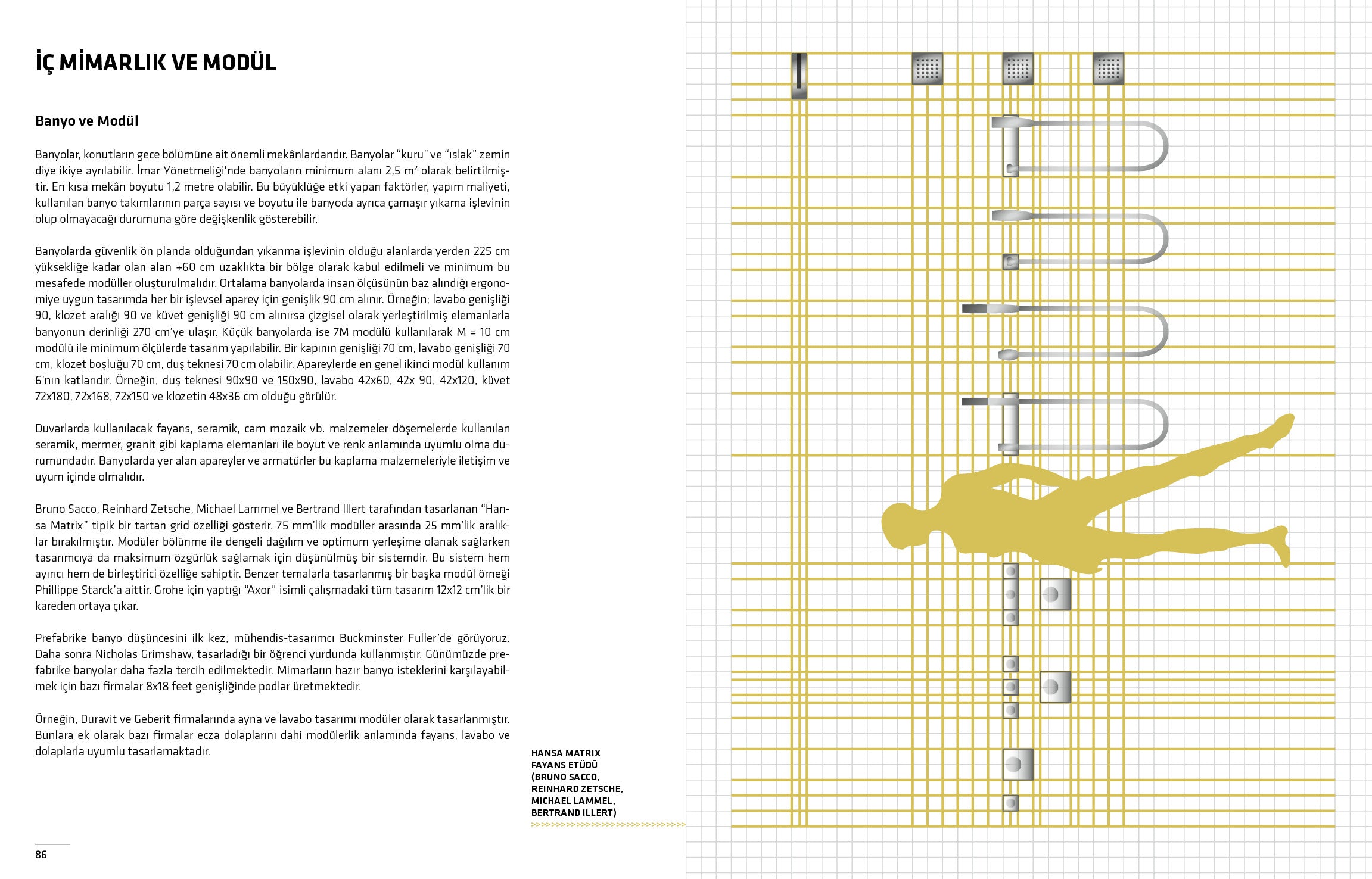
The dynamic of architecture creating a system should be taught to architecture students in every lesson. The design process can change direction from inside-out or outside-in. As this book will show, architects do not only design through plans. Designing with sections on a sloping terrain can sometimes yield more accurate results. In fact, the design of the entire building can derive from a piece of furniture. Sometimes, natural light can shape the building. Stairs, courtyards, or halls can take on the task of organizing the entire structure. While physical and geographical interactions make architecture efficient and effective, ergonomic solutions increase user satisfaction and comfort.
Architects also draw inspiration from branches of fine arts such as sculpture, music, painting, and dance. The acts of composing, choreographing, and writing symphonies parallel the ideas of achieving absolute beauty and creating order that architecture also possesses. No architectural work is designed randomly. Just as painters focus on one color or composers get stuck on one maqam, architects can be obsessively attached to one material. Whatever the case, geometric arrangements and concerns for proportion should not be lost. The series of rules and principles inherent in architectural teaching should be preserved and passed on to new generations to ensure its beauty and grandeur. An architect or interior designer should, like composing a symphony, conceptualize materials and building components in a modular system and observe the harmony of the instruments that make up the structure…”
