
Urban Land Readjustment: Urban Transformation
Yazar: Nihat Enver Ülger
Brand: YEM Yayın
Basım Tarihi: Haziran 2023
Basım Dili:
Sayfa Sayısı: 232Boyut: 16.5 x 24.0 cm
Out Of Stock
9786257008686
Product Description
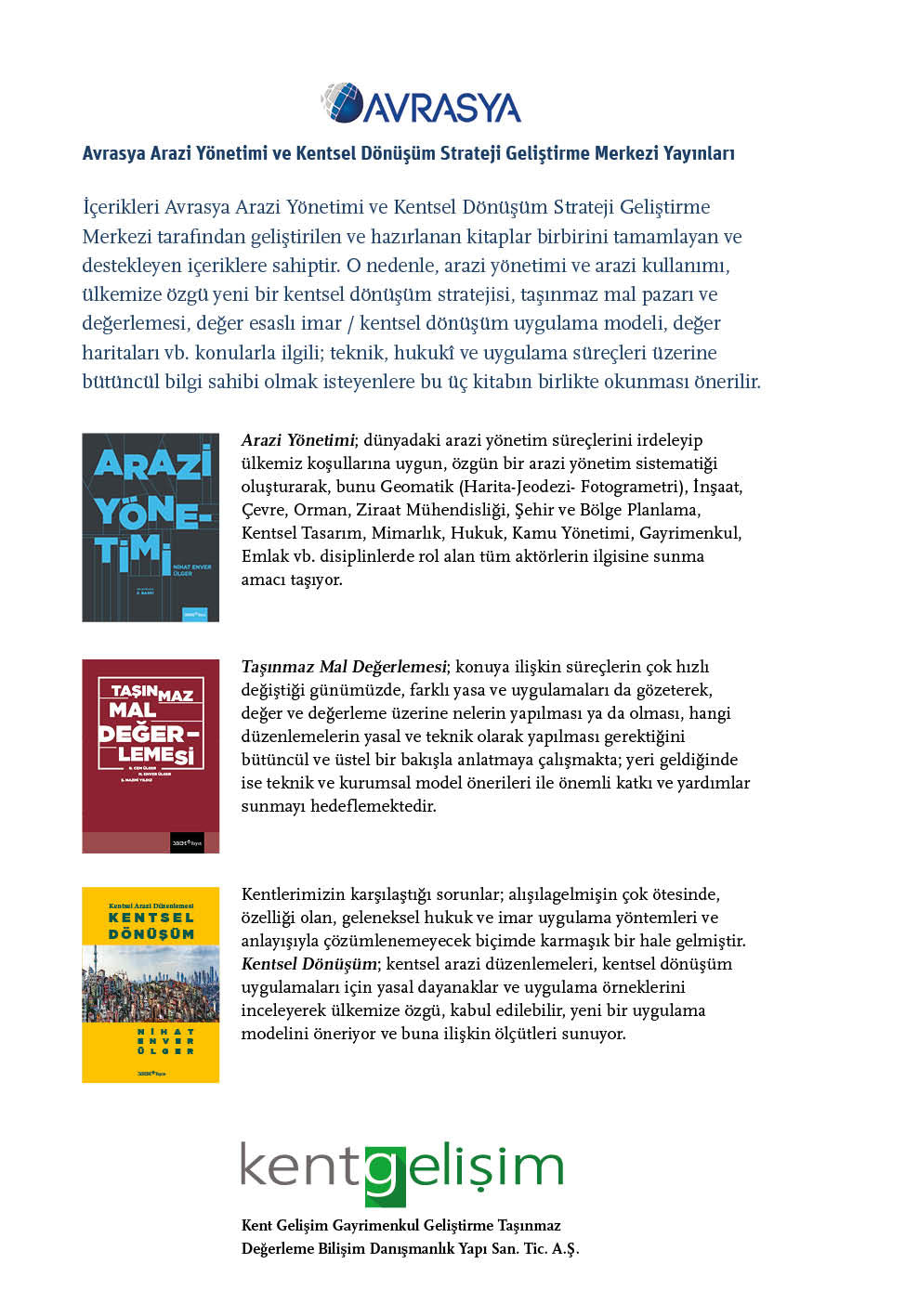
Nihat Enver Ülger’s new book, Urban Land Readjustment: Urban Transformation, has been published by YEM Yayın in collaboration with Kent Gelişim Gayrimenkul Geliştirme Taşınmaz Değerleme Bilişim Danışmanlık.
In his new book, Prof. Dr. Nihat Enver Ülger emphasizes the need for a perspective beyond and above the applications made under the name of "urban transformation" to date. He invites us to act with the awareness that we are not the owners of the nature we inhabit but rather its stewards for future generations when planning our cities; he points out that urban transformation should be seen not merely as the creation of earthquake-resistant, sheltered, private volumes/spaces, but as living areas for public individuals.
Nihat Enver Ülger explains the reason for preparing this book as follows:
"To propose a new, acceptable implementation model specific to our country for urban land readjustment and urban transformation applications, by examining legal bases and application examples, and to present the criteria related to it. The problems faced by our cities have become so complex that they are far beyond the usual, unique, and cannot be solved with traditional legal and zoning application methods and understanding. This situation involves a special process that concerns all segments of society, from public institutions to rights holders, project development experts, and investors, and requires new specialized knowledge. For this, a special and unique framework and a strategy based on it are needed. Therefore, instead of the classic zoning application, it would be much clearer to use the concept of 'Special Zoning Application / Urban Transformation,' which describes the point our country has reached. The book emerged from the search to present a detailed framework and methodology on how special zoning / urban transformation applications, referred to as urban land readjustment, can be carried out."
Ülger summarizes the necessity of a new perspective on the concept of urban transformation in the preface as follows:
“Often, the terms real estate, immovable property, and land are used interchangeably under the name 'land.' Land can be defined in two different ways: urban and rural in character. In our country, land use plans made on urban lands or on lands that are rural in character but opened for urban use, and the zoning applications based on these plans, are considered within the scope of plot and land readjustments. In contrast, land readjustments where the rural character is preserved are often considered within the scope of agricultural land consolidation. However, looking at the procedures and applications, it is clear that consolidation in agricultural lands is a form of zoning application in rural areas. Therefore, it would be a more correct understanding to consider all planning activities carried out on land, whether urban or rural in character, and the zoning applications based on them, under the heading 'land readjustment/zoning application.'
No matter how meticulously prepared, plot-land use-zoning plans offer no benefit other than a waste of effort, time, and money if they are not implemented, not registered in the land registry as new property and its form of use. Therefore, for real estate use-zoning-plans to have meaning, they must be feasible, achievable, in other words, implementable. However, implementing any type of plan is much more difficult than preparing it. This difficulty becomes fully apparent during the implementation of zoning plans.
The implementability of zoning plans requires a certain systematic approach and special facilities. Foremost among these is the need for a strong will and determination to implement the plan. This must be followed by a zoning law that is based on human rights, utilizes modern technology, considers societal needs, is internally consistent, has a specific ideology, is multifaceted, and includes the tools of an active land policy. Providing highly trained technical personnel and financial resources is also an unavoidable necessity in this field. Professor Dr. Hermann Jansen, a Berlin urban planning expert who prepared Ankara's master plan in the 1930s after the War of Independence, asked Atatürk: 'You won the War of Independence. But will you be able to show similar determination in preparing Ankara's master plans?' (Atay, 1969). His question has proven how right he was at the point our country has reached today.
Urban land readjustments and the transformation of cities must be carried out with the acceptance that humans are public beings. Urban transformation should be viewed not merely as the creation of earthquake-resistant, sheltered, private volumes/spaces, but as living areas for public individuals.
Urban transformation is a property readjustment. A country's view and understanding of property determine its regime, its political, legal, and institutional structure, the moral values of its society, and its economic structure. Therefore, regulations and interventions concerning property cannot be carried out with a simplistic approach focused solely on creating a volume/space. The readjustment of urban lands, which is a property readjustment—in other words, zoning applications, in other words, urban transformation—must be carried out by creating a new culture with a new understanding.
The proper preparation and implementability of land use plans, or zoning plans, for the purpose of urban land readjustment, depend solely and exclusively on the strong structuring and will of the authorized institutions and organizations in this regard. The establishment of a robust institutional structure and the ensuring of its continuity, unaffected by daily political interventions, is directly related to the creation of a new culture.
Within the urbanization problem in our country, there is a need for new legal and technical regulations and zoning application tools in urban land readjustments. Intensive constructions, issues related to the application of existing plot readjustments, the elevation of infrastructure standards in planned or unplanned densely built-up areas within zoning regulations, and the need for new construction in renovation and complete demolition areas as a precaution against the earthquake risk, which is a reality in our country, bring the process of urban transformation to the agenda.
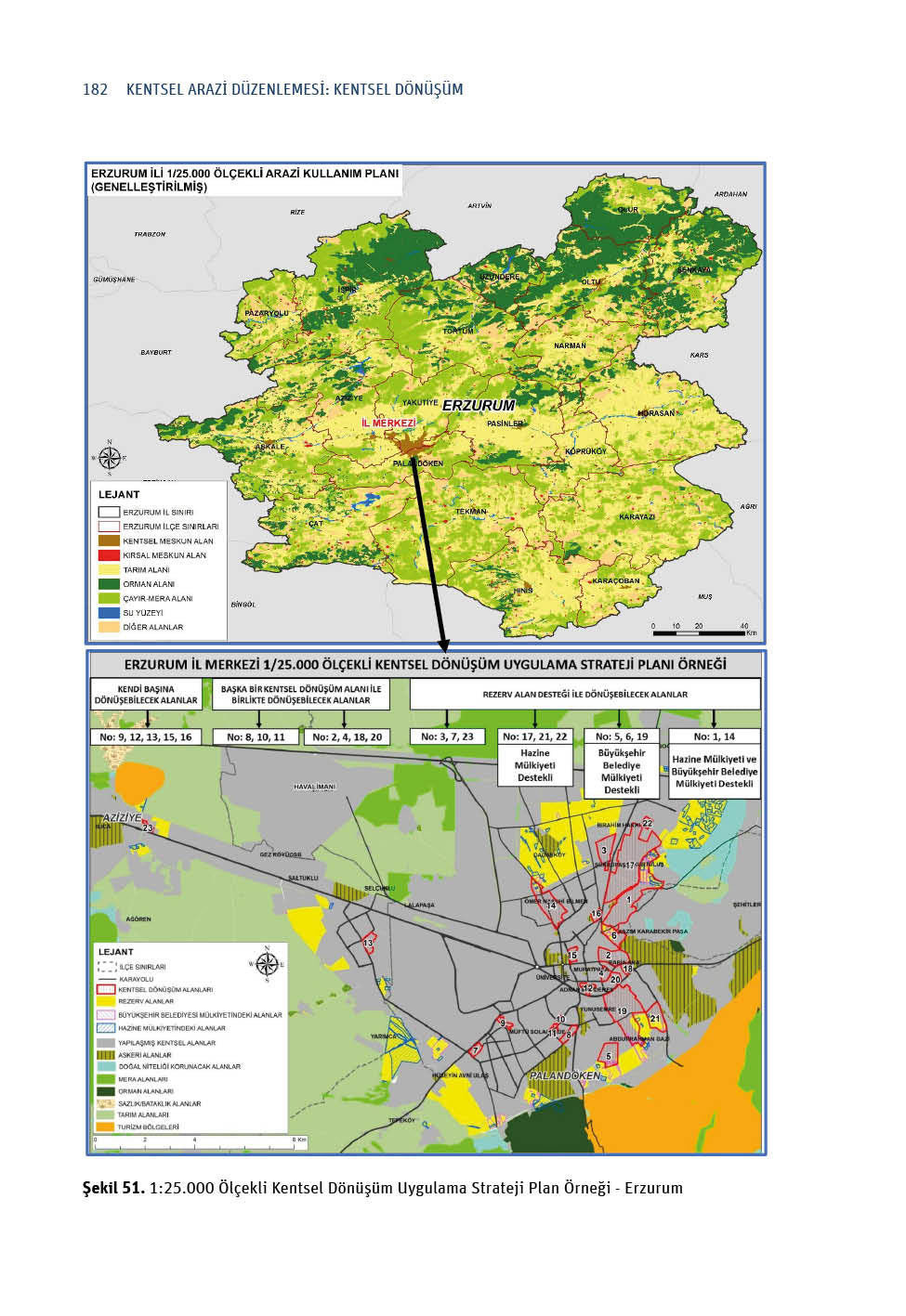
The problem is the legal determination of zoning application tools regarding how this will be done, securing financial resources, preparing feasible and viable zoning plans, the implementability of the prepared zoning plan, the distribution of new properties that will emerge, and their registration in the land registry. This describes a process. The name of this process is 'Urban Transformation' (Ülger, 2008; Ülger, 2009).
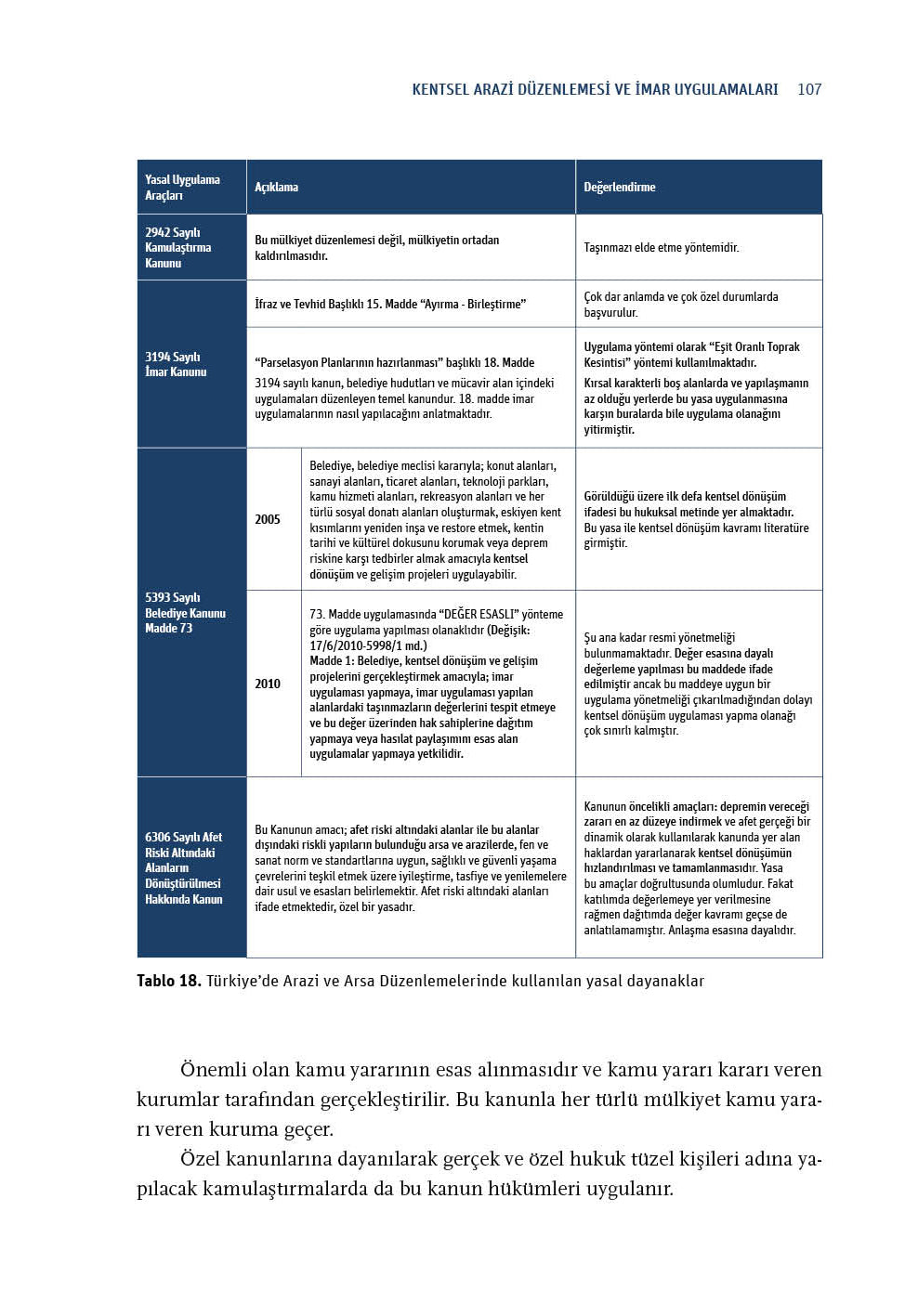
The legal framework concerning urban land readjustments and urban transformation in Turkey indicates that urban transformation application tools, especially in metropolitan and densely built-up areas, are insufficient. A new zoning application method in densely built-up areas will address this need. This is the 'Value-Based Method.'
The understanding of urban transformation, which came to the fore with the 1999 Marmara Earthquake, has become more visible and prominent with the 2023 Kahramanmaraş Earthquake. It has been frequently reiterated throughout the book that urban transformation is a zoning/plot readjustment. Yes, urban transformation is a zoning application. It is an urban land readjustment, a zoning application, in solving the problems faced by our country's cities, which have reached a point where they are confronted with immense economic, social, and criminal issues caused by disasters."
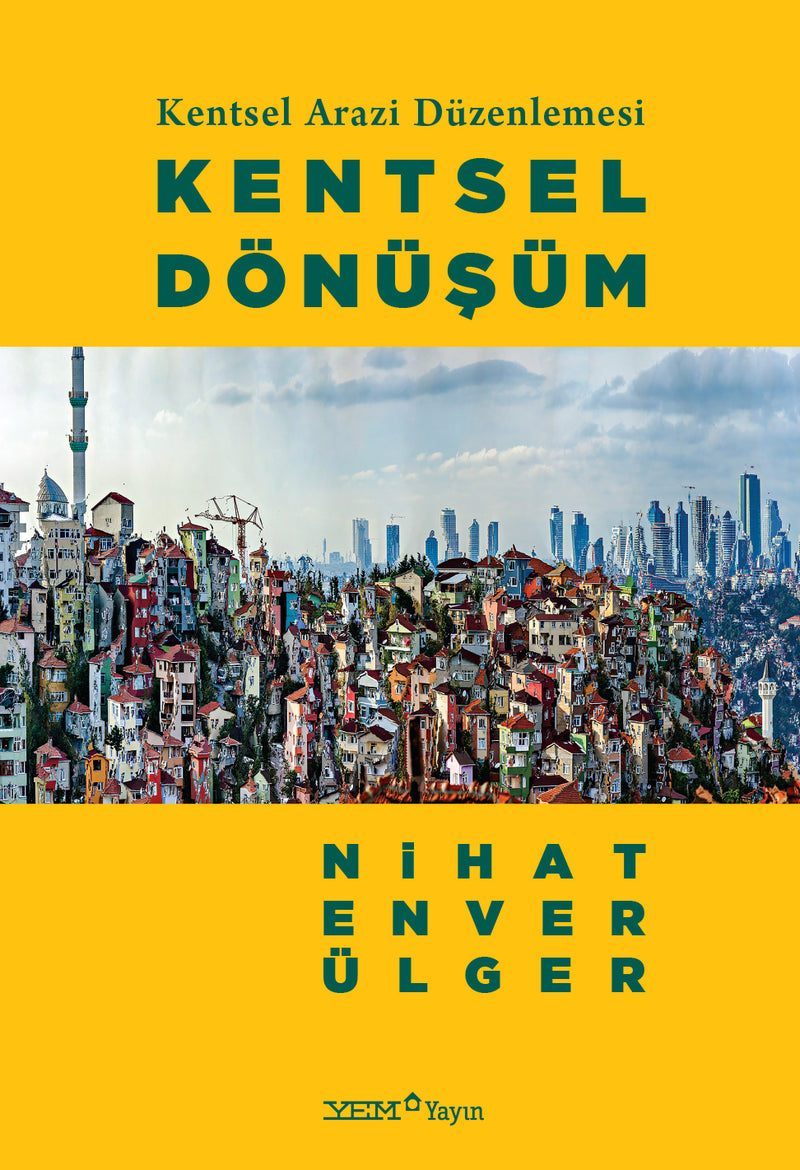
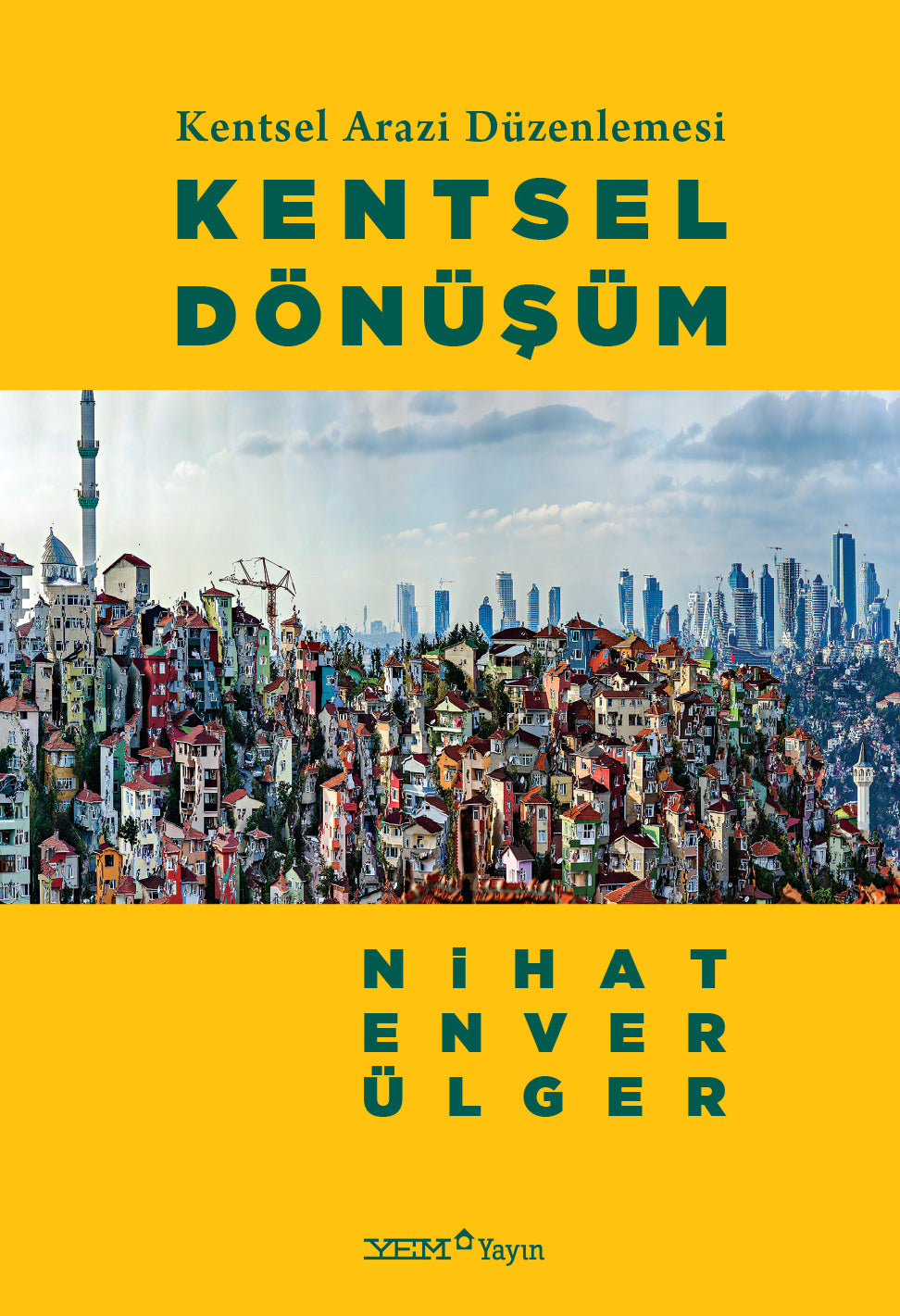
The book cover, designed and applied by Resul Atabay, features one of Murat Germen's photographs from his "Muta-morfoz" series, which examines the change/transformation experienced by Istanbul.
Who is Prof. Dr. Nihat Enver ÜLGER?
Prof. Dr. Nihat Enver Ülger graduated from Istanbul State Engineering and Architecture Faculty, Department of Geodesy and Photogrammetry Engineering in 1976.
He received his master's degree from Yıldız Technical University, Department of Geodesy and Photogrammetry Engineering in 1983 and his doctorate from the same department in 1988. He got married in 1986.
Between 1988 and 1992, he worked as an assistant professor at the University of Technology Vienna, Department of Land Surveying. During this time, he served as the project manager for the establishment of Austrian Land Information Systems.
He started working as an assistant professor at Yıldız Technical University, Department of Geodesy and Photogrammetry Engineering in 1992 and served as the Vice Head of the Department between 1993 and 1995.
Between 1992 and 1996, he served as the Chairman of the Istanbul Chamber of Surveying and Cadastre Engineers.
Nihat Enver Ülger received his associate professorship in 1999 and also served as a board member at Türkiye Kalkınma Bankası (Development Bank of Turkey) between 1999 and 2000.
Between 2002 and 2010, he worked at Istanbul University, Faculty of Engineering, Department of Mining Engineering.
