
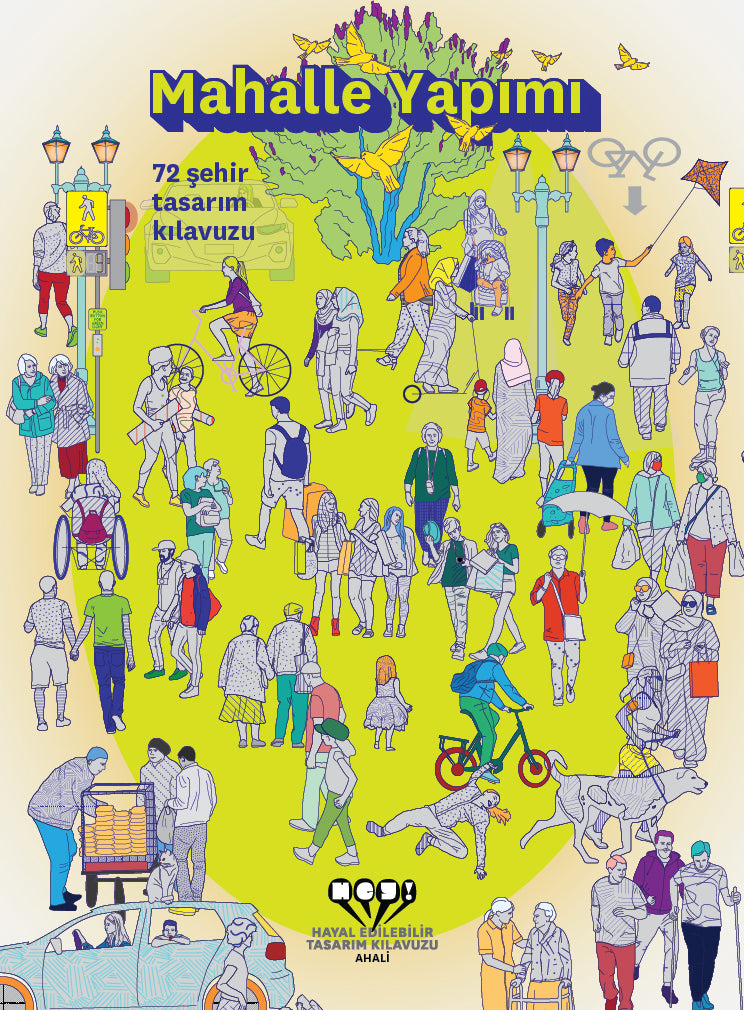
Neighborhood Creation – Imaginary Design Guide: The Community (Playing Cards)
Yazar: Alexis Şanal
Brand: YEM Yayın
Basım Tarihi: Ağustos 2023
Basım Dili:
Sayfa Sayısı: 80 Kart (160 Sayfa)Boyut: 12.0 / 16.5 cm
Out Of Stock
9786257008716
Product Description
Neighborhood Building - The Imaginable Design Guide: Ahali card deck, designed by Alexis Sanal (SANALarc) as a guide for everyone to participate in the design process of their own neighborhood, has been published by YEM Publications.
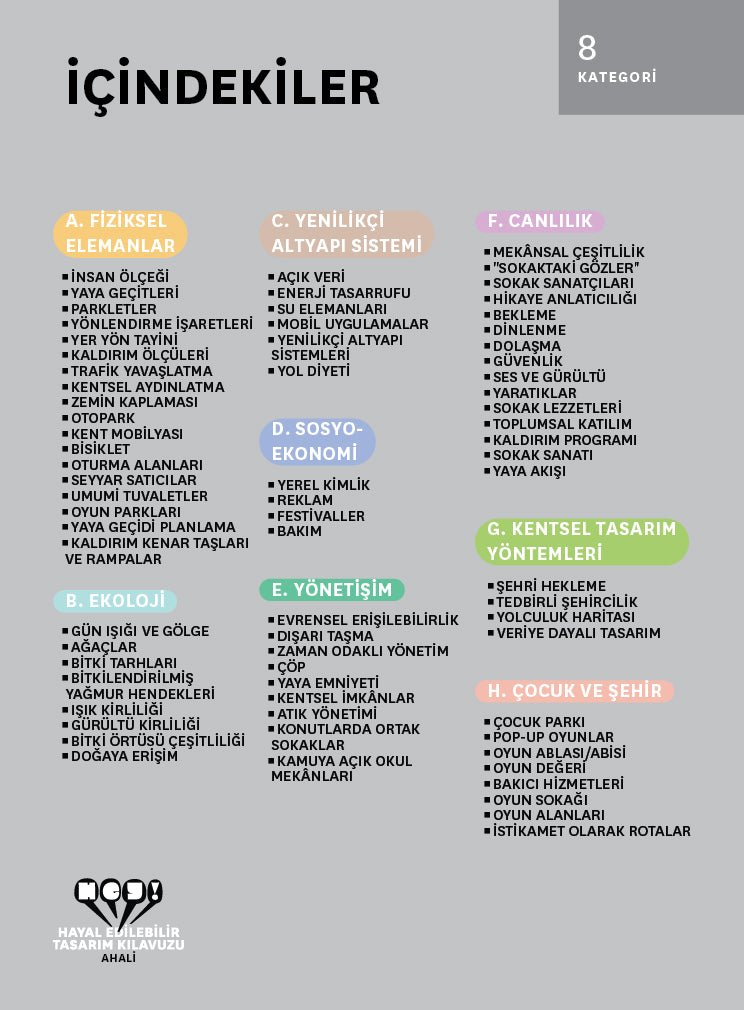
Neighborhood Building - The Imaginable Design Guide: Ahali aims to enable everyone to explore their neighborhood and participate in the design processes of public spaces by addressing 72 urban design concepts with definitions, design principles, and guidelines. This special card deck provides an opportunity for imagining, exploring, discussing, and sharing, not only for designers and urban planners but for all "ahali" (people) who wish to live in livable, lovable, and walkable neighborhoods.
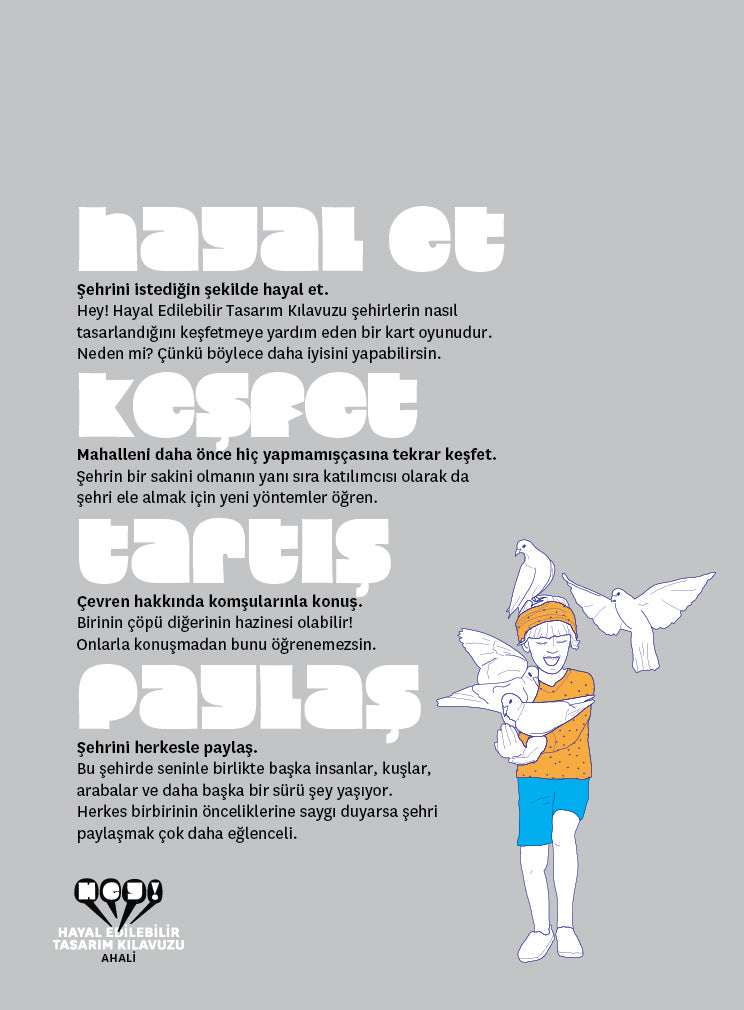
IMAGINE — Imagine your city the way you want it. Hey! The Imaginable Design Guide is a card game that helps you discover how cities are designed and how to make them better.
EXPLORE — Rediscover your neighborhood in ways you've never done before. Learn new ways to approach the city, not just as a resident but also as a participant.
DISCUSS — Talk to your neighbors about your surroundings. One person's trash can be another's treasure! You can only get this information by talking to them.
SHARE — Share your city with everyone. Along with you, other people, birds, cats, cars, and many other things live in this city. Sharing the city is much more enjoyable in an environment where everyone respects each other's priorities.
The Neighborhood Building card deck is a card game that allows users to explore how their neighborhoods are designed. These cards serve as both a source of information to bring residents together to make collective decisions and a design guide, suggesting the creation of self-organized neighborhood designs that prioritize vibrant public life and neighborhood cohesion.
The cards, prepared with the contributions of over 100 participants, aim to explain concepts such as pedestrian crossings, pavement, vegetated rain gardens, energy saving, waste management, maintenance, waiting areas, parklets, children's parks, etc., to the "neighborhood ahali" in an entertaining and educational language.
BENEFITS — Check out these cards, an urban design tool for exploring, learning, and implementing how neighborhoods are designed. Utilize this reference guide to create livable and beloved neighborhoods through actionable ideas and to develop a new civic imagination.
CONSIDERATIONS — Consider these design guidelines for everyone to imagine a city through various influences that shape decisions in city-making. Take action with your knowledge and ideas, and have a say in the public participation of your neighborhood. Participate in decisions for improvements, needs, and public life within your community.
SUGGESTED IDEAS — Create new thematic guides for streets, squares, new development areas, recreational areas, and other places that constitute public spaces.
The deck, prepared especially as a glossary for the public to design with experts, design activists, NGOs, and professionals, brought together the analytical, practical, and creative minds necessary for the development of meaningful and timeless urban design. In this sense, the card game approach offers a dynamic path for every participant in neighborhood design. Players who participate by writing, discussing, and reflecting reorganize the cards, taking into account their own urban design priorities and wishes, thereby creating a new design guide. At the same time, the concept of a 'card deck' as an object and 'game' represents a social learning dimension that can be used in workshops.
CONTRIBUTORS TO THE WORK:
Project Director: Alexis Sanal
Research and Content Editor: Şeyda Özcan
Project Coordination: Muhammad Abdullatif – Ahmet Fazıl Yenice
Community Engagement Consultant: Lisa Collins
Graphic Design: Kat Bielobrova
Graphic Consultant: Okay Karadayılar
Illustrations: Mrinë Godanca
Text Editor: Duygu Demir
Translation: Reyhan Nazlıaydın
