


Architecture, Form and Geometry
Yazar: Esen Onat
Brand: Efil Yayınevi
Basım Tarihi: Aralık 2020
Basım Dili: ["Turkish - English"]
Sayfa Sayısı: 104Boyut: 16x24
In stock
9786054334339
Product Description
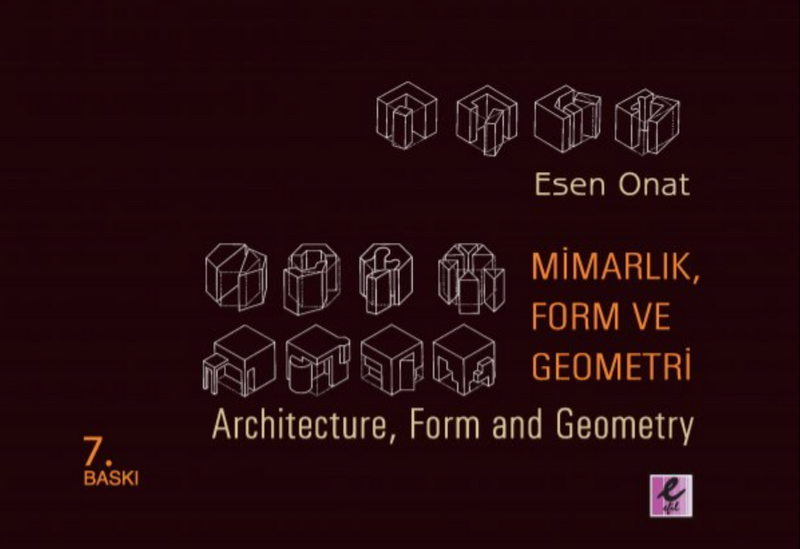
In this book, Prof. Dr. Esen Onat systematically presents and illustrates the fundamental techniques and approaches in the process of generating architectural forms by utilizing and processing three-dimensional geometric primitive forms.
The mass form of a building is a multifaceted phenomenon that carries functional, spatial, spiritual, symbolic, and semantic predicates, determining the architectural product's relationship with its physical and social environment. For this reason, the decision regarding form is one of the most sensitive issues for architects.
Considering that all forms can be derived from basic geometric shapes, the main purpose of this study is to introduce the techniques of processing and using the primitive geometric forms that everyone knows, and to exemplify that these forms have been used with similar techniques despite changing needs, technologies and trends from past to present.
In this book, Prof. Dr. Esen Onat systematically presents and illustrates the fundamental techniques and approaches for generating architectural forms by utilizing and transforming three-dimensional geometric primitives.
The mass form of a building is a multifaceted phenomenon that carries functional, spatial, spiritual, symbolic, and semantic attributes, shaping its relationship with both the physical and social environment. For this reason, it is one of the most critical concerns for architects.
Given that all forms can be derived from fundamental geometric shapes, this study primarily aims to introduce the basic techniques for processing and utilizing these universally recognized geometric forms. Additionally, it seeks to demonstrate that, despite evolving needs, technologies, and trends over time, these geometric primitives have consistently been applied using similar techniques throughout history.
