
What Is Architecture? And 100 Other Questions
Yazar: Rasmus Wern - Gert Wingardh
Brand: YEM Yayın
Basım Tarihi: Ekim 2023
Basım Dili:
Sayfa Sayısı: 216Boyut: 12.5 x 17.0 cm
In stock
9786257008280
Product Description
YEM Yayın has published its new book, What is Architecture? and 100 Other Questions, which aims to encourage reflection on concepts such as architecture, design, cities, and spaces, and to view the conventional landscape from a different perspective.
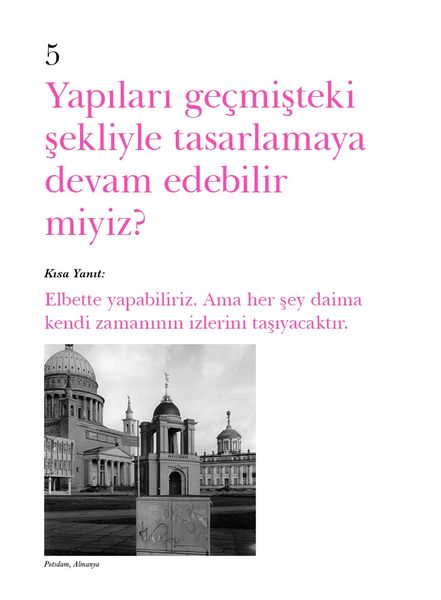
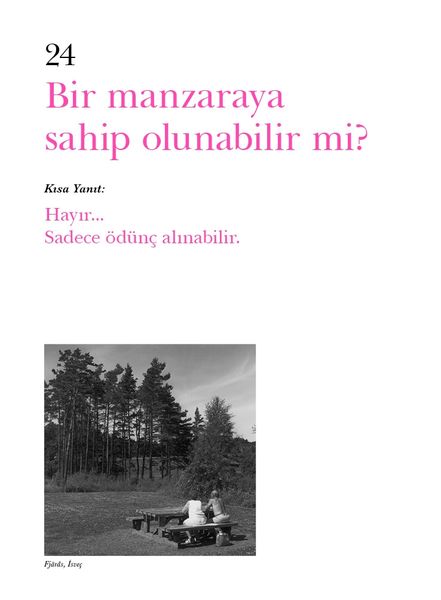
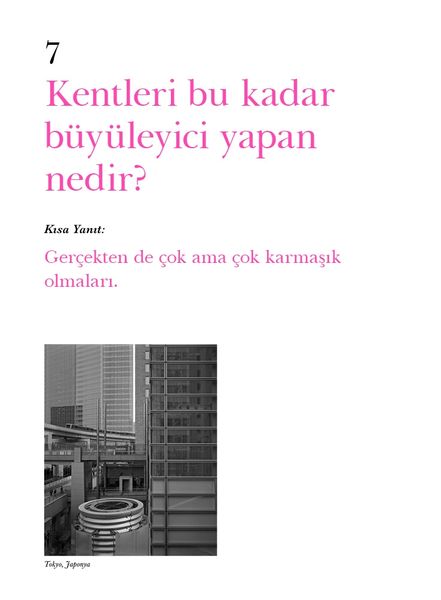
In the book, prepared for easy reading and communication, Rasmus Wern and Gert Wingårdh seek short and long answers to 101 questions they pose about architecture, cities, design, and space, using a critical language that can be described as humorous and even provocative.
The book was translated into Turkish by Prof. Dr. Özlem Erdoğdu Erkarslan. Erkarslan, who first encountered What is Architecture? and 100 Other Questions as a reader, architect, and academician before translating it, describes it as follows:
“Every architecture student dreams of finding and reading a single book titled ‘The Secrets of Architecture!’ to be ‘enlightened’. Especially students who finish their first year often describe an experience of confusion rather than a learning experience when they look back. In this process, there are so many different layers of knowledge, skills, and notions that it is often impossible for a student to classify and define their acquisitions. For this reason, they never give up their search for that mysterious book, assuming that a holistic single truth could actually exist.
The most important difference between contemporary architectural theory and the treatise tradition is its shift from the knowledge of practice and construction to discourse. For example, how we dig a septic tank is no longer among the knowledge areas for which the architect is responsible, but in contrast, it has transformed into the concept of ‘place’ which includes the septic tank and views the soil and sky that support the structure as a whole. Meanwhile, while the knowledge of construction is delegated piece by piece to other specialized fields, thought, idea, philosophy, discourse—however we name it—has become the sole area of discussion in architecture. The ‘grand narrative’ has abandoned practice; it has determined that the abstract, the idea, is more important. Theory is now independent of empirical knowledge. The rationality of the construction tradition has been secondary, replaced by technological expertise.
In this book, authors Rasmus Wern and Gert Wingårdh subtly criticize the ‘grand narrative’ with a humorous language; on the other hand, the book itself, with its title, winks at the curious reader searching for ‘The Secrets of Architecture’. This work is written for easy reading and communication. Instead of the long and convoluted sentences of architectural theory, there are short and simple explanations. Rasmus Wern and Gert Wingårdh take us back to the first ‘treatises’. The narrative is divided into sections and claims to cover the subject with an ambitious number (101). After Vitruvius’s and Alberti’s ten-item books, in the 21st century, surely only 101 items must suffice to cover everything!...
Authors Rasmus Wern and Gert Wingårdh, stating that much of what is said in the book has been said before, summarize their reasons for preparing such a work as follows:
“Much of what is said in this book has been said before. Architects like Adolf Loos expressed themselves with perfect clarity about the distinction between art and architecture. Gunnar Asplund made brilliant comments on the style of time and space; Bruno Taut spoke about color and Jacques-François Blondel about architectural character. We have built this book on the old wisdom we mentioned, adapted it to contemporary conditions, and produced some new ideas. In other words, we applied the process followed in architectural design.
Architects, as far as we know, have been trying to define the essence of architecture since ancient times. Unlike other art forms, architecture is often expected to explain itself. If it’s going to be expensive, we deserve to know what we’re paying for. In addition to basic usability and comfort criteria, the architectural product can add commercial value to the client in many ways, including creating an image, promoting, or generating revenue. However, the mysterious essence of architecture goes beyond such benefits. What is this essence? We have found 101 different ways to describe it. Some of our answers may seem contradictory – exactly as they should. As anyone who has witnessed urban life at some point can know, the same question can have more than one correct answer. Since the subject is both very amusing and very serious, it would be strange if our own structures or answers did not encompass this entire spectrum.
If this book can help the reader appreciate what a wonderful (and emotional) game architecture can be, we would be very happy to hear and learn that.”
