
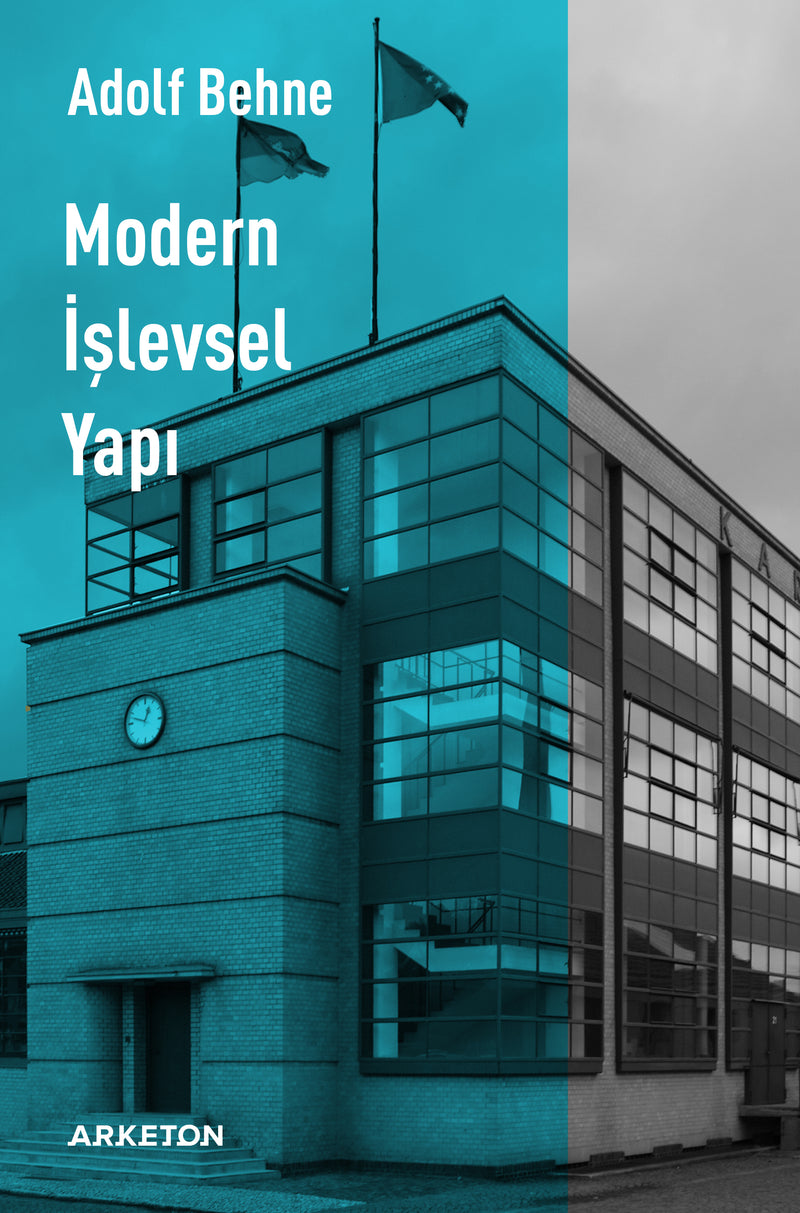
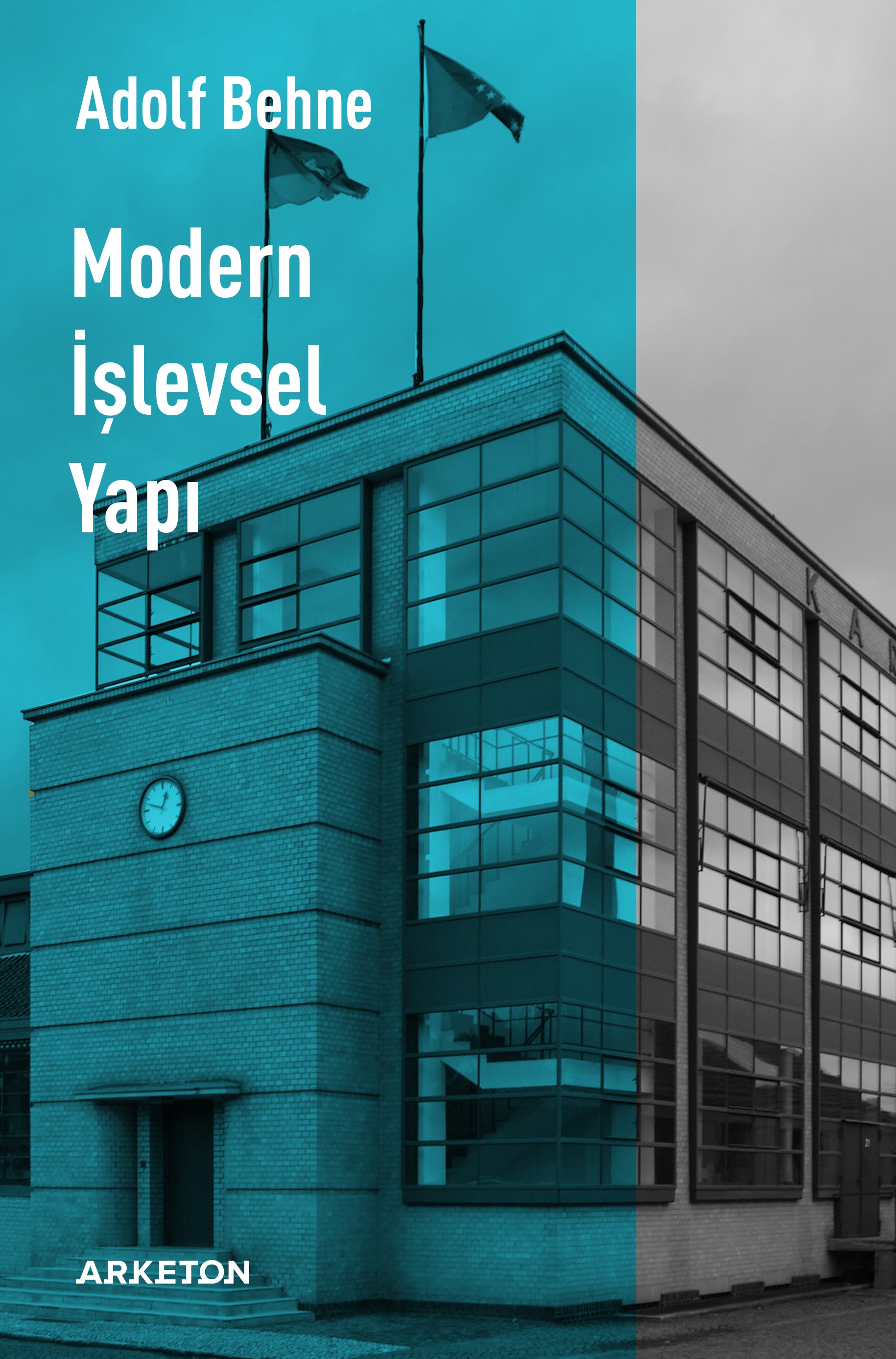
Modern Functional Building
Yazar: Adolf Behne
Brand: Arketon Yayınları
Basım Tarihi: Ekim 2023
Basım Dili: ["English"]
Sayfa Sayısı: 132Boyut: 15.5 x 23.5 cm
In stock
9786057293619
Product Description
Adolf Behne's Modern Functional Building, published in 1926 and one of the pioneering works of modernist architectural literature, has taken its place on the shelves as Arketon Publications' latest book. Modern Functional Building, one of the fundamental classics of architectural literature, makes a significant contribution to the Turkish architectural library with its original visuals, meticulous translation, and high-quality printing. The book, prepared under the editorial direction and editing of Aykut Köksal, was translated by Hüseyin Tüzün and proofread by Erdem Ceylan.
In his foreword to the book, Adolf Behne states: "For the last centuries of European architectural history, one cannot speak of a balance between form and function. Form was superior, and it was perfectly sufficient for function as long as the house could remain functional despite its form, meaning that form did not completely eliminate function. Any structure that somehow interested people, more than a fence or a lean-to, was a structure in terms of form: a structure created by the labor of an artist. Its suitability for purpose was entirely secondary. Alongside these, there were, of course, functional structures; the fence, the lean-to, the log cabin, the barn: these were also the labor of anyone. Since form and function insisted on being separate, the formal structure and the functional structure were also very far apart. However, in practice, it turned out that the alienation of the functional structure from form was not aesthetically as bad as assumed, and the superiority of the formal structure, especially over the simple functional structure, was not as admirable as expected. It was confirmed by experience that sensible, modern people looked with disdain at the formal structures of the time, but observed functional structures like iron bridges, cranes, and large spaces containing machines with pleasure.
So how was this possible? Aesthetic sensibility underwent a revolution. While in the nineties every unnecessary excess of form was admired as if it were a duty, and art was almost equated with ornamentation, at the turn of the century, the enthusiasm for lightness, conciseness, and clarity triumphantly broke through this front and opened eyes to the beauty of the functional.
In this book, we will essentially follow the old concept of functional building, which has been established by defining a certain group of buildings, but at the same time, we will show how architecture redefines the building, asserting itself more strongly here than in other fields of duty."
