
Classical Building Details in Ottoman Monumental Architecture
490.00TL
700.00TL
%30 İndirimli
Yazar: Fatin Uluengin
Brand: YEM Yayın
Basım Tarihi: Eylül 2020
Basım Dili:
Sayfa Sayısı: 272Boyut: 19.5 x27.0 cm
Out Of Stock
9786058136687
Product Description
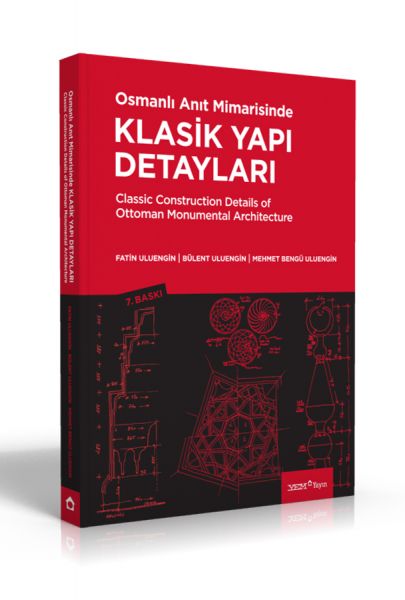
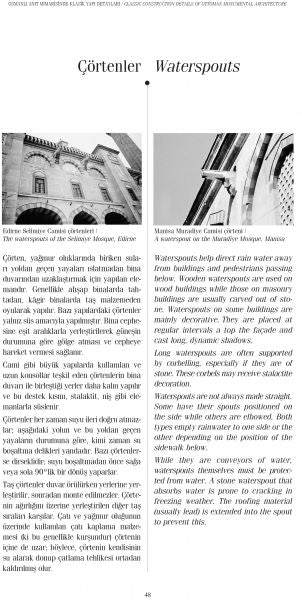
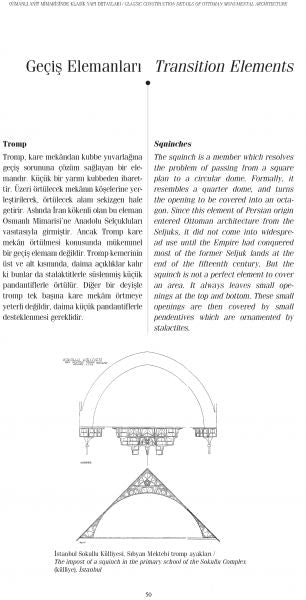
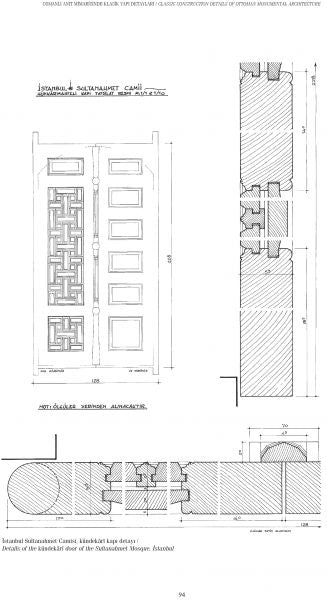
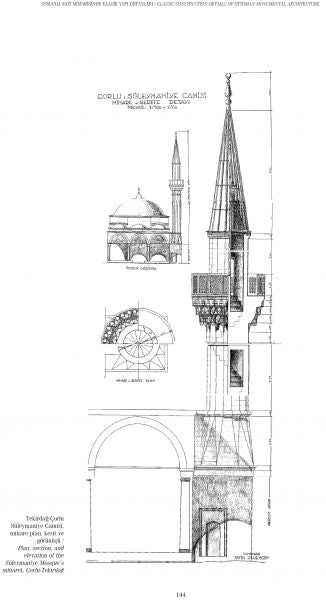
A whole is made up of details. In traditional architecture, details have been developed over time through trial and error. There is no reason for a detail believed to perfectly fulfill its expected function to change. This understanding, which is one of the most important characteristics of traditional architecture, is diametrically opposed to today's architectural understanding. A careful examination will reveal that even two details applied in distant regions or at different times can exhibit astonishing similarities. Therefore, the important thing is to understand the essence of a detail and to decipher how it fulfills its function. An architect who achieves this will have mastered that detail; they can contribute to the development of that detail under the changing conditions of today. This book, the result of a long effort spanning sixty years, primarily addresses architects, restorers, and students in these fields. Perhaps the most important feature of this work is that it presents Ottoman classical building details collectively for the first time. Some of the monuments to which the presented details belong have lost their originality due to faulty restoration work, some are on the verge of collapse due to neglect, and some have been completely lost. If this book can draw the attention of its target audience to these excellent details, help them appreciate them and understand their principles, it will have achieved its purpose. Because we all know that perfection lies in the details.
A whole is made up of details. In traditional architecture a detail is developed over time through trial and error. When it is believed to have been ‘perfected', however, it need no longer change. Close inspection will reveal that most traditional details of the same type have many similarities, even when produced in different regions at different times. This is one of the most characteristic aspects of traditional architecture, and is the exact opposite of our understanding of architecture today. One must strive to understand the working principle of a detail-how and why it has evolved to function so well, and, often, so beautifully. An architect capable of this understanding has mastered that detail and its utility, and can help its further evolution in the context of contemporary conditions of construction. This book, which is the outcome of 60 years of professional experience, is useful primarily for architects, preservationists and students in these fields. Yet this book can also address a much greater audience because it is the first to compile Ottoman classical details in a single volume. Furthermore, some of the buildings which these details are part of have fallen into ruins and others have lost their authenticity due to faulty interventions. These may be the only records of their details. If this book can attract attention to these beautiful details and further an understanding of their working principles it would have accomplished its purpose. Perfection lies in the details.
A whole is made up of details. In traditional architecture a detail is developed over time through trial and error. When it is believed to have been ‘perfected', however, it need no longer change. Close inspection will reveal that most traditional details of the same type have many similarities, even when produced in different regions at different times. This is one of the most characteristic aspects of traditional architecture, and is the exact opposite of our understanding of architecture today. One must strive to understand the working principle of a detail-how and why it has evolved to function so well, and, often, so beautifully. An architect capable of this understanding has mastered that detail and its utility, and can help its further evolution in the context of contemporary conditions of construction. This book, which is the outcome of 60 years of professional experience, is useful primarily for architects, preservationists and students in these fields. Yet this book can also address a much greater audience because it is the first to compile Ottoman classical details in a single volume. Furthermore, some of the buildings which these details are part of have fallen into ruins and others have lost their authenticity due to faulty interventions. These may be the only records of their details. If this book can attract attention to these beautiful details and further an understanding of their working principles it would have accomplished its purpose. Perfection lies in the details.
