
Constructivist Architecture in Russia
Yazar: El Lisitzki
Brand: Arketon Yayınları
Basım Tarihi: Ocak 2023
Basım Dili: ["Turkish"]
Sayfa Sayısı: 136Boyut: 15.5 x 23.5 cm
In stock
9786057141392
Product Description
Arketon Publications presents the foundational texts of constructivism by El Lissitzky: Constructivist Architecture in Russia
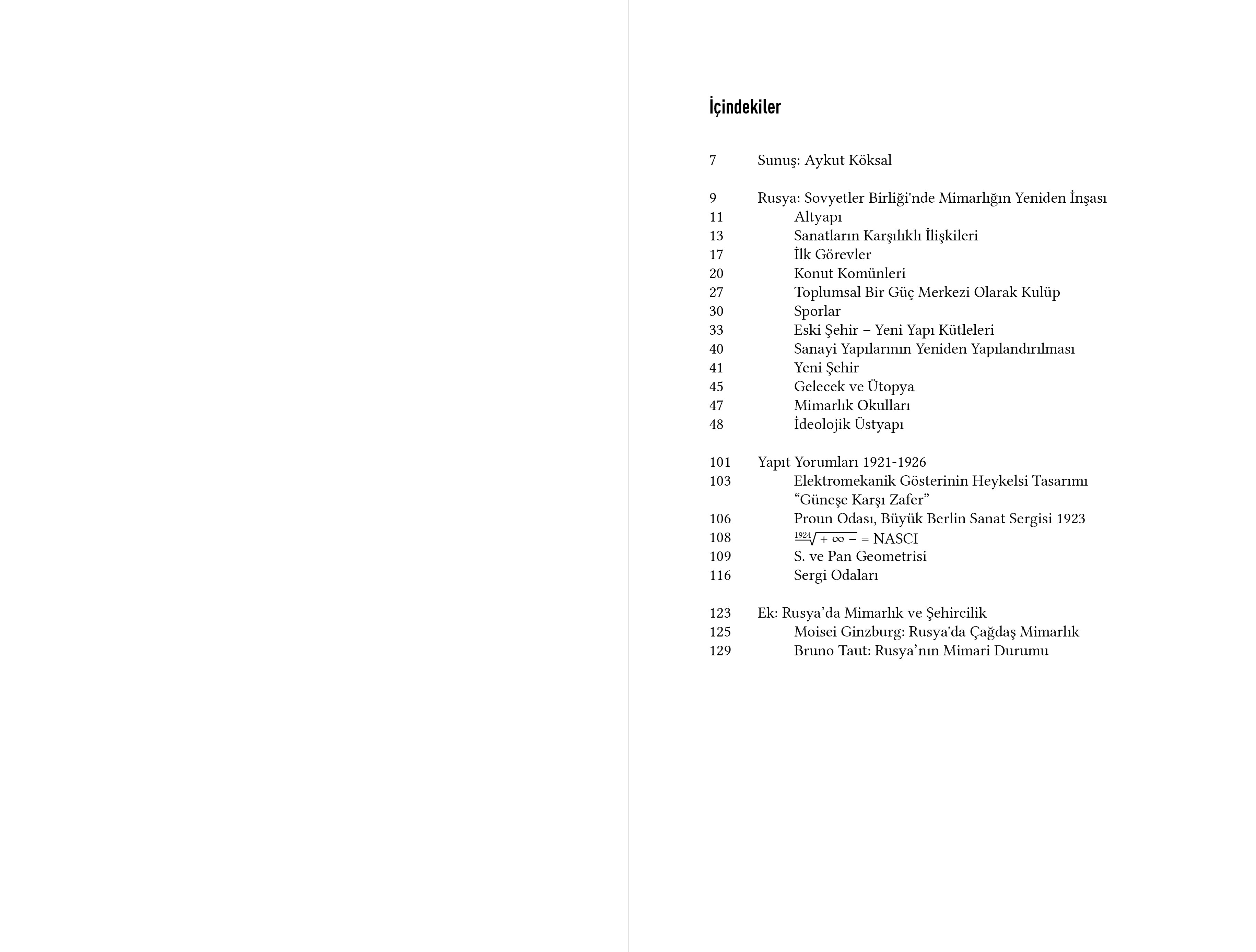
Constructivist Architecture in Russia, a collection of texts by El Lissitzky, has taken its place among Arketon Publications. Edited by Aykut Köksal and translated by Mehmet Kerem Özel, the book contains seminal writings, drawings, and photographs from the period.
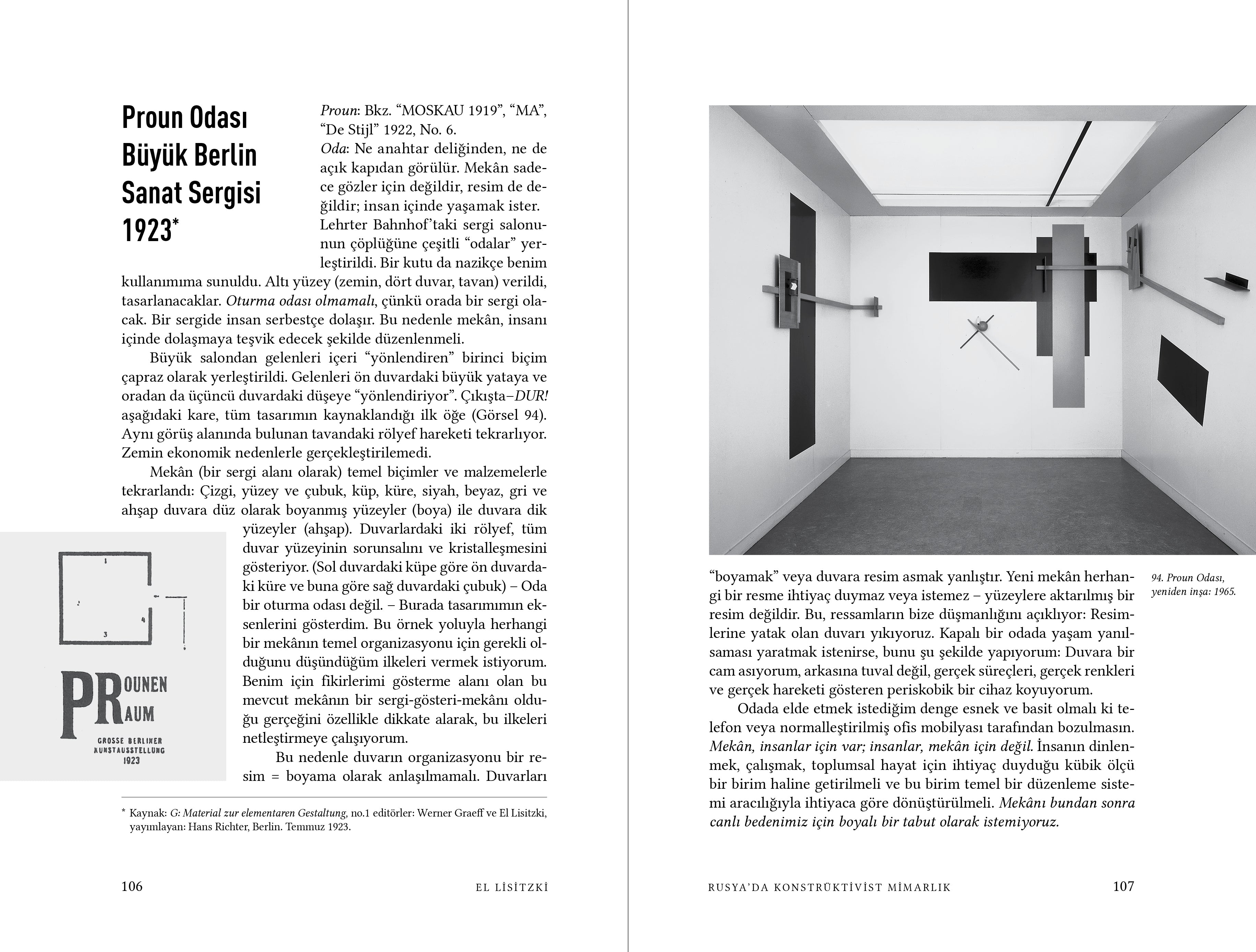
The main text of the collection was written by El Lissitzky in 1929 and published in Vienna in 1930 under the title Russland. Die Rekonstruktion der Architektur in der Sowjetunion (Russia. The Reconstruction of Architecture in the Soviet Union). In addition to this main text, the collection also includes five art essays written by El Lissitzky between 1921 and 1926. These writings, which are among the foundational texts of the Russian avant-garde, illustrate the transition process from suprematist art to constructivist architecture. The 1923 text, in particular, which discusses the Proun Room, is a document demonstrating this turning point.
The appendix of the collection includes two essays by two leading architects of the period, one from Russia and one from Germany, conveying their perspectives on Russia's architectural environment, especially constructivist architecture. Moisei Ginzburg's essay is dated 1928, and Bruno Taut's essay is dated 1929.
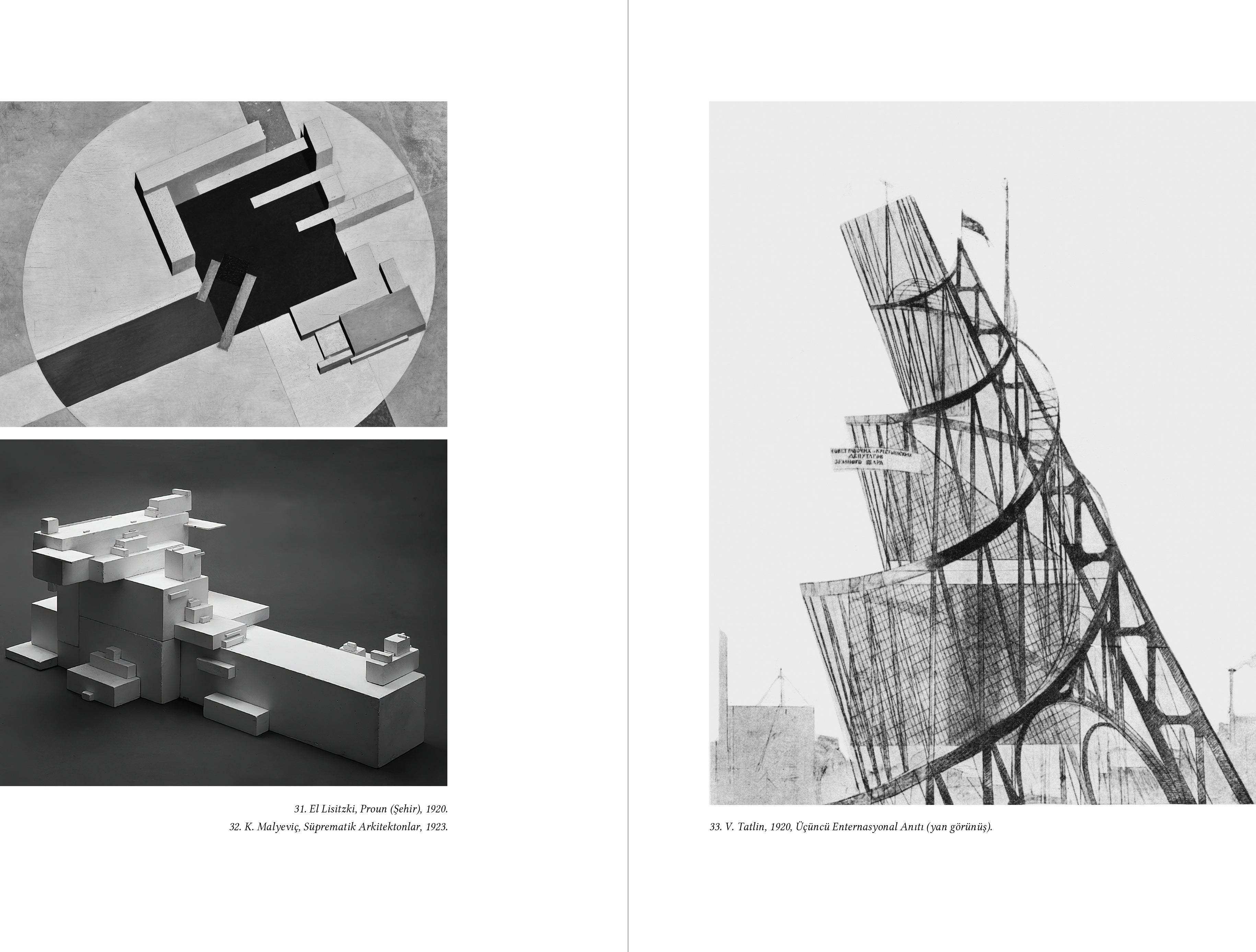
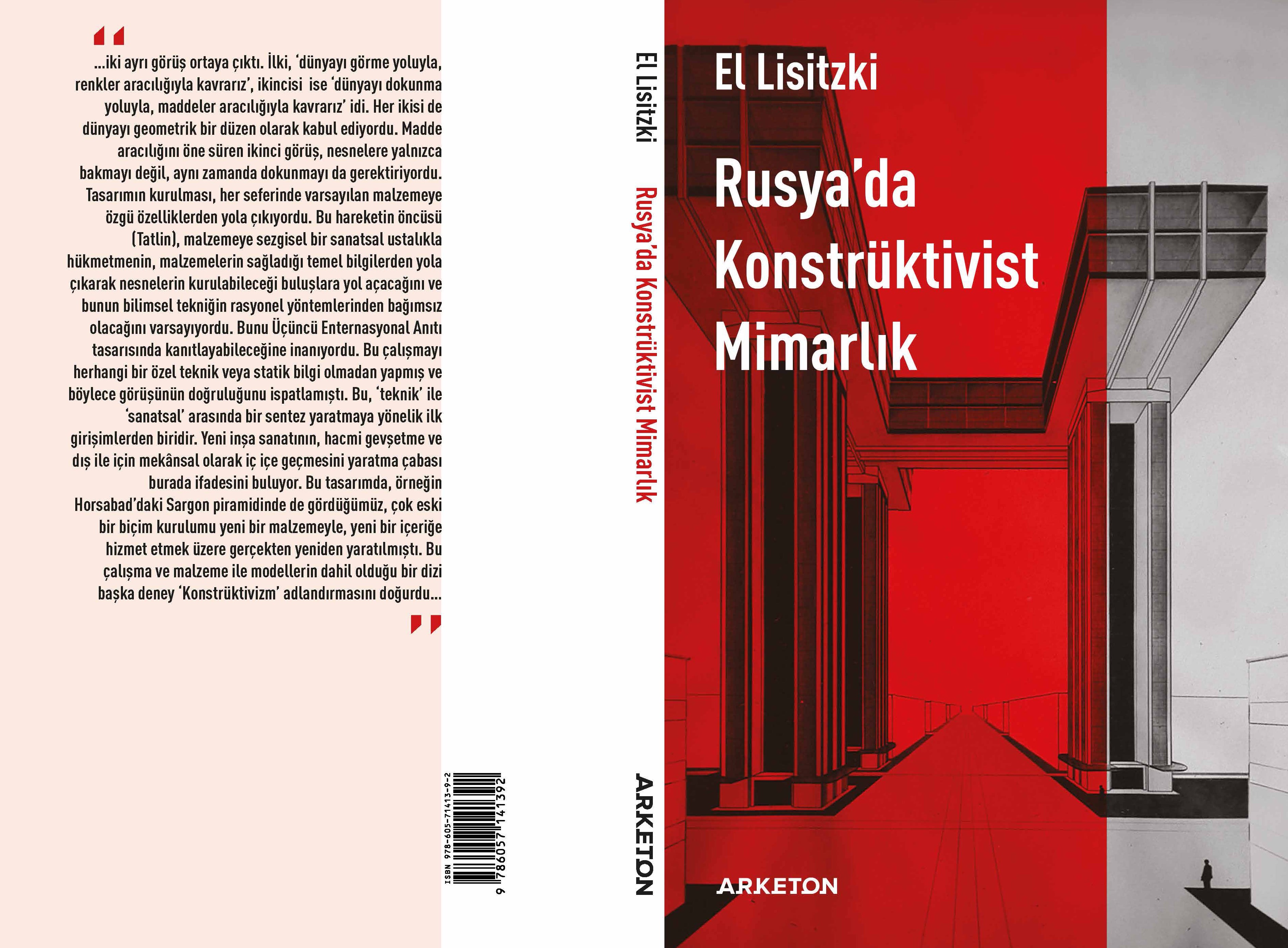
In the book, El Lissitzky describes the genesis of constructivism as follows: "...two distinct views emerged. The first was, 'we grasp the world through seeing, through colors,' and the second was, 'we grasp the world through touching, through materials.' Both accepted the world as a geometric order. The second view, advocating for material mediation, required not only looking at objects but also touching them. The establishment of design started each time from the specific properties of the assumed material. The pioneer of this movement (Tatlin) assumed that intuitively artistic mastery of material would lead to discoveries for constructing objects, based on fundamental knowledge provided by the materials, and that this would be independent of the rational methods of scientific technique. He believed he could prove this in his design for the Monument to the Third International. He made this work without any special technical or static knowledge, thus proving the correctness of his view. This is one of the first attempts to create a synthesis between 'technical' and 'artistic'. Here, the new art of construction finds its expression in the effort to loosen volume and create a spatial intertwining of exterior and interior. In this design, a very old form of construction, which we also see, for example, in Sargon's pyramid in Khorsabad, was truly recreated with a new material to serve a new content. This work and a series of other experiments involving material and models gave rise to the term 'constructivism'..."
