
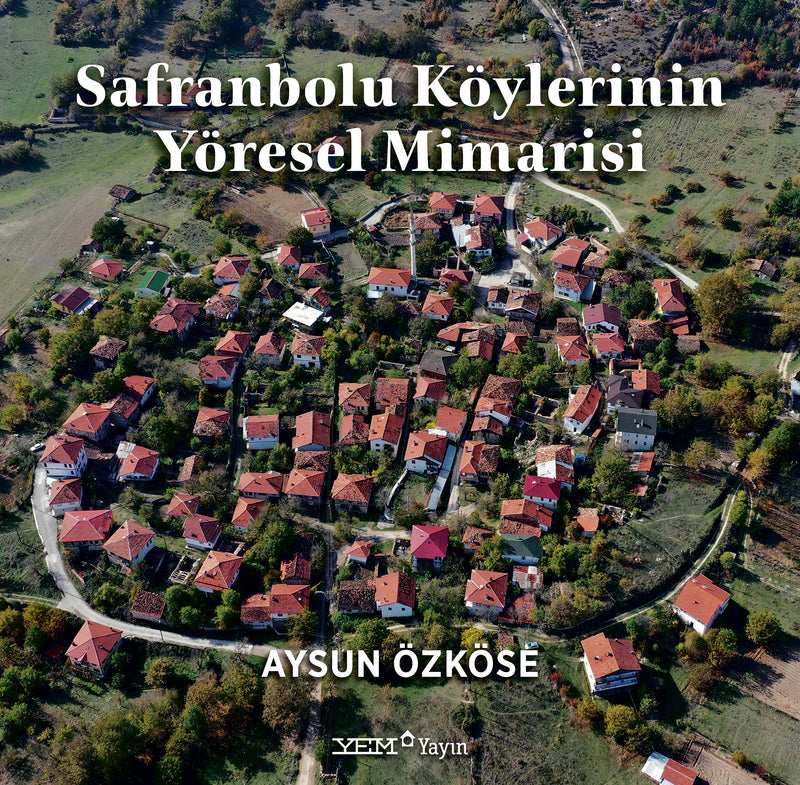
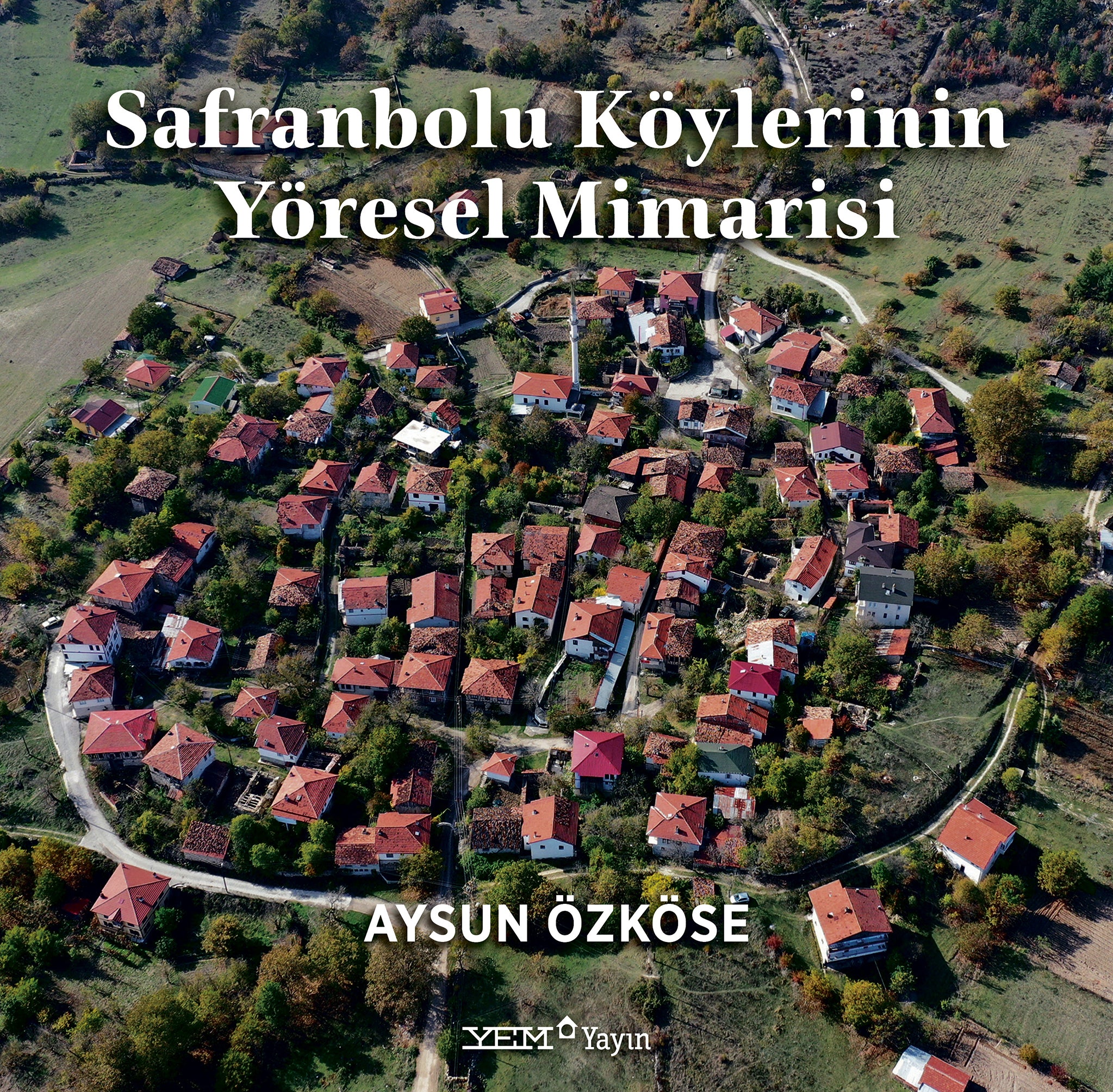








Traditional Architecture of Safranbolu Villages
1,750.00TL
2,500.00TL
%30 İndirimli
Yazar: Aysun Özköse
Brand: YEM Yayın
Basım Tarihi: Kasım 2022
Basım Dili:
Sayfa Sayısı: 216Boyut: 26.0 x 25.5 cm
Out Of Stock
9786257008440
Share:
Product Description
Prof. Dr. Aysun Özköse's new book, titled "Vernacular Architecture of Safranbolu Villages," has been published by YEM Publications.
The book, published with the valuable contributions of the Safranbolu Culture and Tourism Foundation, the Karabük Governorship, and the Karabük University Scientific Research Projects Coordination Office, was meticulously prepared from Prof. Dr. Aysun Özköse's 30 years of both dedicated personal efforts and labor-intensive field identification studies conducted with her students.
Aysun Özköse emphasized the need to raise awareness for the documentation, protection, and sustainability of the traditional architectural heritage in Safranbolu villages:
“The historical city center of Safranbolu has been crowned by UNESCO as one of the most special historical environments in the world requiring protection, due to its unique works such as houses, mosques, inns, Turkish baths, bridges, fountains, and mills, which can shed light on the future, and its rich cultural heritage. Influenced by this, significant progress has been made in inventory-research documentation and conservation-development efforts for the vernacular architectural values in the Safranbolu city center that require protection. In parallel, substantial identification and registration work has been carried out in the villages surrounding Safranbolu, especially Yörükköyü, Yazıköyü, and Bulakköyü in Karabük.
However, it is observed that the vernacular architectural heritage in the remaining villages, consisting of unique examples of folk building art such as traditional timber-framed houses, mills, schools, inns, Turkish baths, mosques, laundries, fountains, cemeteries, bridges, etc., is undergoing a process of deterioration and loss. Yet, it is a fact that these structures possess similar and common unique values to those in Safranbolu's historical city center. The data we obtained from our research support the fact that there are works with the same unique values in all rural settlements surrounding the region.
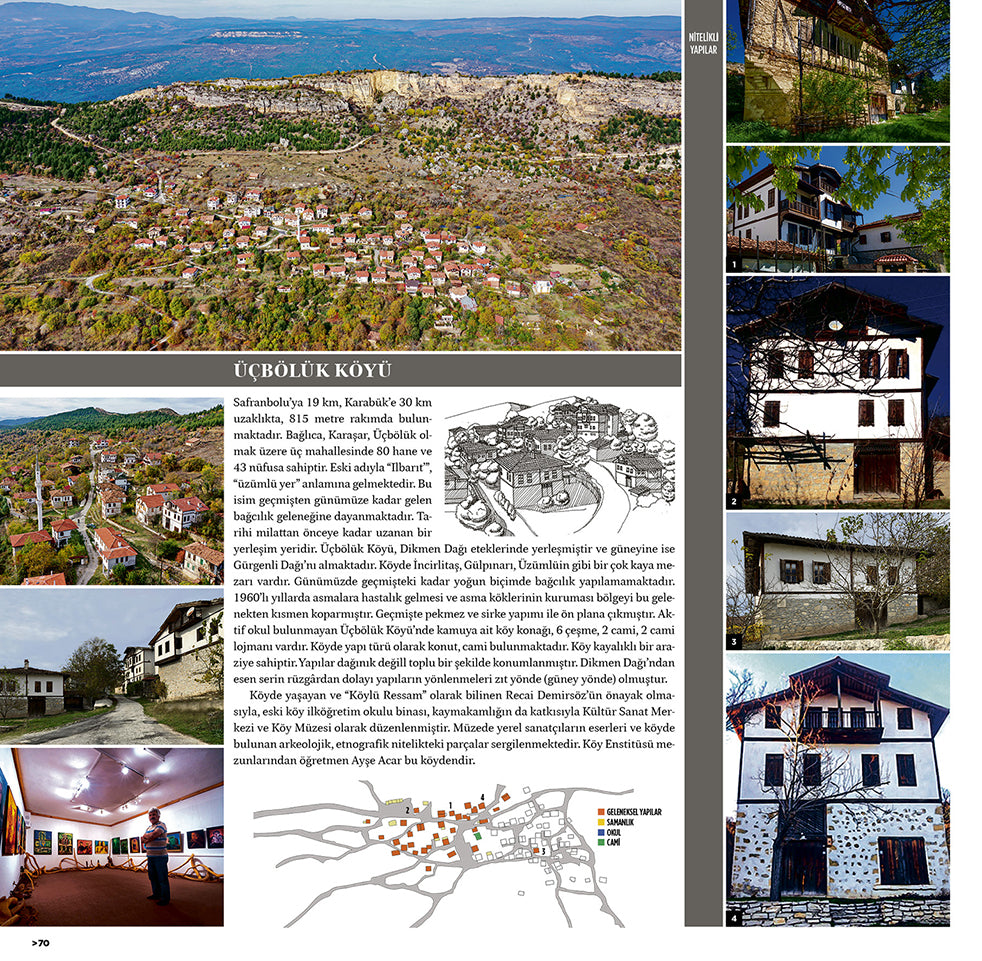
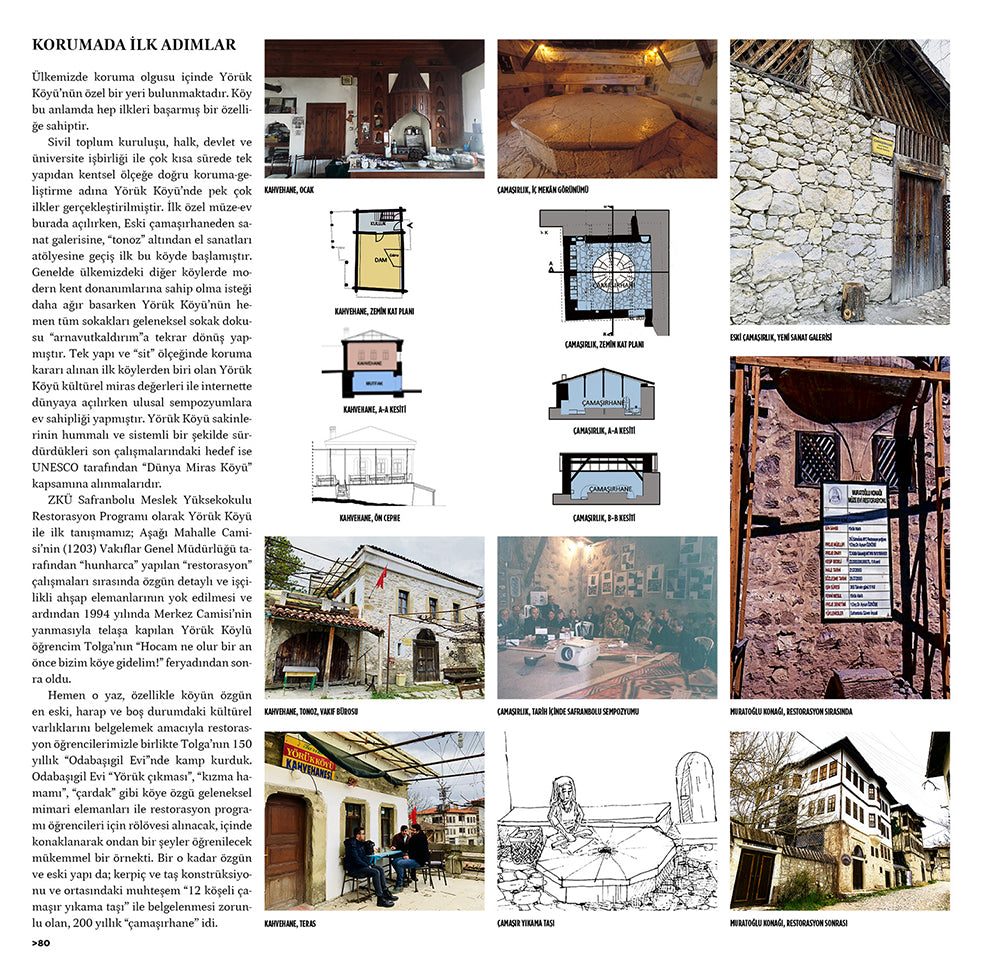
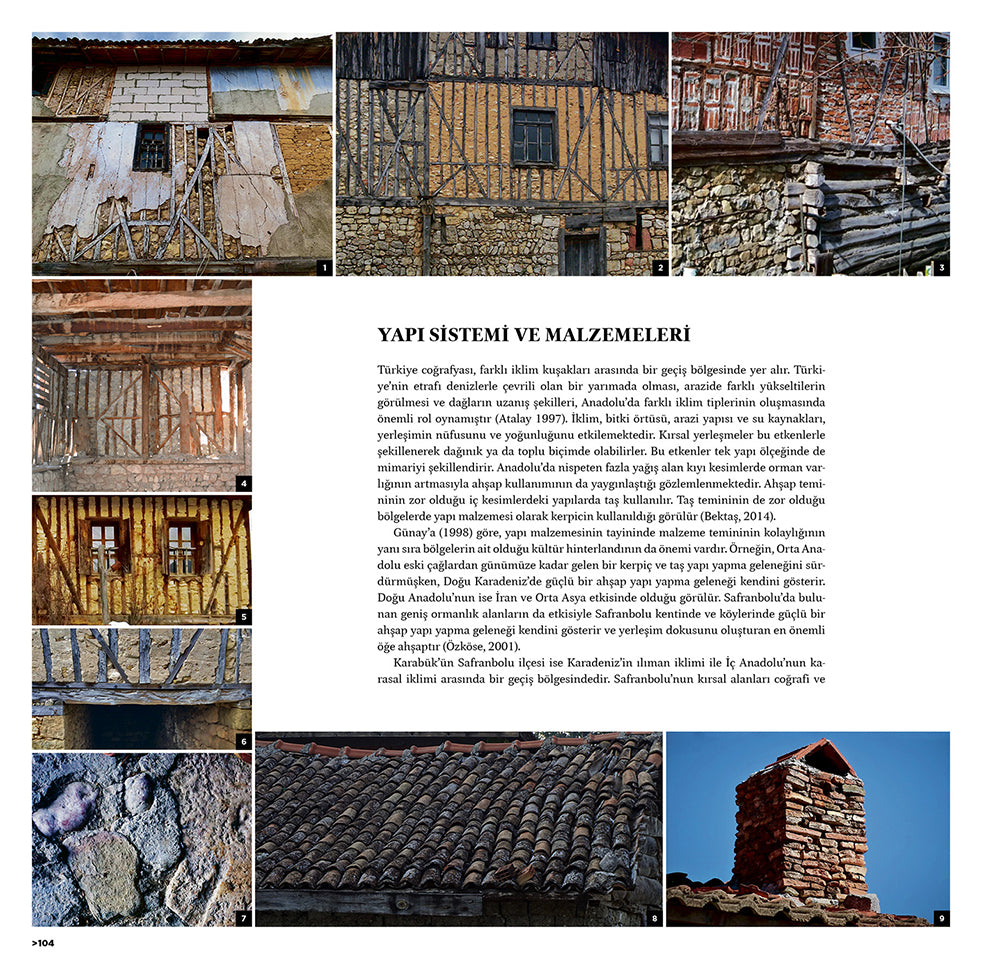
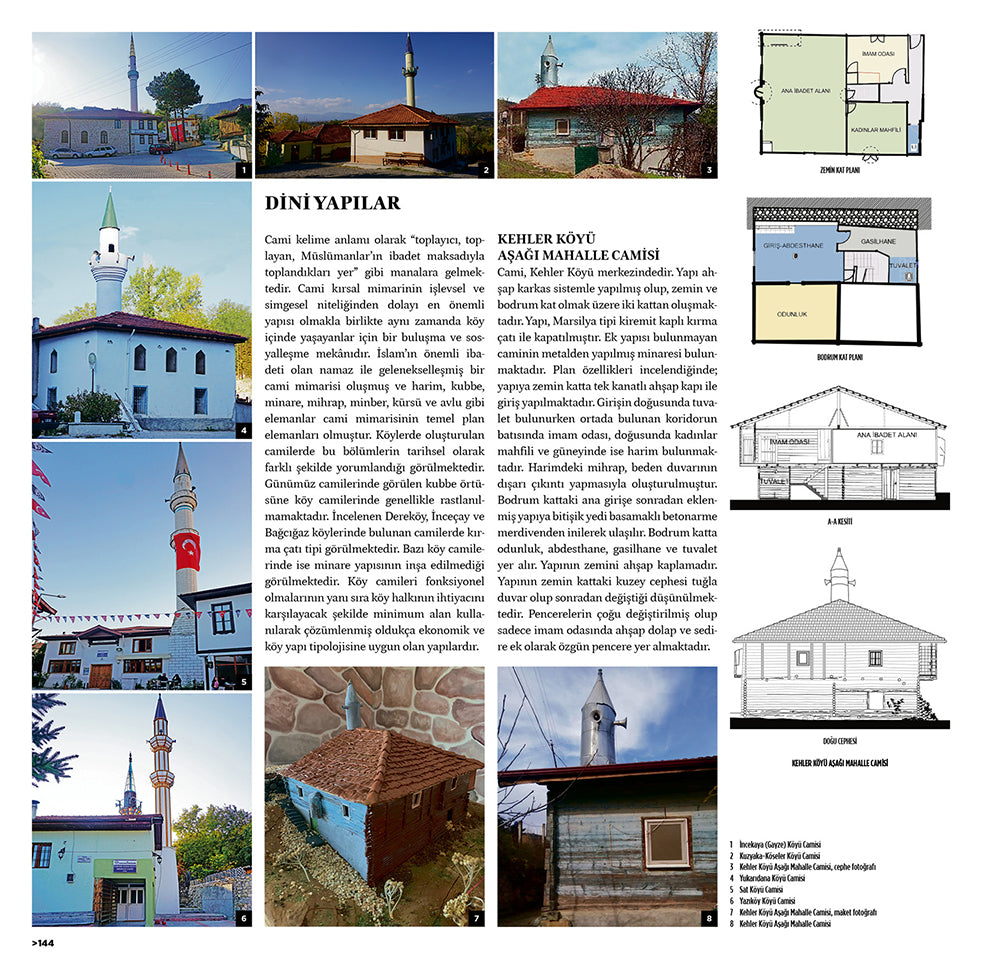
The book presents the general settlement and values requiring protection in 67 villages in and around Safranbolu, including local structural systems and materials, interior features, and examples of selected houses, barns, schools, mills, religious buildings, bridges, Turkish baths, fountains, archaeological values, and cemeteries from these villages, illustrated with drawings and photographs. Additionally, some project trials outlining visions for the sustainability of ecological values in the villages are also presented.
This book aims to both update the findings of the local architectural values in Safranbolu villages, which have been part of my personal archive for 30 years, and to collectively publish them. Thus, the goal is to document the traditional architectural heritage that is rapidly being lost in the villages and to raise awareness for the protection and sustainability of these works...”
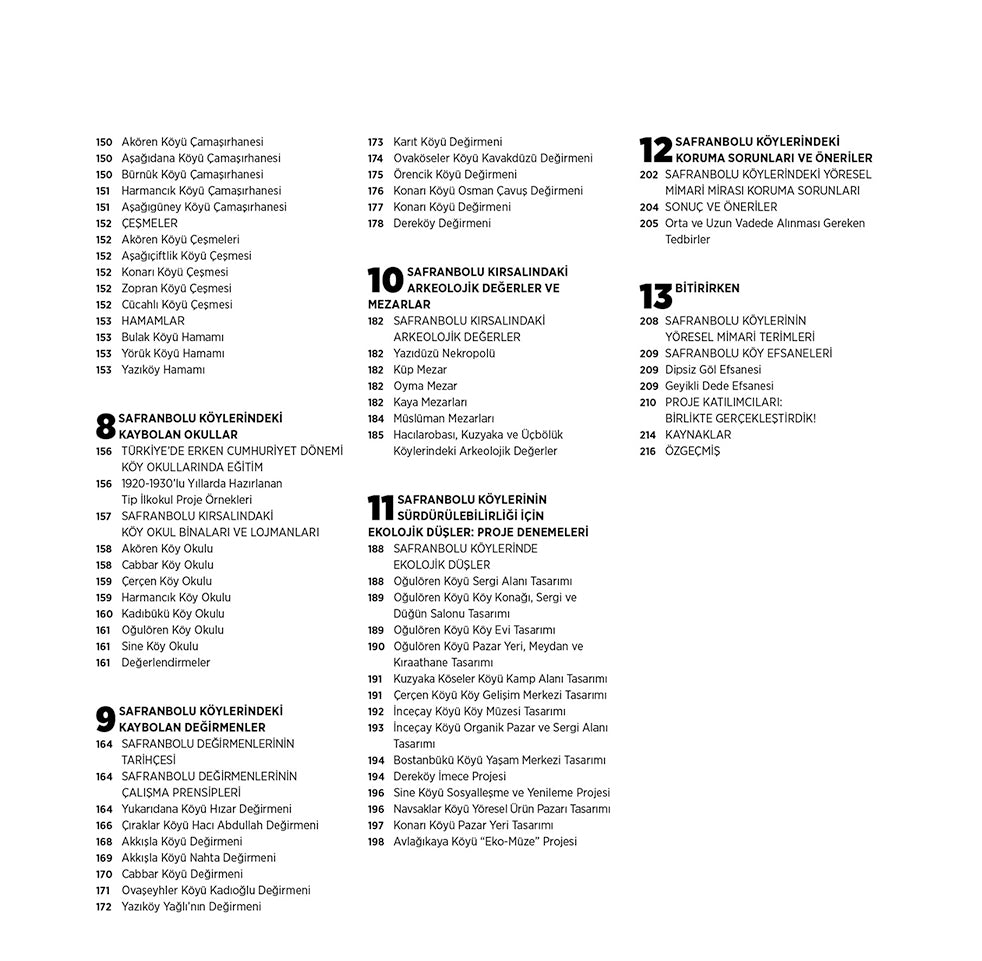
The book consists of the following chapters:
1. Settlement Characteristics and Protected Vernacular Values of Safranbolu Villages
2. Settlement Characteristics and Protected Values of Selected Villages from Other Districts of Karabük
3. Structural Systems, Materials, and Construction Techniques in the Vernacular Architecture of Safranbolu Villages
4. Vernacular Facade Architecture in Safranbolu Villages
5. Vernacular Residential Architecture in Safranbolu Villages
6. Vernacular Barns and Haylofts in Safranbolu Villages
7. Vernacular Public Buildings in Safranbolu Villages
8. Lost Schools in Safranbolu Villages
9. Lost Mills in Safranbolu Villages
10. Archaeological Values and Tombs in Rural Safranbolu
11. Ecological Visions for the Sustainability of Safranbolu Villages: Project Trials
12. Conservation Problems and Recommendations in Safranbolu Villages
13. Concluding Remarks (Vernacular Architectural Terms of Safranbolu Villages, Safranbolu Village Legends, Project Participants)
WHO IS PROF. DR. AYSUN ÖZKÖSE?
Born in Ankara in 1958. She completed her undergraduate and postgraduate studies in the Department of Architecture at Gazi University. After two years of working in DHMİ Air Navigation duties while studying architecture, she worked in the architectural offices of Servet Kılıç, Vedat Özsan, TİTA, and Behruz Çinici. During her tenure as a Restorer-Architect at the Ministry of Culture of the Republic of Turkey, she completed courses in "Restoration of Monuments and Planning of Historical Centers" at CECTI in Florence in 1989 with a scholarship from the Italian government, and "Architectural Restoration" at ICCROM in Rome in 1991. During her time at the Ministry, she managed survey-restoration and museum conversion projects for various historical buildings in Mardin, Trabzon, Kırşehir, Antalya, Ordu, and Safranbolu. In the process of Safranbolu being included in the World Heritage List, where she has lived since 1991, she led the "Safranbolu Rehabilitation Project," the establishment and
development of SMYO Safranbolu Vocational School, and the efforts to include Safranbolu in UNESCO. She played an active role as both an administrator and an academic in the establishment and development phases of the Faculty of Fine Arts and then the Faculty of Architecture in Safranbolu.
Over 40 of her projects contributing to the development of conservation and restoration efforts in Safranbolu have been implemented. She served as the Head of the Karabük Cultural Heritage Preservation Board for two terms. In 2017, she worked on "Ottoman Neighborhood Culture" as a visiting faculty member in the Middle East Studies Department at San Francisco State University with a TÜBİTAK Scholarship. Currently, at Karabük University's Department of Architecture, she conducts studios and courses at the undergraduate and graduate levels in Graduation Project, Survey-Restoration Project, Ecological Design, Vernacular Architecture Research, Re-functionalization of Old Buildings, Ottoman Neighborhood Culture Research, Population Exchange and Architecture, and Open and Closed Spaces in Anatolian Urban Fabric. Her national and international research and publications are also in this direction.
