
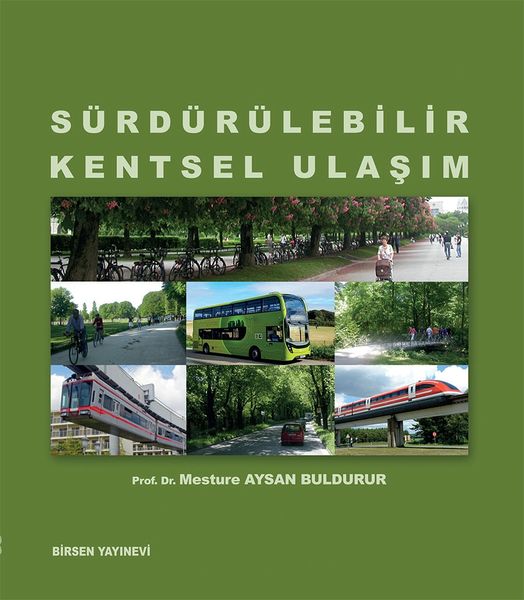
Sustainable Urban Transportation
Yazar: Mesture Aysan Buldurur
Brand: Birsen Yayınevi
Basım Tarihi: Aralık 2018
Basım Dili:
Sayfa Sayısı: 331Boyut: 21.0 / 24.0 cm
Out Of Stock
9789755116846
Product Description
Although it is still felt with varying intensity in different parts of the world, global warming and climate change are predicted to have severe consequences covering the whole world in the near future. Global warming and climate change can lead to pollution, worsening weather conditions, melting glaciers in polar regions, rising sea levels, fresh water sources mixing with the sea, water scarcity, increased floods and inundations, land losses, reduction of agricultural areas, food shortages, droughts, and the gradual reduction or extinction of some animal and plant species, health problems, changes in virus types due to excessive heat, an increase in epidemic diseases, migrations, and other unforeseen vital problems that trigger each other. According to the Global Risk Report published by the World Economic Forum in 2017, the failure to adapt to climate change in the near future is among the most dangerous risks that international communities may face. Climate change issues, which were first discussed in international circles at the UN's "Human Environment Conference" held in Stockholm, the capital of Sweden, in 1972, have been discussed at international meetings at regular intervals, and evaluation reports have been prepared. With the work of the Intergovernmental Panel on Climate Change (IPCC), which has been repeated since 1990, scientists and other experts have produced Special and Technical Reports, organized meetings, and developed roadmaps to draw attention to the issue, and studies are still ongoing. However, at this point, the expected progress has not been achieved on a global scale. In this context, it is understood that policymakers, practitioners, and relevant actors all over the world need to show more effort and sensitivity as required by the importance of the issue.
Despite the increase in knowledge over time, the inability to create awareness and a sense of citizenship regarding the foundations of climate science is an almost universal finding worldwide. In this context, it is clear that the concept of "sustainability" regarding all elements that ensure livability, which forms the agenda of relevant scientific circles and will inevitably be on the world agenda in the coming years, needs to be adopted by wider masses, and all actors affected by the phenomenon of climate change, i.e., all humanity, need to take more steps to act with a sense of responsibility by owning the issue. It is a matter on which all scientific communities agree, with evidence showing that increasingly extensive transportation activities reaching significant proportions on a global scale have a significant share in global warming and climate change. Therefore, Transportation Policy and Planning and Spatial Planning play a vital role in the transition to a low-carbon energy future and adaptation to climate change.
The purpose of preparing the book Sustainable Urban Transportation is to provide direction for current transportation and transportation-related environmental problems experienced all over the world due to wrong transportation and planning policies, with lessons learned from past experiences, current conditions, and a future perspective. The book consists of six chapters. In the first chapter, current transportation problems, past approaches to transportation issues, what transportation policies should be to solve the problems, and expected technological developments are introduced. In the second chapter, transportation-settlement relationships and models defining these relationships are introduced. It is emphasized that new generation models, which can monitor and incorporate the effects of rapidly developing transportation and information technologies, social life preferences, and robotic developments into the decision-making process, will be important tools in planning in the future planning process. In the third chapter, how stratification should be created in the transportation system, which forms the backbone of the urban system, including public transportation system lines, which is the dominant transportation system, criticisms of stratification, and recent stratification approaches are discussed. The fourth chapter covers the classification of intersections, types of intersections and traffic controls necessary in the context of road hierarchy, pedestrian and cyclist arrangements at intersections. The fifth chapter includes the classification of parking lots, parking policies, parking planning, the example of the Netherlands in parking policy and planning, and parking designs. In the sixth and final chapter, in the context of the vision of serving humanity by providing appropriate accessibility for all segments of society and an environmentally friendly space organization that enhances the quality of life, which is the main purpose of transportation, the increase in safety and comfort in pedestrian and cyclist movement and the integrated planning of the pedestrian system within the framework of policies that encourage open space systems and public transportation are emphasized, and global practices in this direction are discussed. The book has been prepared by adding developments over the years, current problems, and developed solution proposals to my lecture notes given at the ITU Faculty of Architecture for over thirty years.
When determining transportation policies and making decisions, it is important to accurately predict the consequences. Today's world has a dynamic structure with rapid technological changes and developments. Transportation and other spatial elements, on the other hand, have a structure that is more permanent in terms of time, costly, has a slower return process, and requires a long time and cost to compensate for losses. Therefore, transportation policies should set a framework that is sensitive to the demands of all segments of society and lays the groundwork for solutions that will pave the way for sustainable development, and should have a flexible structure adaptable to developments. Decisions to be made regarding transportation must be considered with all their dimensions that directly affect land uses, socioeconomic structure, and living environments and nature, and their effects must be accurately predicted in advance. For this purpose, the topics discussed in the book, along with past experiences, practices, and their results, have been handled in a cause-and-effect relationship, and global trends and examples of good practice have been included. The target audience of the book includes, primarily, urban planning and architecture students, as well as members of all relevant environmentally sensitive disciplines and stakeholders. I hope it will be useful.
Mesture AYSAN BULDURUR
CONTENTS
CHAPTER 1:
TRANSPORTATION-INDUCED PROBLEMS AND SUSTAINABLE TRANSPORTATION POLICIES ............. 3
IMPACTS OF THE TRANSPORTATION SECTOR...................................................................3
GLOBAL TRANSPORTATION PROBLEMS ..........................................................................5
INCREASE IN THE MOTORIZATION INDEX ....................................................................5
TRAFFIC CONGESTION...............................................................................................6
ACCIDENTS, LOSS OF TIME, LIVES AND PROPERTY.........................................................6
ENERGY CONSUMPTION............................................................................................7
DESTRUCTION OF THE ENVIRONMENT IN TERMS OF NATURAL AND HUMAN FACTORS ........................ 10
HEAT ISLANDS........................................................................................................ 10
ENVIRONMENTAL POLLUTION.................................................................................. 12
NOISE.................................................................................................................. 15
DAMAGE TO AGRICULTURAL LANDS......................................................................... 15
DAMAGE TO THE ECOSYSTEM.................................................................................. 16
THREATS TO HUMAN HEALTH ................................................................................ 17
COST.................................................................................................................. 18
APPROACHES AND POLICIES ON TRANSPORTATION ISSUES OVER PERIODS....................... 18
PERIODIC DEVELOPMENT IN TRANSPORTATION INVESTMENT POLICY ORIENTATIONS .................... 21
TURKEY'S TRANSPORTATION POLICY.......................................................................... 23
EUROPEAN UNION TRANSPORTATION POLICY AND 2010 ACTION PLAN............................... 27
PROMOTING INTEGRATED POLICIES.......................................................................... 28
URBAN ENVIRONMENT AND LAND USE.................................................................... 29
FOCUSING ON PEOPLE............................................................................................ 29
URBAN GREEN TRANSPORTATION - ENCOURAGING THE USE OF CLEAN VEHICLES............... 30
STRENGTHENING FUNDING - PROVIDING SUPPORT FOR PIONEERING TOWNS AND CITIES.... 30
SHARING EXPERIENCE AND KNOWLEDGE - PROMOTING GOOD URBAN PRACTICES................. 30
URBAN MOBILITY OPTIMIZATION............................................................................... 31
vii
SUSTAINABLE URBAN TRANSPORTATION POLICIES.................................................... 31
AIMS AND OBJECTIVES OF SUSTAINABLE TRANSPORTATION.............................................. 32
SUSTAINABLE URBAN TRANSPORTATION POLICIES AND STRATEGIES................................... 33
EFFECTIVE LAND USE POLICIES.............................................................................. 35
INTEGRATED URBAN LAND USE, TRANSPORTATION AND ENVIRONMENTAL POLICIES AND
LAND USE MANAGEMENT STRATEGIES....................................................................... 35
CREATION OF "URBAN MACRO FORM" AND "LAND USE PATTERN" THAT MINIMIZE PERIODIC TRAVEL TIME AND DISTANCES FOR WORK AND EDUCATION PURPOSES THROUGH AN INTEGRATED LAND USE AND TRANSPORTATION PLANNING APPROACH...........................36
DEMAND MANAGEMENT .......................................................................................... 39
DEMAND SUPPRESSION........................................................................................ 39
DEMAND SHIFTING ............................................................................................. 42
EFFICIENT VEHICLE AND ROAD INFRASTRUCTURE UTILIZATION....................................... 47
CONTROL AND RESTRICTION OF INDIVIDUAL TRANSPORTATION (CAR USE).......................... 48
PARKING RESTRICTIONS AND CONTROLS IN CENTRAL AREAS......................................... 48
PARK AND RIDE APPLICATIONS............................................................................... 48
RESTRICTING CAR USE THROUGH TRANSPORTATION INFRASTRUCTURE PRICING METHODS AND OTHER MONETARY MEASURES....................................................................... 49
ENCOURAGEMENT OF URBAN GREEN (CLEAN) TRANSPORTATION AND VEHICLE USE............. 50
TRAFFIC INFORMATION SYSTEM................................................................................. 50
OTHER MEASURES..................................................................................................... 50
APPROPRIATE PLANNING OF ROAD CORRIDORS, GEOMETRIC AND PHYSICAL STANDARDS....... 50
USE OF EFFECTIVE ROAD NETWORK MODELS SUITABLE FOR TOPOGRAPHY....................... 50
FUEL ECONOMY.................................................................................................... 51
AWARENESS-RAISING AND AWARENESS-INCREASING ACTIVITIES.................................. 52
NEW TECHNOLOGIES IN TRANSPORTATION SYSTEMS................................................... 52
INFRASTRUCTURE AND TECHNOLOGY SUPPORTING SMART TRANSPORTATION................... 58
ITS AND SUSTAINABLE DEVELOPMENT....................................................................... 59
ADVANCED TECHNOLOGY PUBLIC TRANSPORTATION VEHICLES....................................... 60
ASSESSMENT OF TECHNOLOGY TRENDS.................................................................... 65
IMPACTS OF SUSTAINABLE TRANSPORTATION POLICIES ON HEALTH................................ 68
MONITORING OF SUSTAINABLE TRANSPORTATION POLICIES ............................................... 69
SUSTAINABLE TRANSPORTATION PLANNING................................................................... 71
PURPOSE AND OBJECTIVES OF TRANSPORTATION PLANNING............................................. 72
viii
FUNDAMENTAL PRINCIPLES OF TRANSPORTATION PLANNING............................................ 72
WHAT KIND OF TRANSPORTATION PLANNING?................................................................ 73
TOOLS OF TRANSPORTATION PLANNING........................................................................ 74
CONCLUSION............................................................................................................... 75
CHAPTER 2:
TRANSPORTATION-SETTLEMENT RELATIONSHIP........................................................... 79
HISTORICAL PROCESS IN THE TRANSPORTATION-SETTLEMENT RELATIONSHIP................... 79
IMPACTS OF TRANSPORTATION SYSTEMS ON URBAN SETTLEMENTS............................... 79
TRANSPORTATION INFRASTRUCTURES AND THEIR IMPACTS ON URBAN LAND USE................... 82
LAND USE AT TRANSPORTATION NODE POINTS.............................................................. 85
NETHERLANDS ABC APPLICATION IN LAND USE ALLOCATIONS BASED ON TRANSPORTATION SYSTEM FACILITIES..................................................................................... 87
URBAN LAND USE AND ITS IMPACTS ON URBAN TRANSPORTATION............................... 90
INTERACTION WITH EXISTING URBAN STRUCTURE.......................................................... 93
URBAN MOVEMENTS................................................................................................. 94
URBAN TRAVEL PURPOSES......................................................................................... 95
URBAN MOBILITY....................................................................................................... 95
INDIVIDUAL TRAVEL BEHAVIORS................................................................................... 96
FACTORS AFFECTING TRAVEL BEHAVIOR................................................................... 96
PHYSICAL CONDITIONS RELATED TO TRANSPORTATION INFRASTRUCTURE, LAND USE AND SETTLEMENT TEXTURE............................................................................. 97
PEDESTRIAN-FRIENDLINESS - PUBLIC TRANSPORTATION FACILITIES, TRANSFERS, PRICING POLICIES...... 98
SOCIO-ECONOMIC CONDITIONS............................................................................ 100
INDIVIDUAL ROLES............................................................................................. 102
IMPACTS OF INFORMATION TECHNOLOGY............................................................... 103
CHANGING PROCESSES OF URBAN ELEMENTS.............................................................. 104
THEORETICAL FRAMEWORK IN LAND USE TRANSPORTATION INTERACTION..................... 105
SYSTEM APPROACH-MODELS.................................................................................. 105
HISTORICAL DEVELOPMENT OF THEORIES.................................................................. 105
INTEGRATED LAND USE TRANSPORTATION MODELS.................................................... 110
ix
TRAVEL DEMAND MODELS.................................................................................... 110
OPERATIONAL INTEGRATED LAND USE TRANSPORTATION (A-U) MODELS....................... 111
NEW GENERATION INTEGRATED A-U MODELS............................................................ 113
CONCLUSION............................................................................................................... 118
CHAPTER 3:
ROAD HIERARCHY................................................................................................. 121
NECESSITY OF ROAD HIERARCHY.............................................................................. 121
PURPOSE AND OBJECTIVES OF ROAD HIERARCHY.......................................................... 122
CLASSIFICATION OF ROADS..................................................................................... 123
CLASSIFICATION OF URBAN ROADS............................................................................. 124
CONTEXT OF ROAD HIERARCHY.................................................................................. 126
RELATIONSHIP BETWEEN ROAD HIERARCHY AND SETTLEMENT UNIT, LAND USE AND TOPOGRAPHY...... 127
ROAD HIERARCHY-SETTLEMENT UNIT RELATIONSHIP.................................................... 128
ROAD HIERARCHY-LAND USE RELATIONSHIP............................................................ 130
ROAD HIERARCHY AND TOPOGRAPHY RELATIONSHIP...................................................... 131
GENERAL PRINCIPLES IN HIERARCHY.......................................................................... 132
CRITICISMS OF ROAD HIERARCHY.............................................................................. 133
RECENT HIERARCHY APPROACHES.............................................................................. 133
COMPLETE STREET DESIGNS...................................................................................... 135
A NEW FORMULATION FOR HIERARCHY........................................................................ 137
A FOUR-STAGE ROAD HIERARCHY FRAMEWORK FOR NETWORK PLANNING AND MANAGEMENT.............. 140
MANAGEMENT IN ROAD HIERARCHY....................................................................... 141
WHAT IS OPERATIONAL EFFICIENCY IN ROADWAYS AND HOW IS IT ACHIEVED?............... 143
ROAD DESIGN........................................................................................................... 145
URBAN ROAD HIERARCHY DESIGN CRITERIA................................................................... 145
DATA REQUIRED FOR ROAD DESIGN......................................................................... 146
DESIGN SPEED..................................................................................................... 146
ROAD GRADES..................................................................................................... 147
INTERSECTION SPACING........................................................................................ 148
ROAD CONNECTIONS................................................................................................... 148
ROAD CROSS-SECTIONS............................................................................................ 149
x
ROAD TYPE - AREA USE RELATIONSHIP.................................................................... 154
FUNCTION- AND LOCATION-BASED REDESIGN OF EXISTING ROADS................................ 154
URBAN ROAD NETWORK MODELS................................................................................ 156
ROAD NETWORK MODELS FREQUENTLY USED IN NEIGHBORHOOD UNITS.......................... 159
CONCLUSION.............................................................................................................. 161
CHAPTER 4:
INTERSECTIONS..................................................................................................... 165
DEFINITION AND CLASSIFICATION OF INTERSECTIONS................................................... 165
DETERMINATION OF INTERSECTION TYPE.................................................................. 166
INTERSECTION CHARACTERISTICS............................................................................ 168
KEY ISSUES AFFECTING INTERSECTION SAFETY ........................................................ 168
INTERSECTION SPACING............................................................................................ 169
TRAFFIC MANAGEMENT AT INTERSECTIONS.................................................................. 170
INTERSECTION DESIGN............................................................................................ 170
FUNDAMENTAL PRINCIPLES OF INTERSECTION DESIGN.................................................. 171
AIMS AND OBJECTIVES OF INTERSECTION DESIGN......................................................... 171
DATA REQUIRED FOR INTERSECTION PLANNING AND DESIGN............................................ 171
SELECTION OF INTERSECTION TYPE BASED ON AVERAGE DAILY TRAFFIC........................... 172
AT-GRADE INTERSECTIONS......................................................................................... 173
TRAFFIC CONTROL MEASURES.................................................................................... 173
TRAFFIC REGULATIONS AT AT-GRADE INTERSECTIONS................................................... 174
KEY ELEMENTS OF AT-GRADE INTERSECTION DESIGN.................................................... 175
FACTORS AFFECTING INTERSECTION USERS IN INTERSECTION DESIGN............................. 176
COMPATIBILITY OF INTERSECTIONS WITH PUBLIC TRANSPORT STOPS................................. 177
GENERAL CRITERIA AND FACTORS IN AT-GRADE INTERSECTION DESIGN............................ 178
DETERMINATION AND DEVELOPMENT STAGES OF INTERSECTION GEOMETRY....................... 178
TRAFFIC FLOW, WEIGHT AND DIRECTION DETERMINATION........................................ 178
CREATION OF INTERSECTION CORNERS, TURNING PLATFORMS................................... 179
ANALYSIS OF SIGHT DISTANCES.......................................................................... 180
DEVELOPMENT STAGES BASED ON TRAFFIC VOLUME INCREASE................................... 181
xi
CHANNELIZATION PROCESS/CHANNEL FORMATION.................................................... 183
EXAMPLES FOR IMPROVING EXISTING INTERSECTIONS.................................................. 187
DIFFERENT SOLUTIONS IN INTERSECTION DESIGN........................................................... 190
THREE-ARM INTERSECTION SOLUTIONS..................................................................... 190
U-TURN MEDIAN................................................................................................. 192
BOWTIE INTERSECTION SOLUTION........................................................................... 192
QUADRANT INTERSECTION.................................................................................... 194
LANE BALANCE........................................................................................................ 195
ROUNDABOUT TYPE INTERSECTION........................................................................... 196
RIGHT-OF-WAY FOR BICYCLE LANE IN ROUNDABOUT................................................ 198
MODERN ROUNDABOUT........................................................................................... 198
TRAFFIC CIRCLE (ROUNDABOUTS)............................................................................. 200
BICYCLE MOVEMENTS IN TRAFFIC CIRCLE................................................................ 201
DESIGN FOR CYCLISTS........................................................................................ 201
INTERSECTIONS WITH SEPARATE BICYCLE TRACKS OR LANES......................................... 202
REDESIGN OF INTERSECTIONS FOR CYCLISTS......................................................... 204
INTERSECTION DESIGNS FOR CYCLISTS............................................................. 204
SIGNAL-CONTROLLED INTERSECTIONS......................................................................... 204
CONFLICT, DIVERGENCE AND CROSSING POINTS AND AREAS AT INTERSECTIONS................... 204
SIGNALIZATION AT FOUR-WAY INTERSECTIONS.......................................................... 206
SIGNAL CONTROL............................................................................................... 208
GRADE-SEPARATED (MULTI-LEVEL) INTERSECTIONS................................................... 210
REGULATION PRINCIPLES FOR GRADE-SEPARATED INTERSECTIONS..................................... 210
CONCLUSION............................................................................................................... 214
5.
CAR PARKS........................................................................................................... 217
OVERVIEW OF THE CAR PARK PHENOMENON......................................................... 217
CAR PARK POLICIES.............................................................................................. 218
OLD CAR PARK APPROACH AND PERCEPTION......................................................... 219
NEW CAR PARK APPROACH AND PERCEPTION......................................................... 219
INTEGRATED CAR PARK MANAGEMENT WITH DEMAND MANAGEMENT......................... 219
CAR PARK MANAGEMENT STRATEGIES..................................................................... 220
xii
PARK & RIDE...................................................................................................... 220
MONETARY METHODS.......................................................................................... 221
MORE ACCURATE AND FLEXIBLE STANDARDS......................................................... 222
OFF-SITE PARKING.............................................................................................. 224
OVERFLOW PARKING PLANS................................................................................ 224
SHARED PARKING................................................................................................ 224
INSTITUTIONAL MEASURES.................................................................................. 225
SEPARATELY SOLD PARKING............................................................................... 226
INFORMATION................................................................................................... 226
SMART PARKING SYSTEM SERVICES....................................................................... 226
CLASSIFICATION OF CAR PARKS............................................................................... 228
CLASSIFICATION BY LOCATION.................................................................................. 228
CLASSIFICATION BY USE......................................................................................... 229
CLASSIFICATION BY DURATION................................................................................ 229
URBAN PARKING AREA PLANNING........................................................................... 229
PRINCIPLES FOR THE ARRANGEMENT OF REGIONAL AND GENERAL CAR PARKS........... 232
PERIPHERAL CAR PARKS OUTSIDE THE CENTRAL BUSINESS DISTRICT....................... 233
CAR PARKS IN RESIDENTIAL AREAS.......................................................................... 234
CAR PARKS AT WORKPLACES................................................................................... 234
VEHICLE PARKS IN RURAL AREAS............................................................................. 235
BICYCLE PARKS................................................................................................... 235
THE NETHERLANDS' CAR PARK POLICY.................................................................... 235
GENERAL PLANNING AND DESIGN PRINCIPLES FOR PARKING AREAS......................... 237
OFF-STREET (SURFACE) PARKING AREAS GENERAL PLANNING AND DESIGN PRINCIPLES.... 237
WALKING DISTANCES......................................................................................... 237
VEHICLE ACCESS................................................................................................ 238
PEDESTRIAN ACCESS AND CIRCULATION............................................................... 239
LOADING........................................................................................................... 240
REGIONAL CAR PARK ARRANGEMENT....................................................................... 240
FUNCTIONAL AREAS CAR PARK ARRANGEMENT..........
