
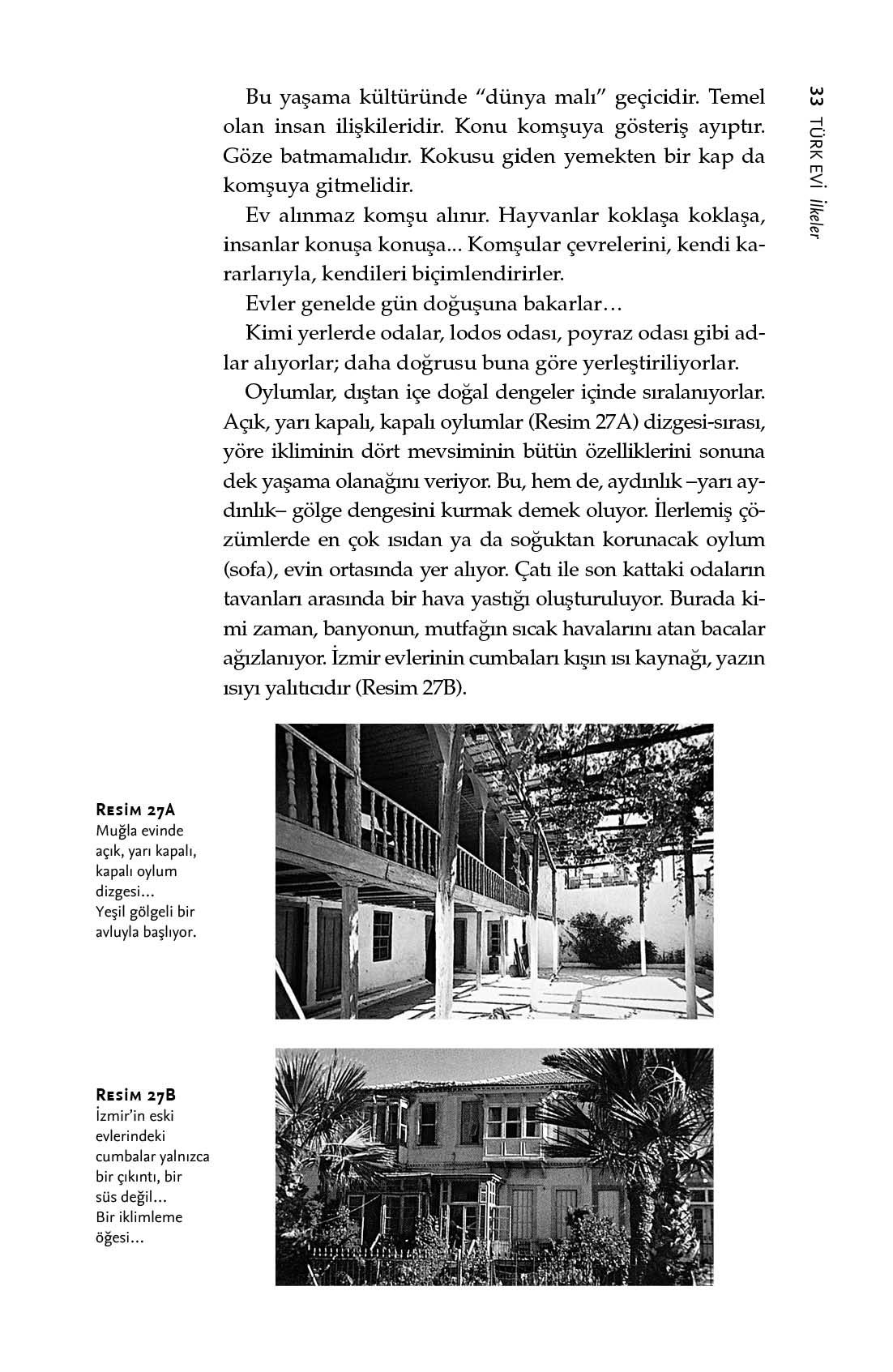
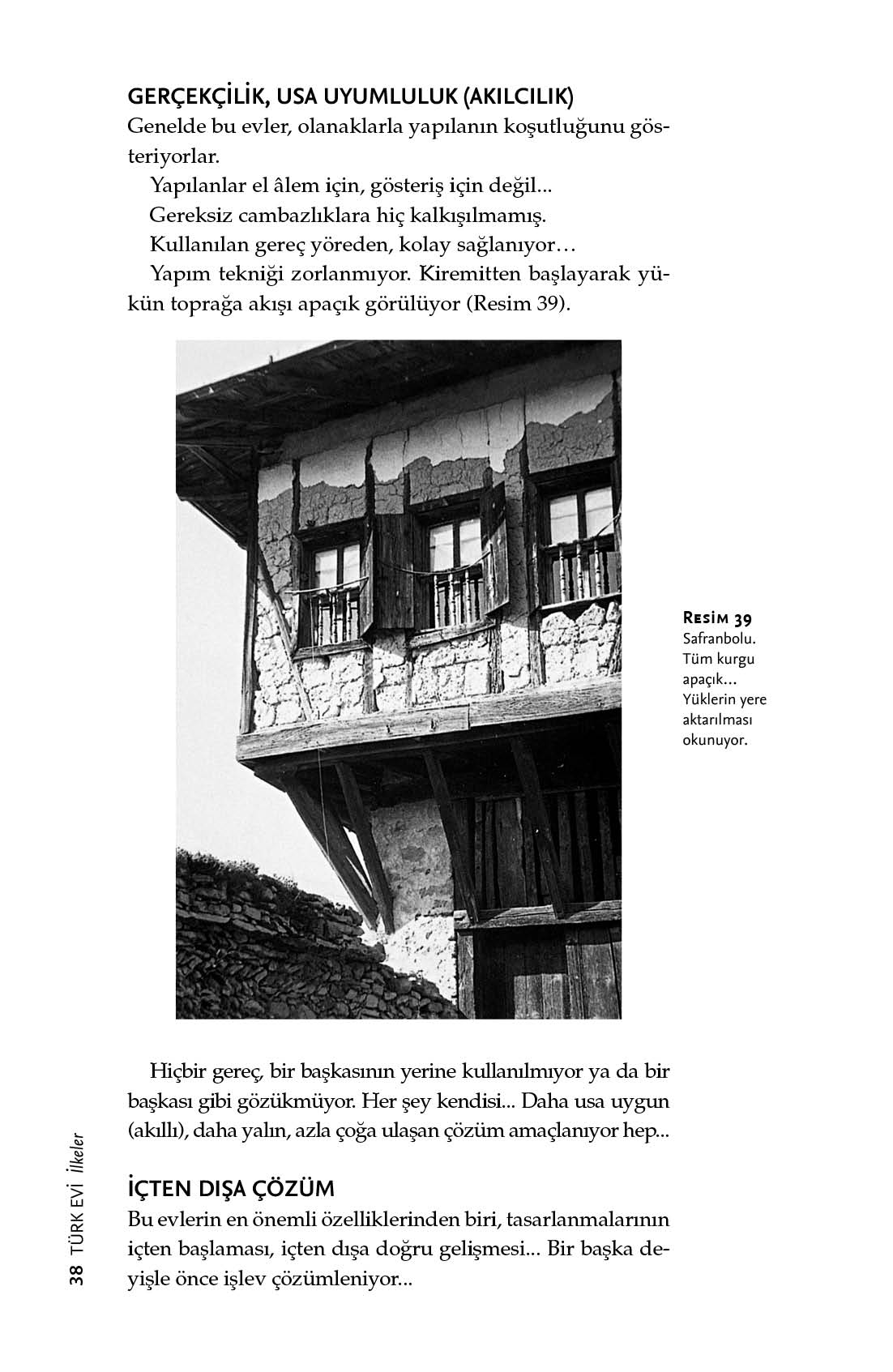
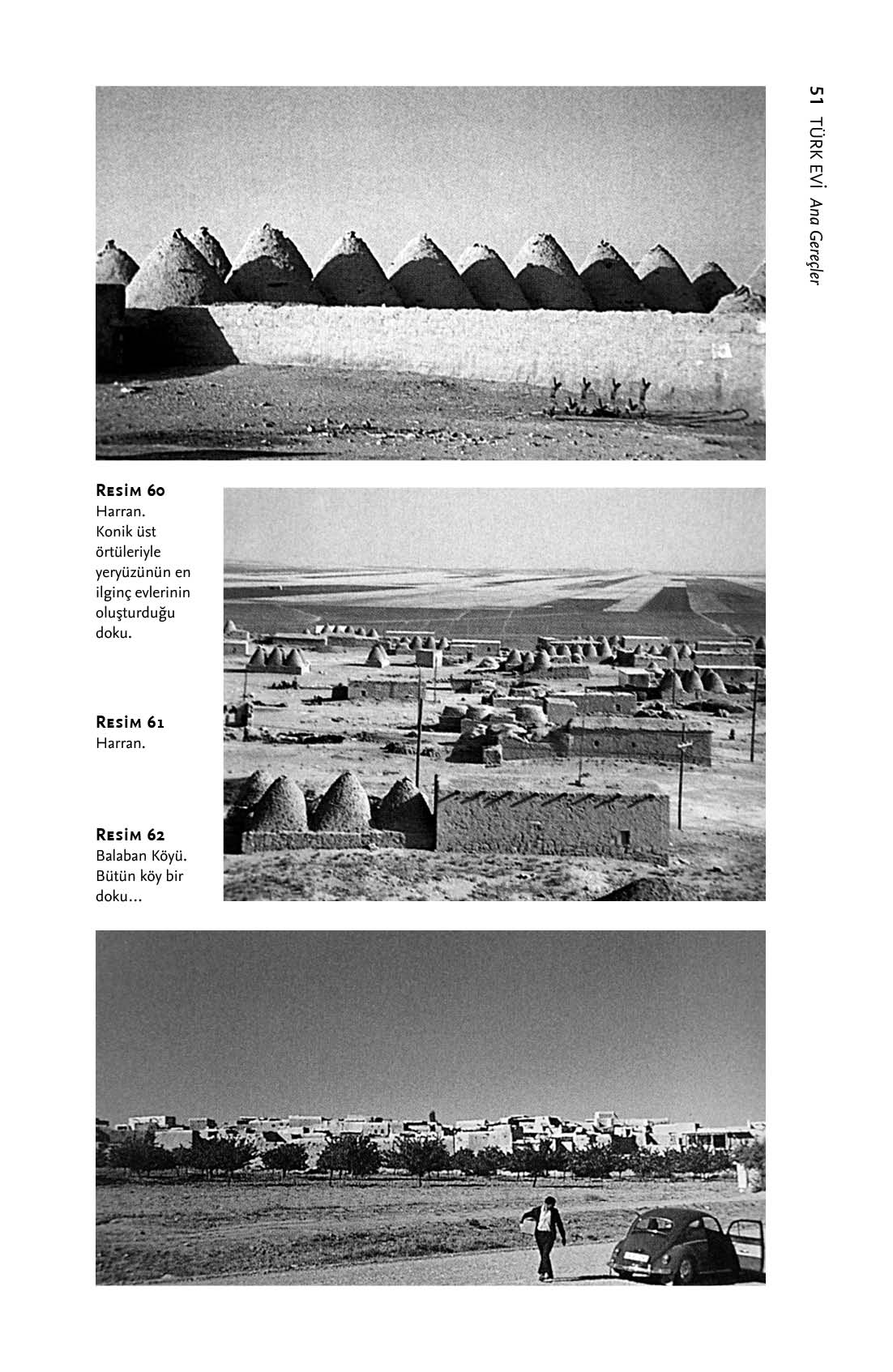
Turkish House
Yazar: Cengiz Bektaş
Brand: YEM Yayın
Basım Tarihi: Mart 2023
Basım Dili:
Sayfa Sayısı: 152Boyut: 14.0 x 21.5 cm
Out Of Stock
9786058177772
Product Description
“The Turkish House” is a presentation of Cengiz Bektaş's detailed observations, made through countless research and study trips to the Balkans, the Aegean Islands, and all of Anatolia, where he photographed, wrote, sketched, and often measured, to understand the "house" that he was born and raised in, which emerged from the accumulated knowledge of the geography and the culture of living.
Cengiz Bektaş examines the concept of "the Turkish house" from a broad perspective, ranging from fundamental principles to materials used, from plan types to flexibility, and from style to periods:
“We find houses that are products of Ottoman living culture, encompassing all regional colors, from Sarajevo to Erzurum, built according to similar fundamental principles. Regardless of the materials used, location, or intended occupants, when we examine the examples that still stand today, we can identify certain common aspects and the same basic principles in these houses. Those who grew up in these lands are the natural inheritors of all past and present cultures. Therefore, of course, today's Macedonian will call the Ottoman house in Macedonia a Macedonian house, today's Bulgarian will call the Ottoman house in Plovdiv a Bulgarian house, and today's Greek will call the Ottoman house in Greece a Greek house. Indeed, these houses are precisely the houses of the geography in which they were created... If I say 'Turkish house' today, or if I refer to those living as citizens of Turkey as 'Turks' as a collective identity, then I am, of course, saying something true... But I say the phrase 'Turkish house' knowing that it was created by the common life of Ottoman living culture across all these lands."
Over 250 black-and-white photographs and drawings
Contents
Introduction
Past
Principles
Main Materials
From City to Dwelling
Plan Types of the Turkish House
Flexibility: Ability to Grow, Shrink (Divide)
Style
Periods
Towards the End
WHO IS CENGİZ BEKTAŞ?
Cengiz Bektaş, born in Denizli in 1934 and passed away in 2020, completed his secondary education at Istanbul Erkek Lisesi and his higher education at the State Academy of Fine Arts (DGSA) Decoration and Architecture Departments, and the Technical University of Munich, Faculty of Architecture. He completed his higher education in 1959. In 1960, he attended German urban planning courses. He worked as a freelance architect in Germany, where he won awards in two competitions. He returned to Turkey when he was invited to be a lecturer at METU. In the 1962-63 academic year, he managed the METU Construction Works Presidency, Architecture Workshop for one year. In 1963, he established his own architectural workshop with Oral Vural in Ankara. Between 1963 and 1969, he participated in architecture and urban planning competitions for only six years, winning over 25 awards. He designed buildings considered examples of Republican era architectural history. He received the National Architecture Award twice. In 2001, he won the International Aga Khan Award for Architecture with his Social-Cultural Center building at Akdeniz University (Antalya). The building of the Turkish Language Association was considered by architects to be one of the twenty structures symbolizing the Republican era. In 2014, the International Mimar Sinan Award was presented to Cengiz Bektaş for the first time. He also received: 1970 TRT Short Film Award, 1989 Macedonian Chamber of Architects Award, 1996 Abdi İpekçi Peace Special Award, 1998 Association of Freelance Architects Education Award, 2002 Contribution to Balkan Culture Award, 2004 Romania-Azerbaijan Friendship Association's Honorary Award for Special Contribution to Romania-Turkey-Azerbaijan Cultural and Literary Relations, 2006 Ovacık (Bergama) Villagers' Environment Award, 2009 New Generation Village Institutes Association's Enlightenment Honorary Award. Cengiz Bektaş entered literary life in 1950 with his column writings in a Denizli daily. In 1954, he won first prize in a poetry competition at the DGSA Academy, where Bedri Rahmi was on the selection committee. In 1960, Fazıl Hüsnü Dağlarca published Bektaş's poems for the first time in Turkey in Türkçe Dergisi. His poems have been translated into 16 languages. He has 95 works dealing with architecture and cultural subjects, along with his poetry books. He participated in countless meetings at home and abroad, presenting papers. He wrote entries for encyclopedias. AWARDS IN LITERATURE: 1968 Turkish Language Association Research-Study Branch Award, 1970 TRT Single Poem Award, 1992 Den-Bir Contribution to Culture and Art Award, 1992 Ketsav Honorary Award, 2002 I. Necati Cumalı Meeting Guest of Honor Award, 2003 Troya Poetry Award, 2004 Didim Peace Festival Honorary Award, 2005 International Ovidius (Romania) Poetry Award, 2005 Azerbaijan Writers' Union Honorary Membership, 2007 Ceyhun Atuf Kansu Poetry Award, 2010 Denizli Culture Contribution Award, 2010 Language Association Honorary Award, 2012 Dionysos Poetry Award. He served as the 2nd President of the International PEN Turkish Center for a period, President of the Turkey-Greece Friendship Association for 6 years, and President of the Turkish Writers' Union for 6 years. He is an honorary board member of TYS. Bektaş served as a member of the Central Executive Board of the Chamber of Architects of the Union of Chambers of Turkish Engineers and Architects (TMMOB) for two years. He was a visiting lecturer in America, Germany, and Macedonia. He taught "Folk Building Art" at Eskişehir Anadolu University for one year and Trakya University for 1.5 years, "Philosophy of Art - Sociology of Art" at Marmara University, and "Aesthetics" at Mimar Sinan University Faculty of Fine Arts for 10 years. Between 1999 and 2019, he taught "The Effect of Culture on Planning" and "Volumes of Our Culture" for graduate students in the Urban Planning Department at Mimar Sinan Fine Arts University. POETRY BOOKS: Kişi (Person) (1964), Akdeniz (Mediterranean) (1970, 1981, 1984), Mor (Purple) (1974, 1986, 1999), Dört Kişiydiler Bir de Ben (There Were Four of Them and Me) (1975, 1981, 1984), Yeryüzünün Yüreği (Heart of the Earth) (1978), Yer Deli Gök Deli (Crazy Earth Crazy Sky) (1980), Zeytinli Fırın Sokağı (Olive Oven Street) (1981), Güz Ey (Oh Autumn) (1983), Dört Kişiydiler Bir de Ben + Ustalarım (There Were Four of Them and Me + My Masters) (1984), Fide (Sapling) (1987), Onu Birden (All of Him at Once) (complete poems, 1992), Dışların İçi (Inside of the Outsides) (1994), Poems by Cengiz Bektaş (USA, 1997), Su Belleği (Water Memory) (1998), Mor (Purple) (complete poems, 1998), Sevgi Alnımın Teri (Love Is the Sweat of My Brow) (2003), Yapısı Yüreğin (Structure of the Heart) (Romania, 2005), Bu da Seni Gözlemediğim Küçe (This Is the Alley Where I Didn't Wait for You) (Azerbaijan, 2005), Dün Bugün (Yesterday Today) (2006), Doğuran Doğurtan (Giving Birth, Making Birth) (2008), Can Suyu (Life Water) (2013). TRANSLATIONS: Sapho (with Azra Erhat, 1978, 1983), Tılsımlı Kedi [Grimm Brothers' Tales] (The Enchanted Cat [Grimm Brothers' Tales]) (1981). CHILDREN'S BOOKS: Koca Rıza (Big Rıza) (1981, 2003, 2011), Ebemevi (Grandmother's House) (1989, 2005), Usta ile Çırak (Master and Apprentice) (1989), Sevgiyle Yap (Do with Love) (1990, 2002, 2011), Çağıl Nasıl Mavi Oldu (How Çağıl Became Blue) (1995, 2005), Kuş ile Kuş/Çocuk Şiirleri (Bird and Bird/Children's Poems) (2011). ESSAY-STUDY BOOKS: Mimarlıkta Eleştiri (Criticism in Architecture) (1967, 1995, 2001), Bedri Rahmi Nakışlı Bir Deneme (An Essay Adorned with Bedri Rahmi) (1975, 1984, 2014), Benim Oğlum Bina Okur (My Son Reads Buildings) (1980, 1995, 2002), Duvarların Dışı da Senin (The Outside of the Walls is Also Yours) (1982, 1987, 1991, 1995, 2002), Yuva mı Mal mı (Home or Property) (1983, 1995, 2002), Kimin Bu Sokaklar Alanlar Kentler (Whose Are These Streets, Squares, Cities) (1987, 1996, 2002), Kültür Kirlenmesi (Cultural Pollution) (1995, 1996, 2003), Kent (City) (1995, 1996, 2003), Ev Alma Komşu Al (Don't Buy a House, Buy a Neighbor) (1995), Hoşgörünün Öteki Adı Kuzguncuk (Another Name for Tolerance: Kuzguncuk) (1996, 2003), Bak Bak Desinler (Let Them Say "Look, Look") (1998), Kentli Olmak ya da Olmamak (To Be Urban or Not to Be) (1999, 2004), Barış Sofrası (Table of Peace) (2001), Yaşama Kültürü (Culture of Living) (2003), Kendini Tanı (Know Thyself) (2007), Sevgiyi Paylaşalım (Let's Share Love) (2007), Kentini Yaşamak (Living Your City) (2007), Gelecek Biziz (We Are the Future) (2007), Her Şey Bir İnsanı Sevmekle Başlar (Everything Begins with Loving a Person) (2011), Aigina, Poros, Hydra, Midilli, Sakız (2011), Sevgidir Her İşin Başı (Love is the Beginning of Everything) (2011), Denizli (2011), İstanbul (2011), Kültür Vatanımız (Our Cultural Homeland) (2011), Sevgi Örülünce Yapıda (When Love is Woven into the Structure) (2011), Anadolu'lu İnsan Olmak (Being an Anatolian Person) (2011), Köpeksiz Köy (Village Without Dogs) (2011), Anlamıyorlarsa Anlatamıyorsun (If They Don't Understand, You Can't Explain) (2011), Sabır ile Koruk (Patience and Unripe Grapes) (2011), Kent-Kültür-Demokrasi (City-Culture-Democracy) (2011), Bu Ezgi Kimin? (Whose Melody Is This?) (2012), Yaz Okulları (Summer Schools) (2013), Doğaya Uyumlu Mimarlık (Architecture in Harmony with Nature) (2013), Nazım Hikmet'in Mimarlığa Bakışı (Nazım Hikmet's View on Architecture) (2013), Rodos (Rhodes) (2013), Rodos (English, 2013), Mimar Sinan Yazıları (Writings on Mimar Sinan) (2013), Yaşanası Kent (Livable City) (2013), Mimar Nedir, Mimar Ne Yapar? (What is an Architect, What Does an Architect Do?) (2013). COMPILATION: Koca Sinan (Great Sinan) (1968). STUDY BOOKS: Halk Yapı Sanatından Bir Örnek: Bodrum (An Example of Folk Building Art: Bodrum) (1979, 1983, 1996, 2013), Antalya Evleri (Antalya Houses) (1980, 2005, 2013), Babadağ Evleri (Babadağ Houses) (1987, 2005, 2013), Şirinköy Evleri (Şirinköy Houses) (1987, 2005, 2013), Akşehir Evleri (Akşehir Houses) (1987, 2013), Koruma Onarım (Protection and Repair) (1992, 2001), Kuşadası Evleri (Kuşadası Houses) (1992, 2005, 2013), Mimarca Mermer (Marble in Architectural Style) (1993, 2005), Türkevi (Turkish House) (1996, 2008, 2013, 2014), Selçuklu Kervansarayları (Seljuk Caravanserais) (1999), Halk Yapı Sanatı (Folk Building Art) (2001), Kuşevleri (Birdhouses) (2003, 2004), Saim Bugay (2005), Karacasu Evleri (Karacasu Houses) (2008, 2013), Kayaköy/Tersane (2008, 2013), Şirince/Tirilye (2008, 2013), Afrodisyas (Aphrodisias) (2008), Ayvalık (2009, 2013), Manisa Evleri (Manisa Houses) (2009, 2013), Herkes İçin Kent (City for Everyone) (2009), Cumartesi Buluşmaları (Saturday Meetings) (TMMOB Chamber of Architects, 2010), Güre (2013), Füreya Koral ile Söyleşi (Interview with Füreya Koral) (2013), Azra Erhat Mektupları-1 (Azra Erhat Letters-1) (2013), Afrodisyas (English, 2013, 2014), Bir Yerli Olmak (Being a Native) (2014), Azra Erhat Mektupları-2 (Azra Erhat Letters-2) (2015), Amerika Katlar Savaşı (America's War of Floors) (2015), Toz Ahşap Cam (Dust Wood Glass) (2015), Kültürümüzün Oylumları (Volumes of Our Culture) (2015), Bir Yerli Olmak (Being a Native) (2015), Kıyılarımızı Yağmalayanlar (Those Who Plunder Our Coasts) (2015)
