
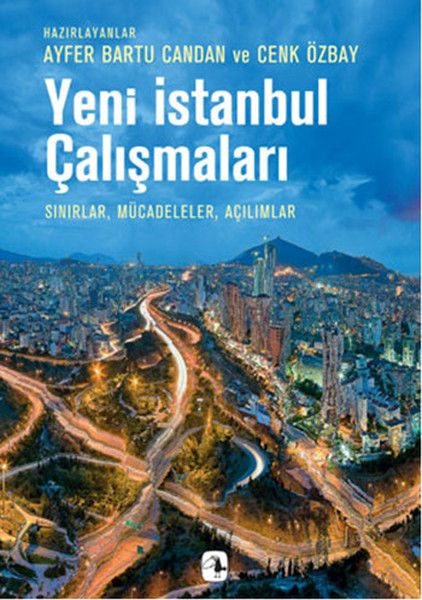
New Istanbul Studies
Yazar: Ayfer Bartu Candan (haz.), Cenk Özbay (haz.)
Brand: Metis Yayıncılık
Basım Tarihi: 2019
Basım Dili:
Sayfa Sayısı: 432Boyut: 16.5x24
In stock
9789753429726
Product Description
Istanbul is undergoing rapid change. This change affects the lives of the people living in this city first, then its regional environment, and finally all of Turkey. The "new" in New Istanbul Studies primarily refers to the "new" Istanbul that has emerged with this rapid change, focusing on aspects of the city that we have not experienced before. On the other hand, these are also "new" studies: both in terms of research topics and perspectives. The selection, carefully compiled from different disciplines, offers extremely valuable clues for understanding the different dimensions of urban change, with its variety of levels, theories, methods, and topics.
The articles in the book, grouped into four sections: "Space and Politics," "Labor and Economy," "Political Ecology," and "Body and Sexuality," start from the city's encouragement into globalization "by the state," and cover the pressure of neoliberalism on the city, how the ambiguities in land ownership law are exploited, dispossession, gentrification, clues provided by the city's transformation geography, the stigmatization of certain neighborhoods as "dangerous," and the police violence they endure. In all articles, there are clear traces of resistance against the city's developments, especially the "Gezi Park" resistance, and the new urban opposition. With a significant emphasis on how social labor, despite carrying Istanbul on its back, often remains invisible in urban studies, tourism, traffic, and transportation problems, as well as "mobilities" in the city, are discussed. Two different examples from the textile and banking sectors are examined to see the effect of gender on female employment.
One of the important contributions of the book is to look at the city from a political ecology framework. The articles evaluating the city's present based on the concept of "sustainability" also clarify how the central government and the municipality reduce concepts and understandings such as environmentalism, nature, and sustainable development to mere rhetoric and image material, emptying them of their meaning, and in most cases, engaging in practices that are the exact opposite. In the last section, the publicness and sexuality of the body in the city are discussed through the LGBT movement, disabled bodies, migrant women domestic workers, trans individuals, sex cinemas, and the recent historical course of related conservatism.
