
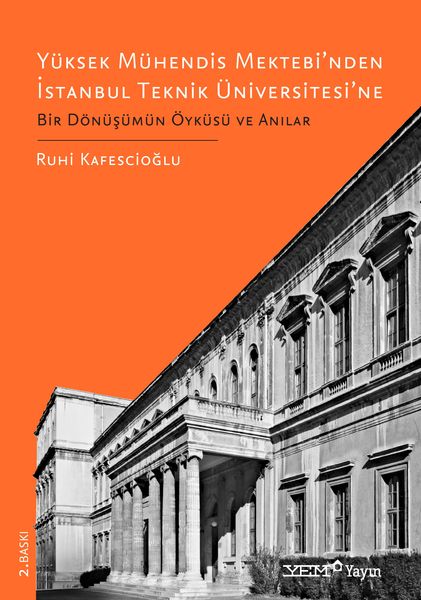
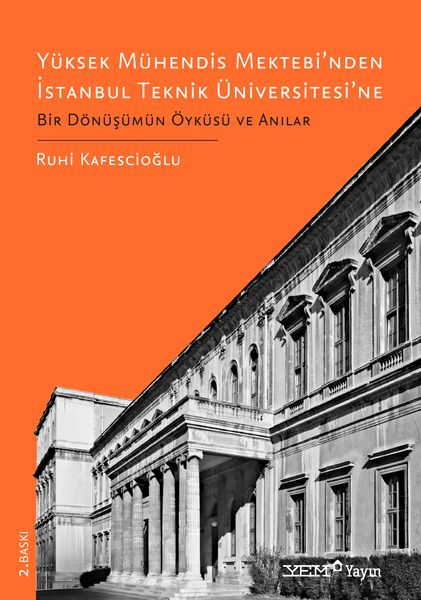
From the School of Engineering to Istanbul Technical University…
Yazar: Ruhi Kafescioğlu
Brand: YEM Yayın
Basım Tarihi: 2019
Basım Dili:
Sayfa Sayısı: 168Boyut: 14.5x20.5 cm
Out Of Stock
9786058119185
Product Description
Ruhi Kafescioğlu completed his architectural education at the School of Engineering in 1943. After the school was transformed into Istanbul Technical University in 1944, he became an assistant at the ITU Faculty of Architecture's Department of Building Science II in 1947. He completed his qualification work at the same faculty in 1949. He became an associate professor in 1954 and a professor in 1965. For a period, he served as the general secretary and president of the Building Research Institute at the ITU Faculty of Architecture; he ensured the establishment of the faculty's materials archive and materials laboratory.
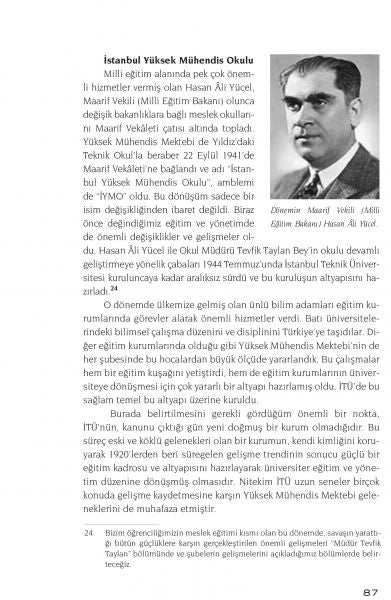
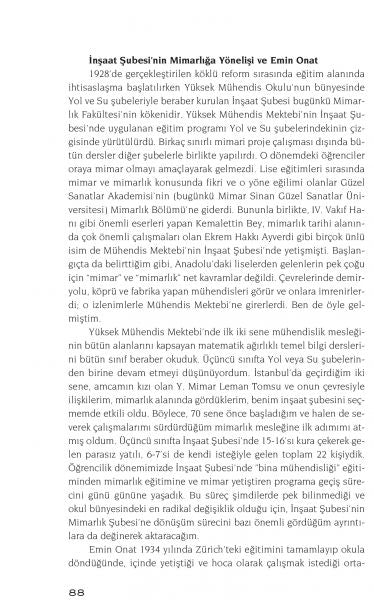
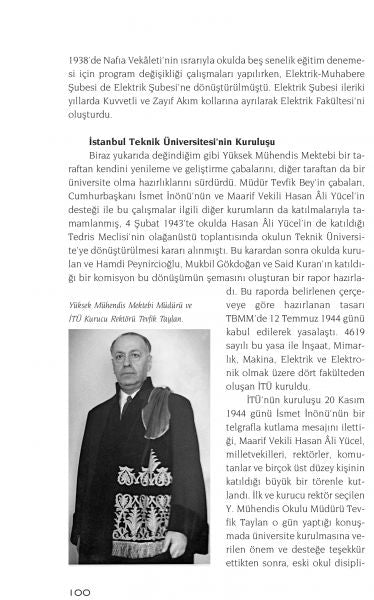
In the book, Ruhi Kafescioğlu describes the period between 1936 and 1946, witnessing the transition from the School of Engineering to Istanbul Technical University and the formation of the faculty of architecture there. He conveys developments based on his personal observations, memories, and archive documents, as well as those of students who studied during that period. Ruhi Kafescioğlu frames this narrative historically with a chronologically ordered, brief explanation of the institutions established during the Ottoman Empire and continued to provide education in the early years of the Republic, which also formed the roots of ITU. The book also includes cartoons, photographs from the 1943 Arı Yearbook, and additional important archive documents related to the period.
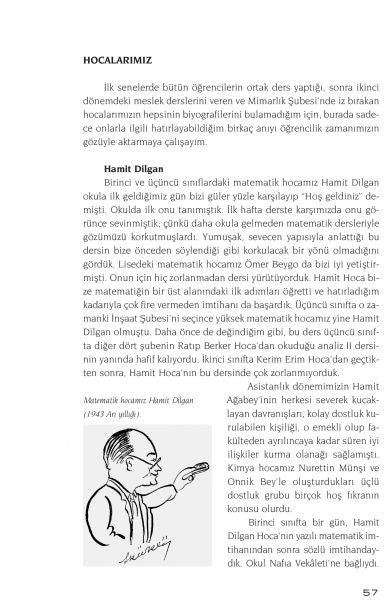
Ruhi Kafescioğlu also details, for the benefit of younger generations, the professors he had during his student years at this institution where the foundations of architectural education in Turkey were laid and when he was just starting his academic career: Hamit Dilgan, Nurettin Münşi Algan, Salih Murat Uzdilek, Langland, Mehmet Emin Kalmuk, Malik Sayar, İlhami Civaoğlu, Kerim Erim, İhsan İnan, Ziya Kocainan, Fikri Santur, Said Kuran, Clemens Holzmeister, Gustav Oelsner, and Emin Onat.
About Ruhi Kafescioğlu
Born in Kayseri in 1920. He completed his architectural education at the School of Engineering in 1943. After the School of Engineering was transformed into Istanbul Technical University in 1944, he started working as an assistant at the ITU Faculty of Architecture's Department of Building Science II in 1947. He completed his qualification work in 1949, became an associate professor in 1954 with his work on "Wooden House Structures in Northwest Anatolia," and a professor in 1965.
Between 1955 and 1957, he participated in applications of building and materials courses at Hannover Technische Hochschule in West Germany and research studies at the Institut für Bauforschung e.V. Upon returning to his position at ITU, he took charge of the Building Materials course with a new program he created for architecture students. He also taught materials courses in the architecture departments of ITU Technical School, Özel Işık Engineering School, and Trabzon Technical University.
Kafescioğlu is one of the founders of the Building-Industry Center, established in 1968. He participated in project competitions with different groups, received various awards, and engaged in professional practices. He served as general secretary and president of the Building Research Institute at the ITU Faculty of Architecture; he also ensured the establishment of a materials archive and materials laboratory at the same faculty.
His fundamental research project on "Stabilization of Soil with Gypsum," conducted with a team of researchers from different disciplines, was completed in 1980. He presented papers at numerous seminars and congresses organized both domestically and internationally, gave lectures, and wrote articles for magazines and newspapers. To date, he has published 6 books and over 50 papers and articles. The author, who is still conducting research on the use of soil as a building material and on alker, published his latest book, Çağdaş Yapı Malzemesi Toprak ve Alker (Contemporary Building Material Soil and Alker), in 2018.
