
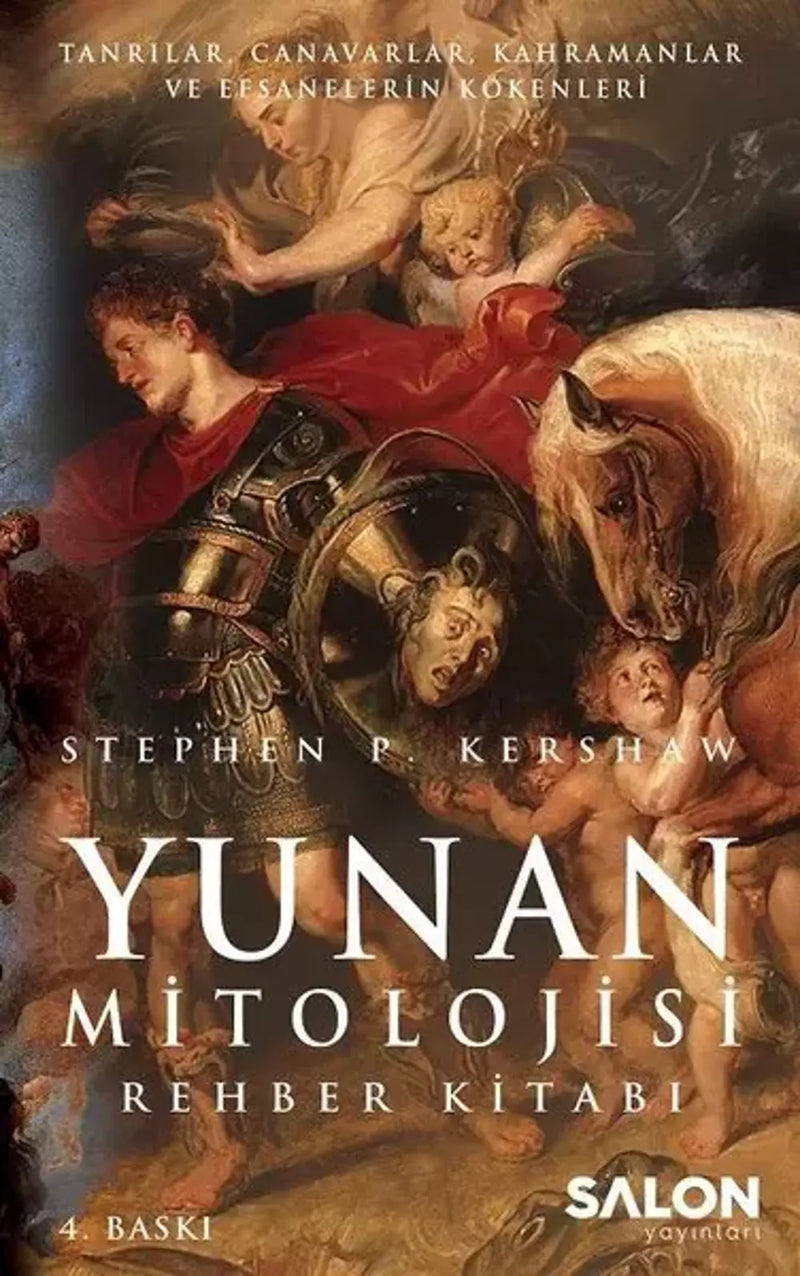
A Guide to Greek Mythology
Yazar: Stephen P. Kershaw
Brand: Salon Yayınları
Basım Tarihi: 2022
Basım Dili:
Sayfa Sayısı: 592Boyut: 14.0 x 21.0 cm
Out Of Stock
9786059530651
Product Description
In the twenty-first century, we are constantly surrounded by the echoes of Greek mythology, and we talk about myths all the time, however rarely we trouble ourselves to think. We live in a chaotic world (Chaos, its original name) where Trojan horses threaten our computers, and Ajax is both a cleaning product and a Dutch football team. On the one hand, politicians dismiss the ideas of their opponents as ‘fairytales’ (in other words, lies), while on the other, media archaeologists try to unearth ‘the truth behind the myth’ of Atlantis. Centaurs, horses with human heads, adorn the pages of C.S. Lewis’s Narnia books and J.K. Rowling’s Harry Potter series; in the world of football, coaches declare that their strikers have the Midas touch; a man can be an Adonis, a woman a siren or a harpy, and as is well known, we all have Achilles heels. Others are nymphomaniacs, using aphrodisiacs in all their actions and reading erotic works, all of which are semantic roots of Greek mythology. Meanwhile, as we undertake Herculean tasks, grapple with the Oedipus complex, and embark on individual ‘Odyssean’ journeys, we should definitely steer clear of Greeks bearing gifts.
This book allows you to review the essence of Greek mythology and quickly helps you access the most accurate source for myths, which are most effective when told directly. For different reasons, there are many versions of similar basic stories, told by different authors at different times and places. Many of these differences will be clarified. This book will also explore the reflections and accuracies of Greek tales from ancient Greek times to the twenty-first century. The Guide to Greek Mythology is organized into three main areas:
1. In the first part, myth and mythology are explored. Is it possible to define what Greek myths are? Can they be distinguished from other traditional tales? Is there an accurate definition?
2. In the second part, we will embark on a journey through some of the fundamental tales of Greek mythology. We cannot claim this to be a comprehensive study covering all myths and their different forms. Otherwise, this would be a colossal work.
What we have tried to achieve in this book is to guide the reader through the 'chronological' order of these exciting stories, from the birth of the gods to the return of the Trojan heroes to their homes. Along with a few lesser-known heroes and themes, similar stories such as Jason and the Argonauts, the Trojan War, and Odysseus will also be encountered. In addition, this book frequently attempts to explain interesting issues arising from the stories and discusses the myths with their accuracies. Did the Trojan War really happen? What about Atlantis? How were legendary findings used or misused in more modern times? Are we just another part of the Greek tradition?
3. In the third part, we will see a brief analysis of different scientific (or less scientific) explanations of Greek myths from antiquity to the present day. Scientists have pondered the origins and meanings of myths from the millennia-old period. Therefore, this book presents research on some of the main intellectual approaches from Euhemerus to Freud and beyond.
