
Obligatory Plurality
Yazar: Aykut Köksal
Brand: Arketon Yayınları
Basım Tarihi: Nisan 2022
Basım Dili: ["English"]
Sayfa Sayısı: 148Boyut: 15.50 x 23.50
In stock
9786057141316
Product Description
Aykut Köksal’s book, Compulsory Plurality – Discontinuity of Language in Architecture and Art, first published in 1994, is now available from Arketon Yayınları in a second edition with refreshed visuals. The book, which garnered great interest after its initial publication and quickly sold out, brought a new breath to the modernism/postmodernism debates of those years.
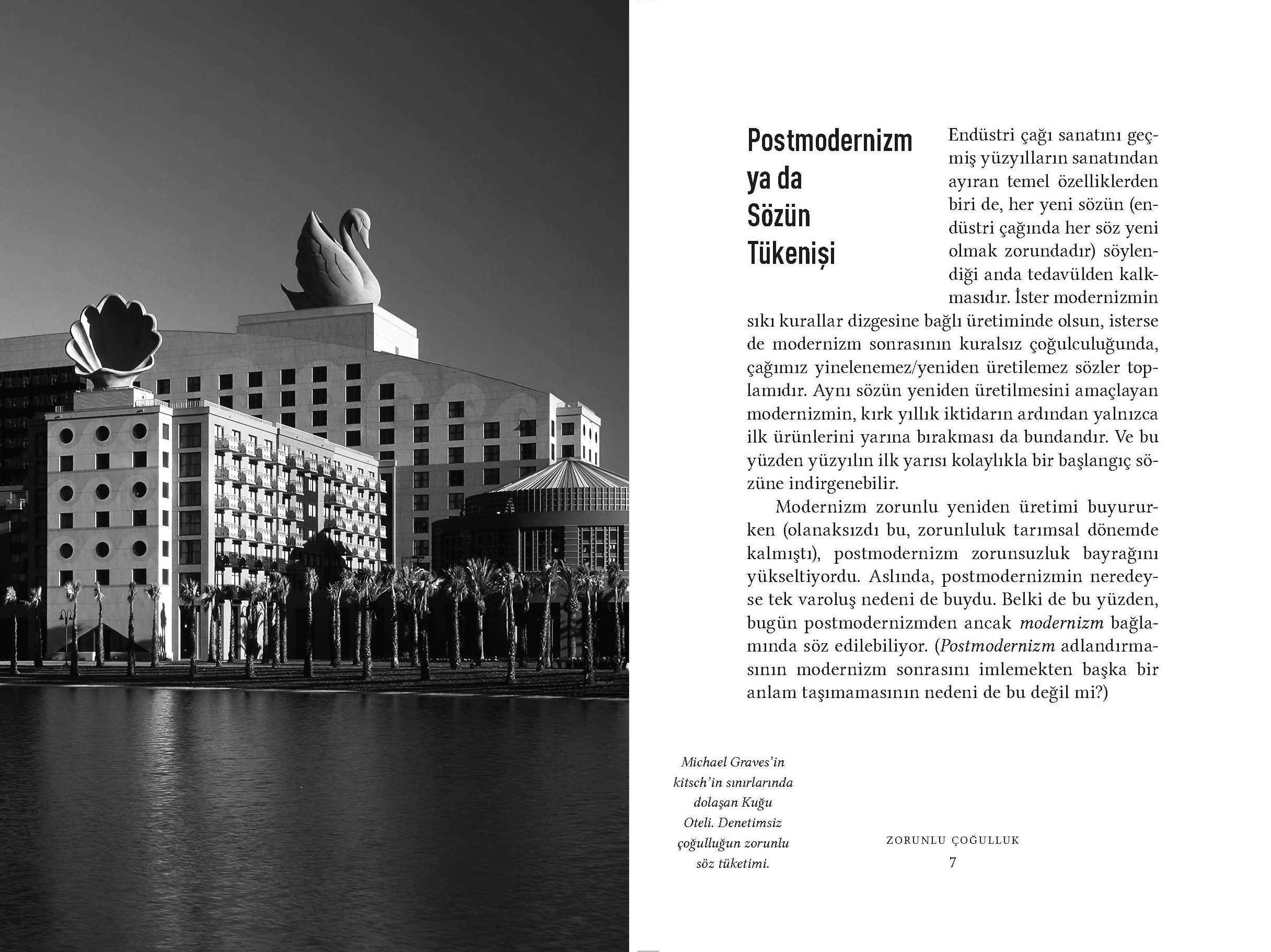
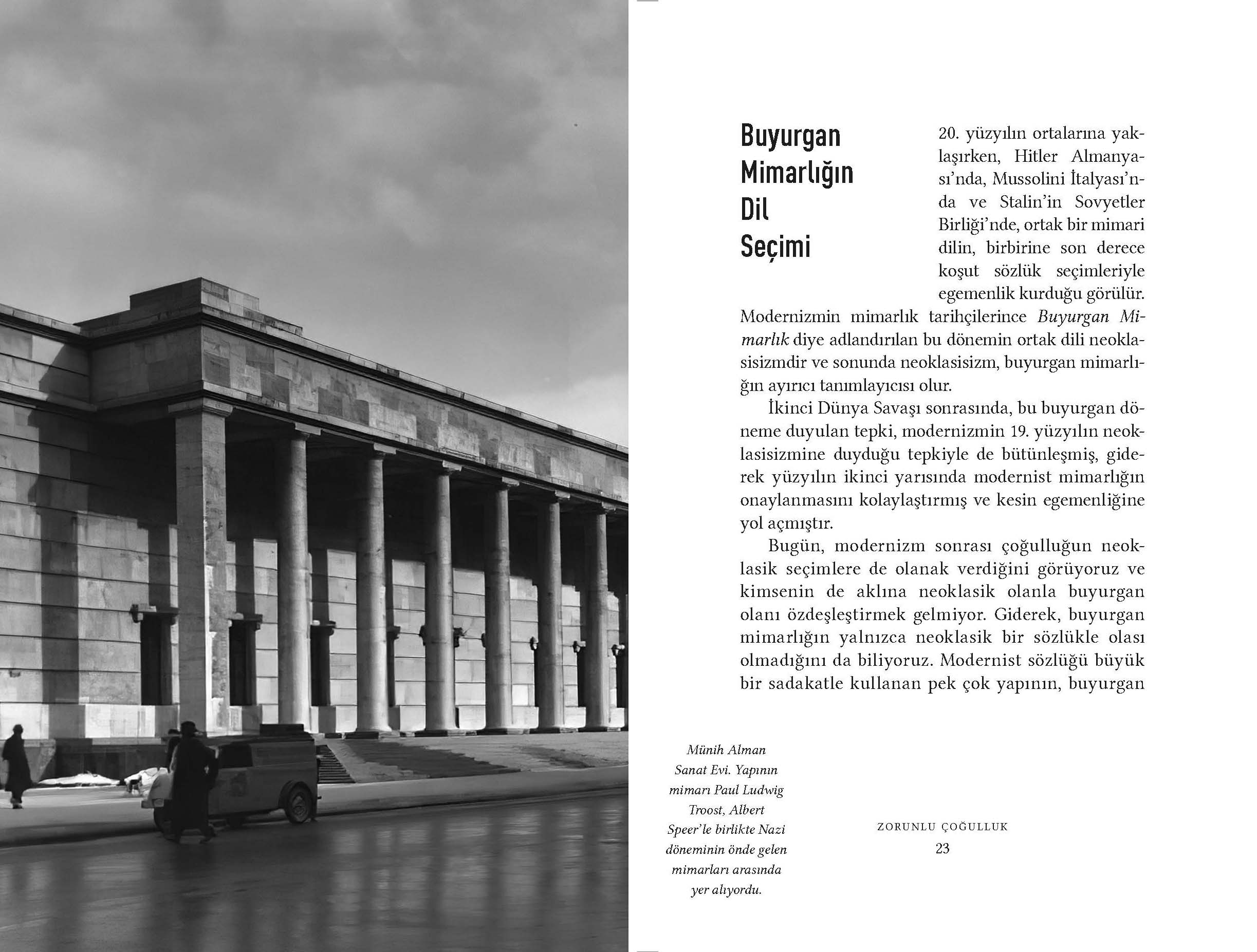
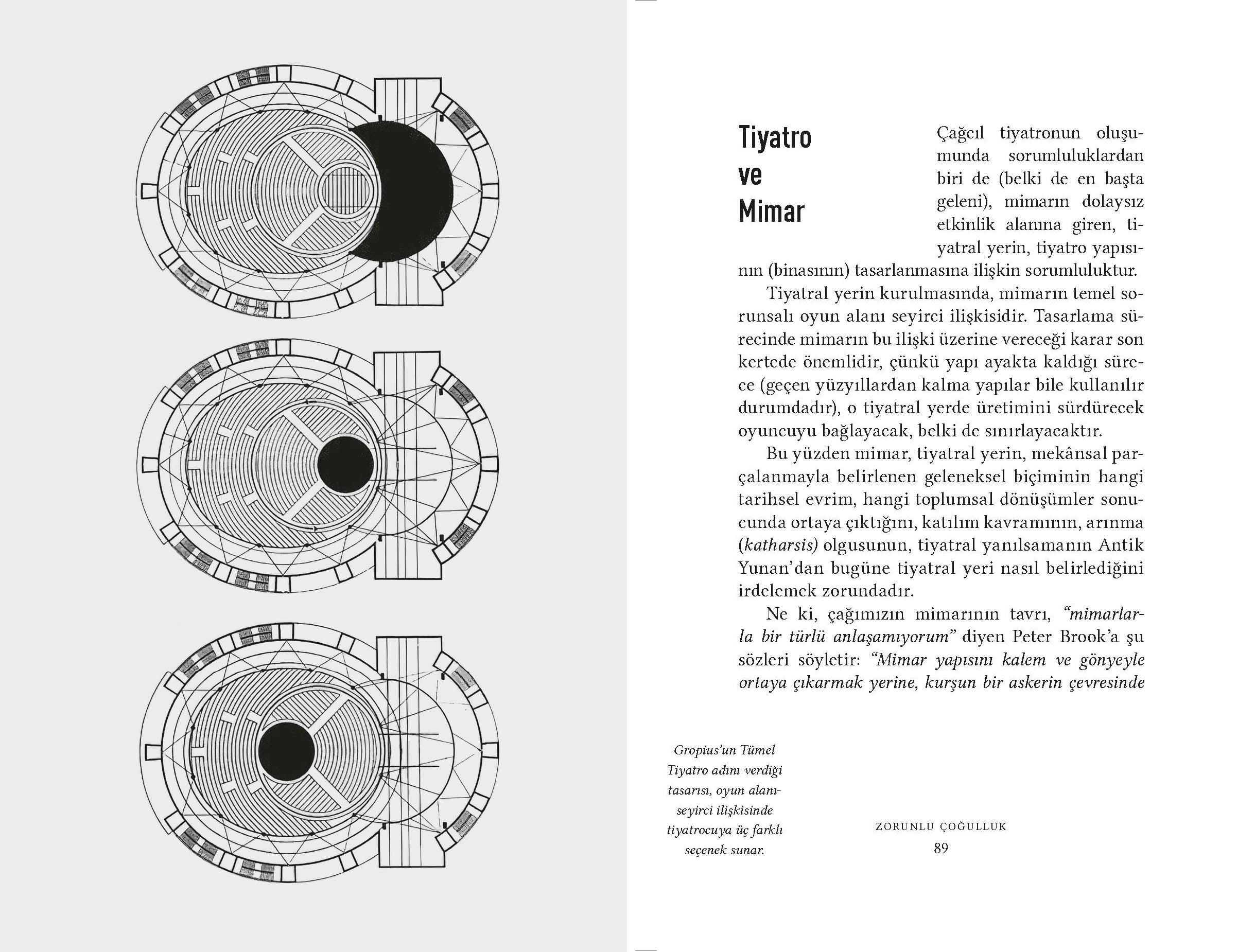
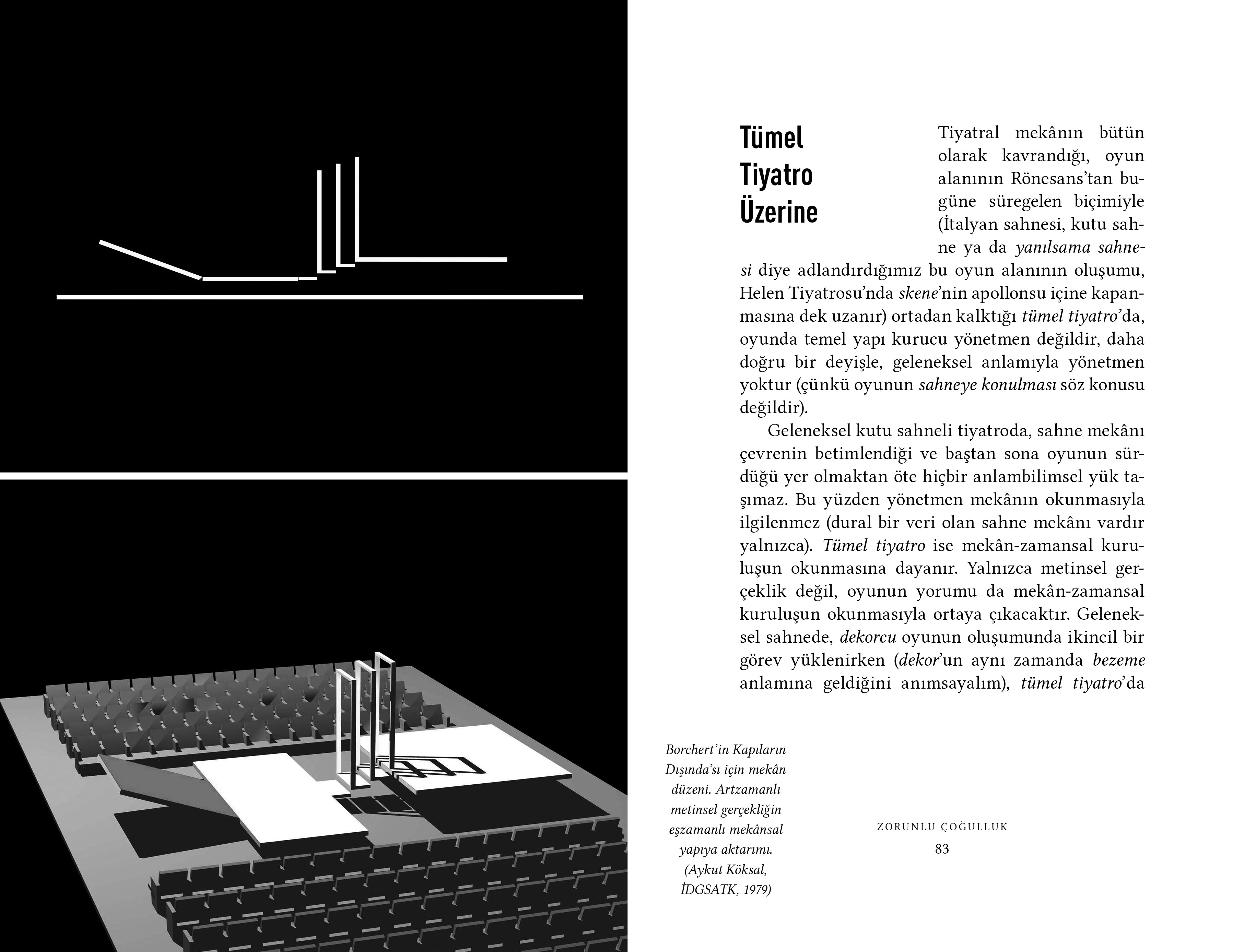
The essays in Compulsory Plurality are grouped into four separate sections. The essays in the first section, titled ‘The Age of Fictional Languages,’ center on the opposition between the natural language singularity of the agricultural production era and the fictional language plurality of the industrial production era. The context of modernity forms the main theme of the ‘Those Reaching for the Future’ section: artists who question the work of art against an intellectual backdrop and seek answers for the future, or, in short, “those reaching for the future.” The essays grouped under the main heading ‘Writing on Space’ examine the spatial dimension in artistic expression across different planes of reality. The essays in this section address the phenomenon of space in theater, music, cinema, and literature. The final section of the book, under the title ‘Grasping the Past’, contains essays discussing the organizational logic of the elements that constituted the historical city and concludes with an assessment of Sinan.
In his preface to the book, Enis Batur says: "Are works, structures, cities what occupy Köksal's horizon? More so: I would say Time, Space, Language. In his almost consecration of Measurement, this, and from this, a significant part can be read: He looks at the results, to be sure, but constantly probes the causes – the origin, the formation, the design. There is no need to seek an exact proximity, yet I cannot help but dwell on it: In every part of this book, not just a few parts, but in its totality, there is an attitude reminiscent of Valéry's sculpting of writing: Aykut Köksal's power of abstraction – which perhaps creates the most special corner of the human mind – extends like a magnifying glass to the unseen, less visible aspect of the subject he holds. In this sense, it is evident that we are dealing with an expert of shadows, an expert of the 'under-shadows'.: Such observers are so rare."
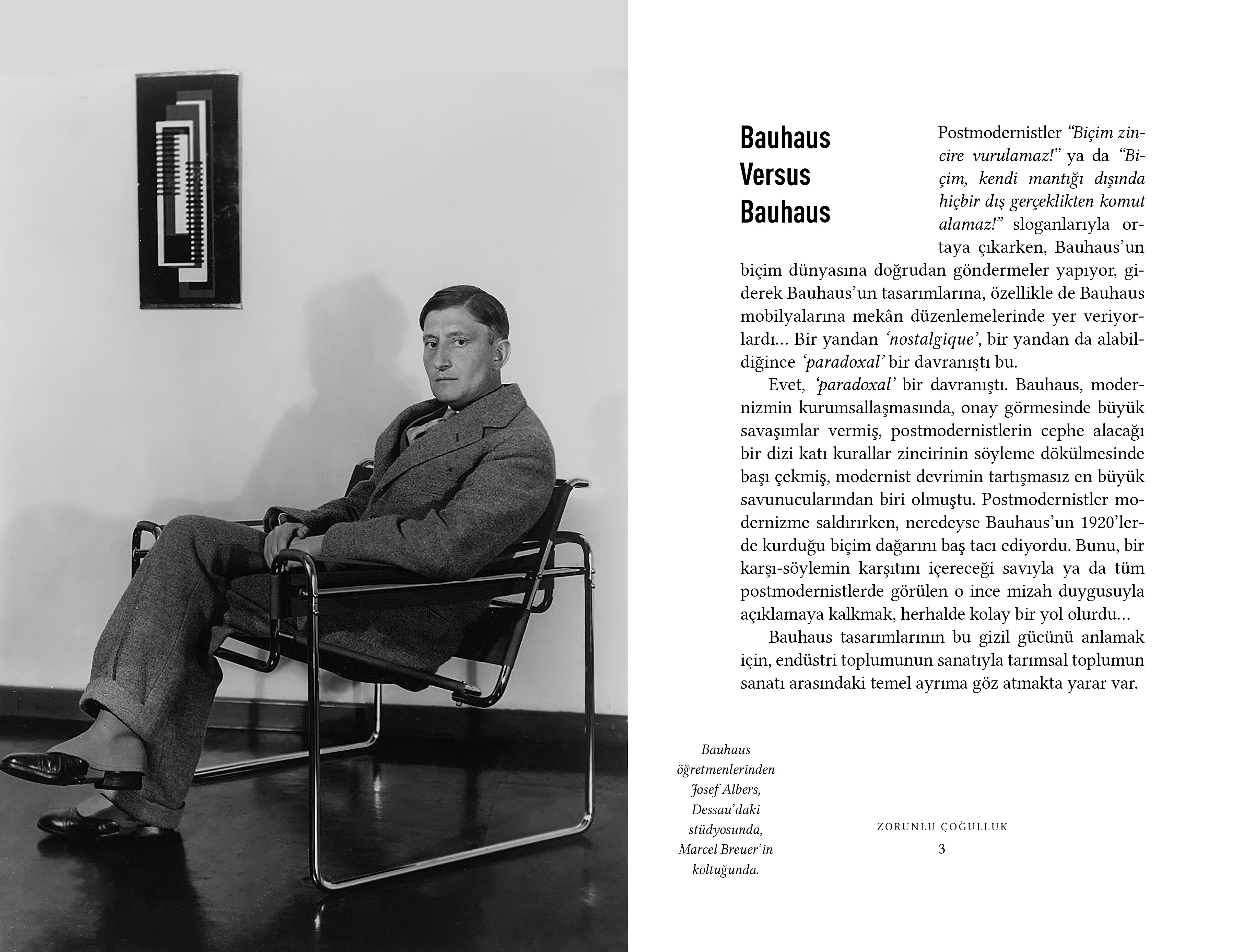
Necmi Sönmez, in his article about the book, makes the following assessment: "The subtitle of Compulsory Plurality, ‘Discontinuity of Language in Architecture and Art,’ indicates that the author opposes the continuity that art history is believed to have uniquely achieved. To understand which target this subtitle is aiming at, one needs to put the book's first section, titled The Age of Fictional Languages, under a magnifying glass. In this section, Köksal starts from the logic Bauhaus used when making its modernist break and immediately afterwards brings up the 'freedom to create fictional languages' of the postmodernists who opposed it. This approach has been used as a method, as can be understood from the contrasting but 'paired' essays in the book. Köksal employs contra-adversus to emphasize discontinuity. Why? Because the characteristic that makes contemporary art history interesting and constantly keeps it alive lies in the world of 'paired-oppositions' that Köksal uses."
